



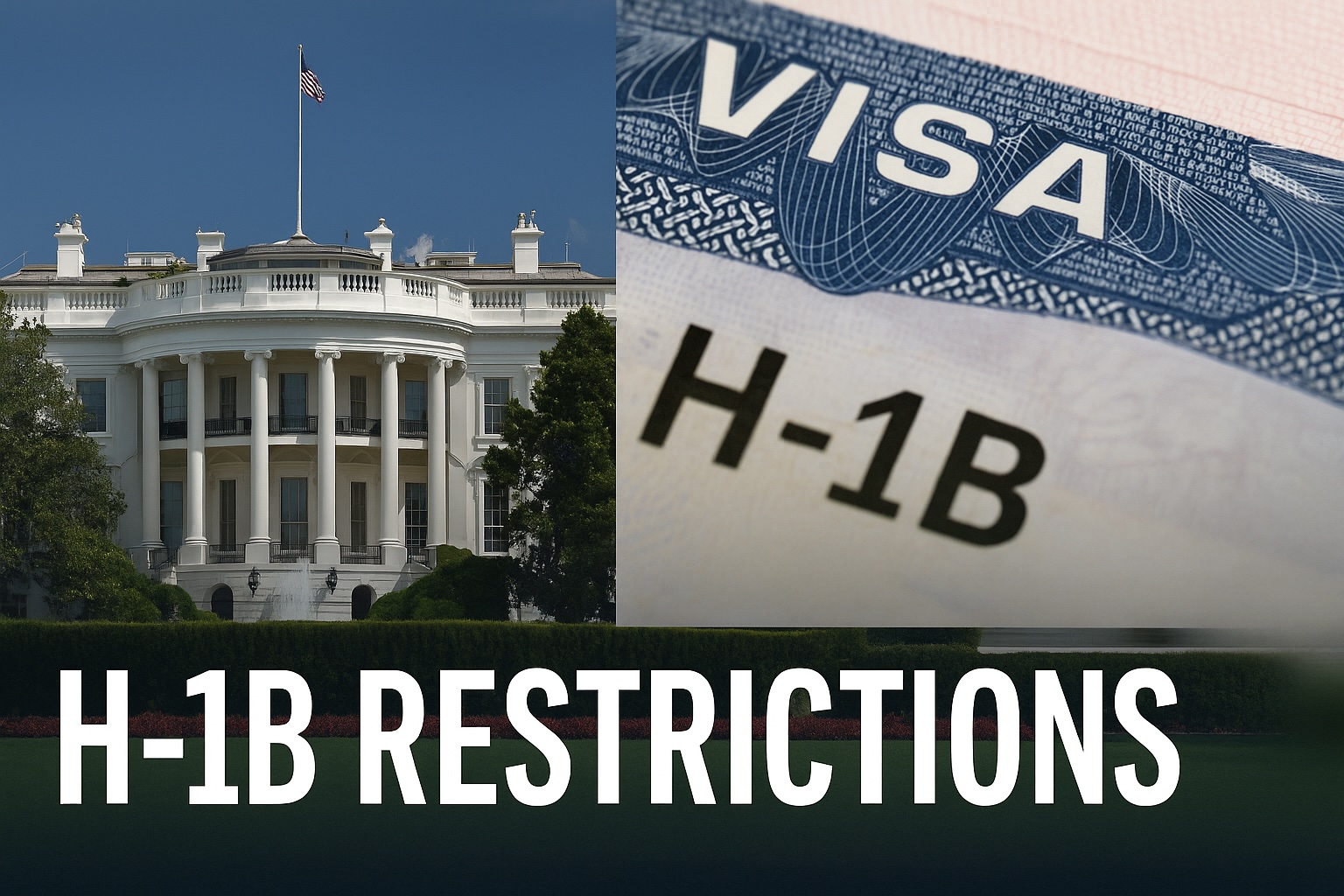
New rulemakings will raise prevailing wage levels and prioritize higher-paid applicants in the H-1B lottery, sparking fresh debate over the program’s future.
By AB Wire
The White House has clarified that the presidential proclamation issued on September 19 — imposing a hefty $100,000 fee on H-1B visa petitions — does not apply to existing visa holders or to petitions filed before 12:01 a.m. on September 21.
An “H-1B FAQ” posted on the White House website on Sunday further stated that the proclamation “does not change any payments or fees required to be submitted in connection with any H-1B renewals” and “does not prevent any holder of a current H-1B visa from traveling in and out of the United States.”
As The American Bazaar reported, Friday’s proclamation triggered widespread panic among H-1B visa holders — both those living in the United States and others who were abroad on vacation or work assignments. Tech companies quickly issued advisories urging employees on overseas trips to return before the new deadline, while those preparing to travel were told to postpone or cancel their plans altogether.
The uncertainty also spilled over into the travel sector: airlines operating between the U.S. and India reported a surge in last-minute bookings, driving ticket prices sharply higher and adding to the chaos faced by anxious travelers. At major airports such as San Francisco, the confusion even led to scenes of passengers demanding to deboard, airlines issuing in-flight announcements acknowledging the situation, and departures being delayed by several hours.
RELATED: Relief for existing H-1B visa holders as White House signals $100,000 fee applies only to new visas (September 20, 2025)
Sunday’s clarification also outlined additional steps to reform the H-1B program, as envisioned in the proclamation. Among them:
The Department of Labor will initiate a rulemaking process to revise and raise prevailing wage levels, with the goal of “upskilling” the H-1B program and ensuring it is used to hire only the most highly qualified temporary foreign workers.
The Department of Homeland Security will undertake a rulemaking to prioritize high-skilled, higher-paid applicants in the H-1B lottery over those at lower wage levels.
The broader changes that the White House signaled, including new rulemakings, are set to reshape the H-1B program in fundamental ways. The Department of Labor will move to revise and raise prevailing wage levels, a step the administration argues will ensure that foreign workers brought in under H-1B are among the “best of the best” and not a source of cheaper labor.
Simultaneously, the Department of Homeland Security is preparing a rule to restructure the H-1B lottery, giving priority to higher-paid, highly skilled applicants over those at lower wage levels.
Supporters say the reforms could protect American workers and elevate the program’s standards, while critics argue they will narrow opportunities for younger professionals, startups, and mid-sized firms that rely on entry-level or moderately paid talent. Together, these changes are likely to reignite a long-standing debate over whether the H-1B system is a bridge to innovation or a tool for undercutting the U.S. labor market.