



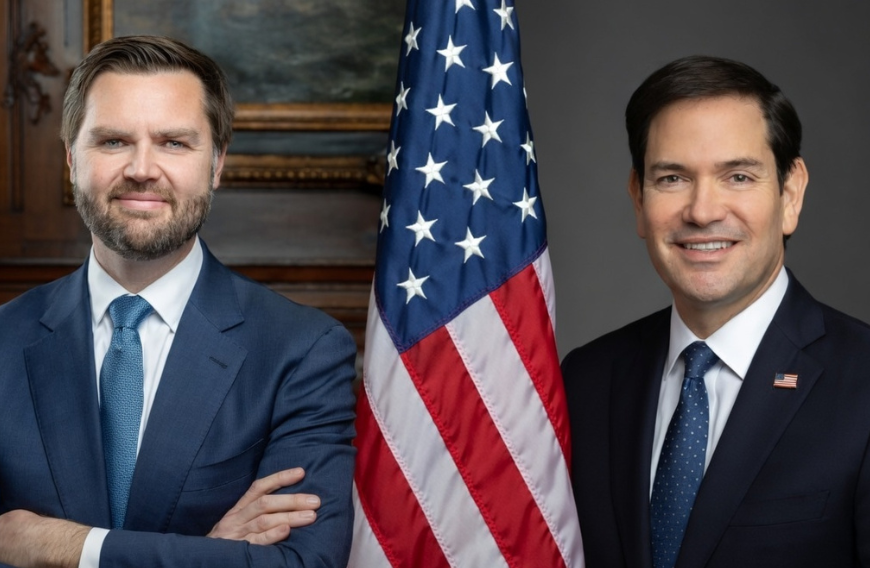
In the past month, both Vice President JD Vance and Secretary of State Marco Rubio added one point each in this ongoing series examining who is more likely to emerge as the GOP standard bearer in 2028.
Rubio still holds the lead, but the distance between the two continues to shrink because both men are beginning to define themselves very differently inside the same Trump political universe.
Vance scored this month through his increasingly aggressive focus on Medicaid fraud and abuse within entitlement programs. What initially looked like a routine policy issue is rapidly becoming one of the most politically combustible issues in the country. The administration has focused heavily on improper Medicaid enrollments, inflated billing schemes, abuse within state-administered healthcare programs, and weak oversight structures that allowed taxpayer money to flow through the system with limited accountability.
Minnesota became the political flashpoint. Federal investigations tied to Medicaid-funded fraud schemes suddenly transformed what many voters viewed as abstract government waste into something concrete and emotionally charged. Vance immediately recognized the political opening. He has framed the issue not simply as fraud, but as evidence that large government programs inevitably become vulnerable when politicians are unwilling to enforce rules aggressively.
What elevates this issue politically is not only the scale of the alleged fraud, but the growing public attention on the backgrounds of some individuals implicated in these investigations. Immigration immediately enters the conversation. The issue suddenly stops being about accounting and becomes a much larger debate about who government programs are designed to serve and whether taxpayers believe the system is still operating fairly.
Vance understands the emotional force behind this argument. He is not discussing Medicaid fraud like a policy analyst. He is discussing it like a prosecutor presenting a case before a frustrated jury. And his message is direct: Americans will support safety-net programs if they believe those programs are protected from abuse, but the moment voters believe the system is being manipulated, public trust collapses quickly.
READ: Sreedhar Potarazu | Vance vs Rubio round 1: Who will grab the ring from Trump? (March 13, 2026)
That argument resonates because many Americans already believe that government has become too large, too slow, and too afraid to enforce its own standards consistently. Medicaid fraud therefore becomes symbolic of something much bigger than healthcare policy. It becomes a reflection of whether government still has the ability or willingness to protect taxpayer dollars at all.
Rubio gained his point this month from a completely different arena: foreign policy, particularly his trip to India.
The relationship between the United States and India has become increasingly delicate over trade disagreements, tariffs, energy policy, defense alignment, and India’s complicated balancing act with countries such as Russia and Iran. Rubio’s visit was largely about preventing further deterioration in one of America’s most strategically important international relationships.
India occupies a unique position in American foreign policy thinking today and is viewed increasingly as a critical economic and military counterweight to China in the Indo-Pacific region. Both Republicans and Democrats recognize that maintaining a strong relationship with India is central to long-term American strategic interests.
Rubio’s trip was less about dramatic announcements and more about stabilizing the relationship before disagreements deepen further and damage control. The goal was to reassure India that despite ongoing tensions over tariffs, trade barriers, manufacturing competition, and geopolitical positioning, the United States still views India as indispensable.
That may not generate the same emotional reaction among voters as Medicaid fraud investigations, but strategically it carries enormous significance. Rubio understands that global influence depends heavily on maintaining trust with major partners, especially at a time when China continues expanding its economic and political influence across multiple regions of the world.
The contrast between the two men is becoming increasingly obvious.
Vance is building influence through domestic confrontation. Fraud investigations, immigration enforcement, entitlement oversight, and institutional accountability now define much of his political identity. He is speaking to voters who believe America’s greatest threats are internal decline, weak enforcement, and leadership unwilling to impose boundaries.
Rubio is building influence through international engagement since he is Secretary of State. Trade relationships, geopolitical alliances, military coordination, and diplomatic continuity define his political profile. He is speaking to voters and donors who still believe America’s strength depends heavily on maintaining global influence and stable international partnerships.
They represent two competing visions of what the Republican Party may become after Trump.
As the country approaches its 250th birthday, the deeper question becomes which of these approaches better reflects the current fabric of America. The country is no longer politically or culturally uniform. America today consists of multiple identities, multiple economic realities, and multiple competing expectations of government.
READ: Sreedhar Potarazu | Vance vs Rubio round 2 : The Anteambulo strategy (April 18, 2026)
Rubio may hold an advantage in his ability to communicate across immigrant communities and minority populations because of his own background and international focus. He often projects stability, predictability, and coalition-building.
Vance, however, may hold the stronger emotional connection to the current Republican grassroots because anger remains one of the most powerful forces in American politics. Frustration over immigration, public spending, cultural conflict, and distrust of institutions continues driving much of the energy inside the conservative movement.
The recent runoff elections reinforce this reality. Pro-Trump candidates continue performing strongly, particularly candidates who embrace tougher positions on immigration, entitlement abuse, and institutional distrust. That environment naturally favors Vance because his political style aligns more directly with the emotional energy currently dominating the Republican base.
At the same time, Rubio’s strengths should not be dismissed. Foreign policy often appears politically secondary until a major international crisis suddenly pushes it to the center of public attention. If tensions involving Iran or China escalate further, if global trade weakens significantly, or if international instability begins affecting American economic security more directly, Rubio’s diplomatic credentials may become far more politically valuable.
For now, Rubio still leads this series.
But Vance is rapidly closing the gap because he has identified an issue that merges taxpayer anger, immigration frustration, and distrust of government into a single political message that resonates deeply with many Republican voters.
And in today’s political climate, that combination carries enormous force.
Round 3: Rubio- 4 Vance- 3