



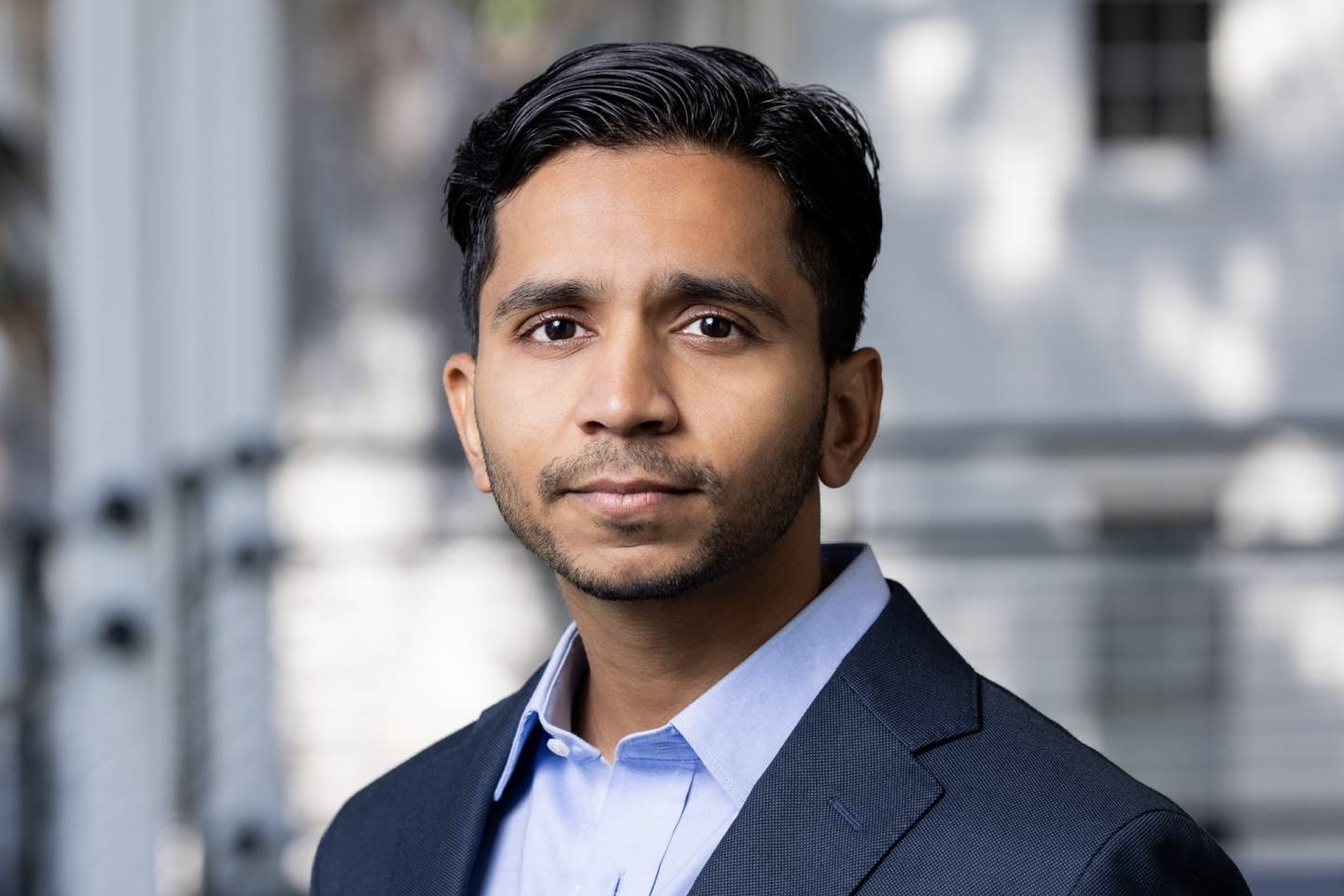
Akash Gupta, an Indian American theoretical and computational physicist who investigates the origin and evolution of Earth- and Neptune-like planet, has joined Princeton University’s Society of Fellows in the Liberal Arts.
Gupta is one of the five new scholars to join the society, an interdisciplinary community of postdoctoral fellows and Princeton faculty members that fosters vibrant and innovative interdisciplinary research, teaching and collaboration in the humanities and humanities-related social sciences, according to a university release.
Appointed in the Departments of Astrophysics and Geosciences, Gupta has a dual B.Tech.-M.Tech. degree in Aerospace Engineering from the Indian Institute of Technology Kanpur. He earned his Ph.D. in planetary science from the University of California-Los Angeles.
READ: 10 Indian American scientists among 2025 American Physical Society Fellows (
Gupta combines mathematical modeling of planetary-scale processes with quantum-mechanical simulations and machine-learning algorithms to uncover the physical and chemical mechanisms that shape planet atmospheres and interiors — ultimately, to understand how such processes could lead to conditions conducive to life.
Established in 1999 by a gift from the late charter trustee Lloyd Cotsen and the Humanities Council’s leadership, the society offers outstanding scholars with a recent PhD the opportunity to enhance their teaching and research over a three-year term.
“We have a wonderful new group of fellows joining us this year,” said Yelena Baraz, director of the society. “Their research profiles highlight the chronological, geographical and methodological breadth of the society. They are already actively engaging with the community here at Princeton, and I am looking forward to hearing them present their work in our weekly seminars.”
READ: Four Indian Americans named 2025 Guggenheim fellows (
Baraz is the Kennedy Foundation Professor of Latin Language and Literature at Princeton and professor of classics.
The full cohort of 13 Cotsen fellows is drawn from a wide range of disciplines in the humanities and humanities-related social sciences — and includes one astrophysicist. Fellows hold appointments as associate research scholars in the Humanities Council, and as lecturers in their academic host departments, teaching one course per term while conducting their own research.
During their time at Princeton, they engage with the campus community in many ways: advising and mentoring undergraduate students, participating in academic programs and panels, presenting their research, developing new courses and co-teaching with faculty members.