



Five Indian Americans — Dr. Kiran Musunuru, Karan Singhal, Nabarun Dasgupta, Priti Bandi and Siddhartha Mukherjee — are among this year’s TIME100 Health—the people most influential in the world of health right now.
The chosen 100 are “a community of scientists, doctors, advocates, educators, and policy-makers, and others—all leaders in their own ways—who are changing the health of the world,” according to Time.
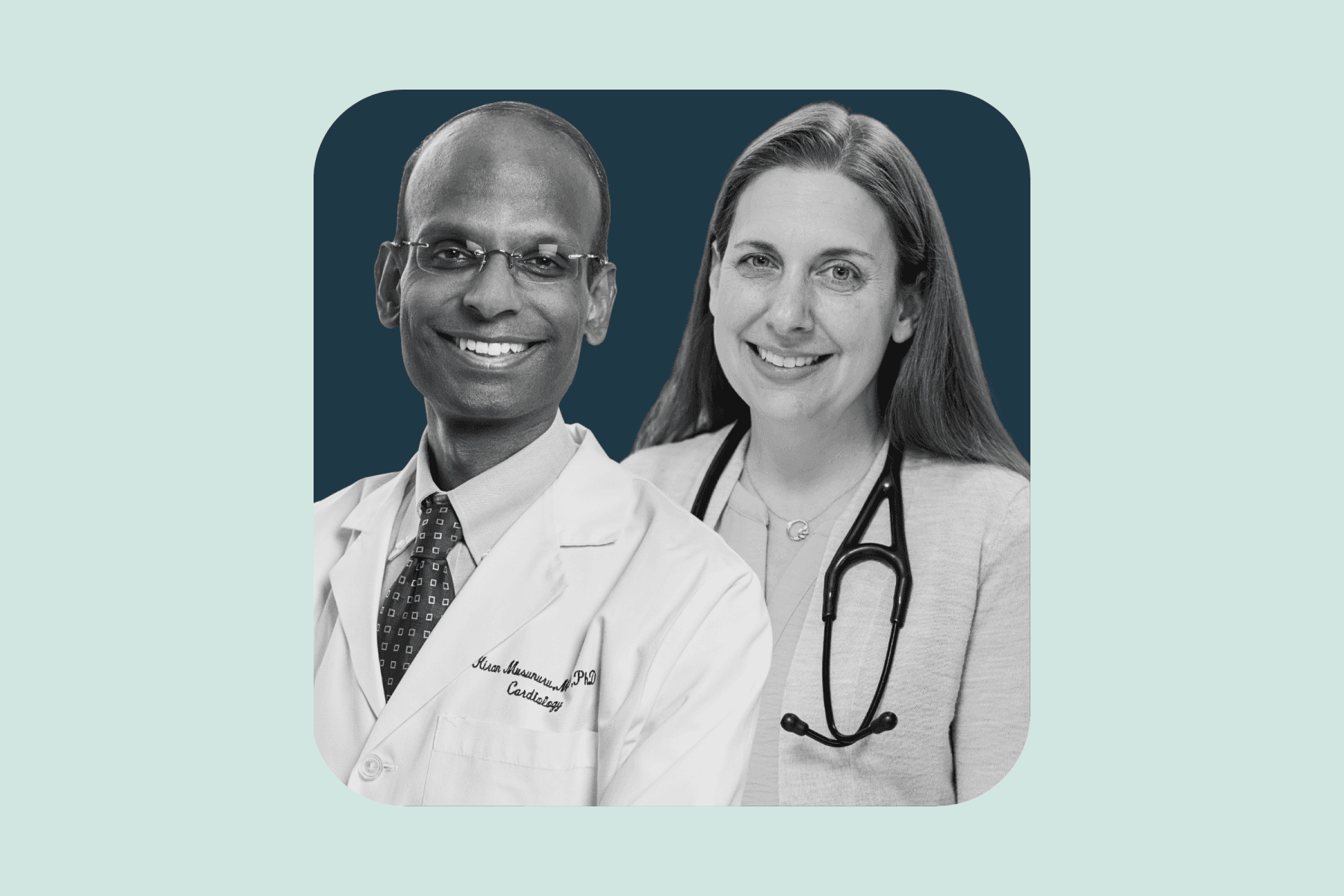
Topping the Indian Americans list is Dr. Kiran Musunuru who was chosen with Dr. Rebecca Ahrens-Nickla for “saving a baby from genetic disease.” Innovation shot forward when the duo administered the first-ever customized CRISPR therapy to treat a baby’s genetic disease, according to Time.
Dr. Ahrens-Nicklas, director of the Gene Therapy for Inherited Metabolic Disorders Frontier Program at Children’s Hospital of Philadelphia, partnered with Dr. Musunuru, director of the Genetic and Epigenetic Origins of Disease Program at the University of Pennsylvania Perelman School of Medicine.
Their goal was to use the the CRISPR gene-editing technique to correct the mutations that Ahrens-Nicklas’ patients were born with, so babies weren’t as severely affected by their conditions.
Ahrens-Nicklas and Musunuru worked with the team of CRISPR co-discoverer Jennifer Doudna to create a world-first customized gene therapy for KJ Muldoon, who was born in August 2024 with mutations that led to a missing enzyme he needed to process proteins properly.
READ: Indian Americans’ success is a warning and call to action: Jay Chaudhuri (
Beyond KJ’s success, his treatment has spurred Ahrens-Nicklas and Musunuru to work on developing custom therapies for other patients. “I don’t think it’s exaggerating to say that this is the future of medicine,” says Musunuru.
Karan Singhal, who leads the Health AI team at OpenAI, a group of researchers dedicated to improving AI capabilities in health settings, has been chosen for “bridging health and AI.”
He’s played a key role in aiming to prioritize the safety and reliability of the large language models that power ChatGPT Health. “The idea that you could have a companion in your pocket helping you navigate care has been a dream for a long time,” he says.
Singhal worked alongside more than 260 physicians from around the world to shape and refine the system, and partnered on a clinical study that tests how AI can function as a clinician copilot in care settings.
That work has informed ChatGPT for Healthcare, a new suite of products designed to improve care and slash administrative burden. It’s already been deployed in facilities like Boston Children’s Hospital and Cedars-Sinai Medical Center.
Nabarun Dasgupta, an epidemiologist at the University of North Carolina at Chapel Hill, has been chosen for “combatting the street drug crisis.”
Dasgupta leads the school’s Opioid Data Lab, working to identify emerging compounds of concern, like medetomidine, and study how street drug use is changing generationally. This is a “moment of hope,” Dasgupta says, but he emphasizes that fighting the opioid epidemic is a continuous and collaborative effort.
Priti Bandi, scientific director of cancer risk factors and screening surveillance research at the American Cancer Society, has been chosen for “tracking cancer screenings.”
Bandi has spent the last two decades trying to figure out what keeps people from getting screened for cancer earlier, when the disease tends to be much more treatable. In research published in November 2025 in JAMA, Bandi and her team found that screening every eligible U.S. adult for lung cancer could prevent more than 62,000 deaths from the disease over five years.
“Certain groups have low uptake year on year because the bigger picture questions are not being addressed, which is access to care,” Bandi says. “Even a small cost burden can prevent you from taking up screening.”
So can external factors, she and her team have found, such as events like a pandemic, stigma or shame around smoking, and the availability of technologies like CT scans at rural facilities.
READ: ‘The New York Sari’: A window on South Asian culture (
The American Cancer Society’s advocacy affiliate, the American Cancer Society Cancer Action Network (ACS CAN), uses data like Bandi’s to advocate in government to make cancer screening more accessible. “Good science moves good policy,” Bandi says.
Oncologist author Siddhartha Mukherjee was selected for “understanding cancer.” In 2025, 15 years after Dr. Siddhartha Mukherjee’s Pulitzer-winning book, The Emperor of All Maladies: A Biography of Cancer, was first published, he updated it, adding four new chapters about detection, prevention, treatment, and overall understanding of the disease. “I felt an urgent need,” says Mukherjee, “because much of what we know about cancer had changed.”
In another 15 years, he expects AI will have played a key role in developing new treatments that are more precise and less expensive. It’s why last year, he teamed up with LinkedIn co-founder Reid Hoffman to launch Manas AI, a startup using AI to aid drug discovery.
“Manas has discovered medicines that were unimaginable in terms of their chemical composition,” he says. “And within six months, we have probably virtually screened or created virtual medicines that number in the hundreds of thousands, and we will get into the millions.”
Only a small fraction will be synthesized as real chemicals and tested against cancer cells, but Mukherjee considers these capabilities a “massive turning point” that inspires newfound hope and potential.