



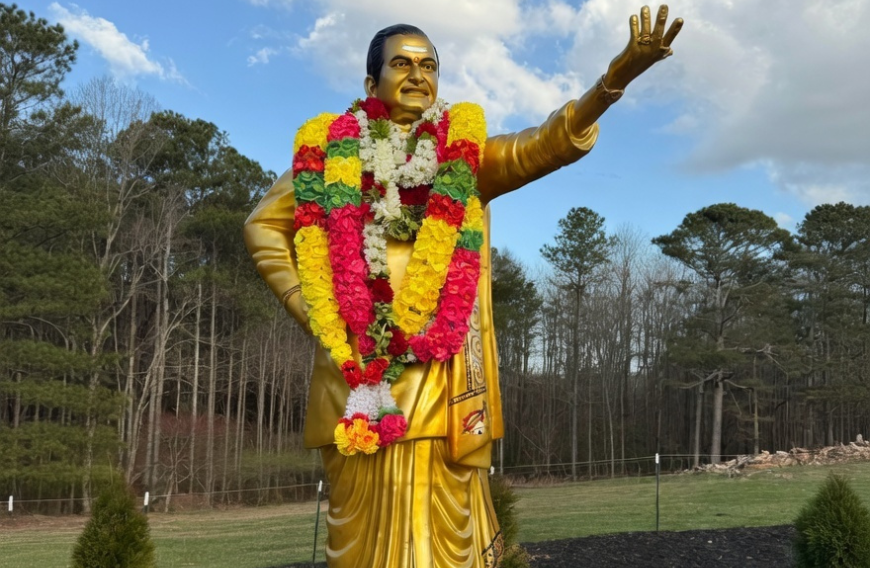
A viral video of a statue honoring Nandamuri Taraka Rama Rao (NTR) in Atlanta has triggered a wave of online outrage, with some social media users calling for its removal and even deportation. This had fueled concerns among Indian Americans about growing hostility during an already tense immigration climate.
The statue, installed in 2024 to celebrate the legacy of the Telugu film icon and former Andhra Pradesh chief minister, became the center of controversy after clips circulated widely on X. While many praised the monument as a cultural milestone, others used it to push anti-India narratives, prompting sharp reactions from the Indian American community.
One viral post read, “Deport this statue along with the people who put it there.” Reflecting extreme rhetoric that conflates cultural expression with immigration politics, heightening fear among diaspora communities.
READ: ‘Texas will be for the Indian community’: Greg Abbott faces backlash as anti-Indian rhetoric grows (April 7, 2026)
Another widely shared post stated, “America doesn’t need foreign politicians’ statues on its soil,” highlighting ongoing debates about cultural representation and belonging, especially for immigrant communities seeking visibility.
The backlash comes at a time when immigration remains a deeply polarizing issue in the United States, with heightened scrutiny around deportation policies. For many Indian Americans, the tone of the criticism goes beyond the statue itself, signaling a broader discomfort with visible expressions of non-Western identity.
Community advocates say such incidents risk reinforcing stereotypes and alienating immigrant groups who contribute significantly to American society. Telugu associations across the U.S. have defended the statue, emphasizing that it honors a cultural figure revered for his contributions to cinema and public service, not a political statement aimed at influencing American discourse.
For Indian Americans, the controversy touches a deeper nerve: the balance between celebrating heritage and navigating acceptance in their adopted homeland. Many see the statue as a symbol of pride, representing decades of migration, cultural exchange, and community building in cities like Atlanta.
READ: Rise of anti-Indian hate in America sparks calls for community action (February 23, 2026)
Viral narratives, even when driven by a small group, can shape perceptions and fuel division. In this case, the rhetoric surrounding the NTR statue has raised alarms about how quickly cultural symbols can become flashpoints in broader ideological battles.
As debates continue, Indian American leaders are calling for respectful dialogue and greater cultural understanding. They stress that public expressions of heritage, whether through statues, festivals, or institutions, should be considered part of America’s multicultural identity, not as a threat.
In the end, the Atlanta statue controversy brings about the challenges immigrant communities encounter in expressing their identity amid increasingly charged debates over immigration and belonging. However, locals argue that immigrants need to assimilate into the American culture instead of imposing on them.