



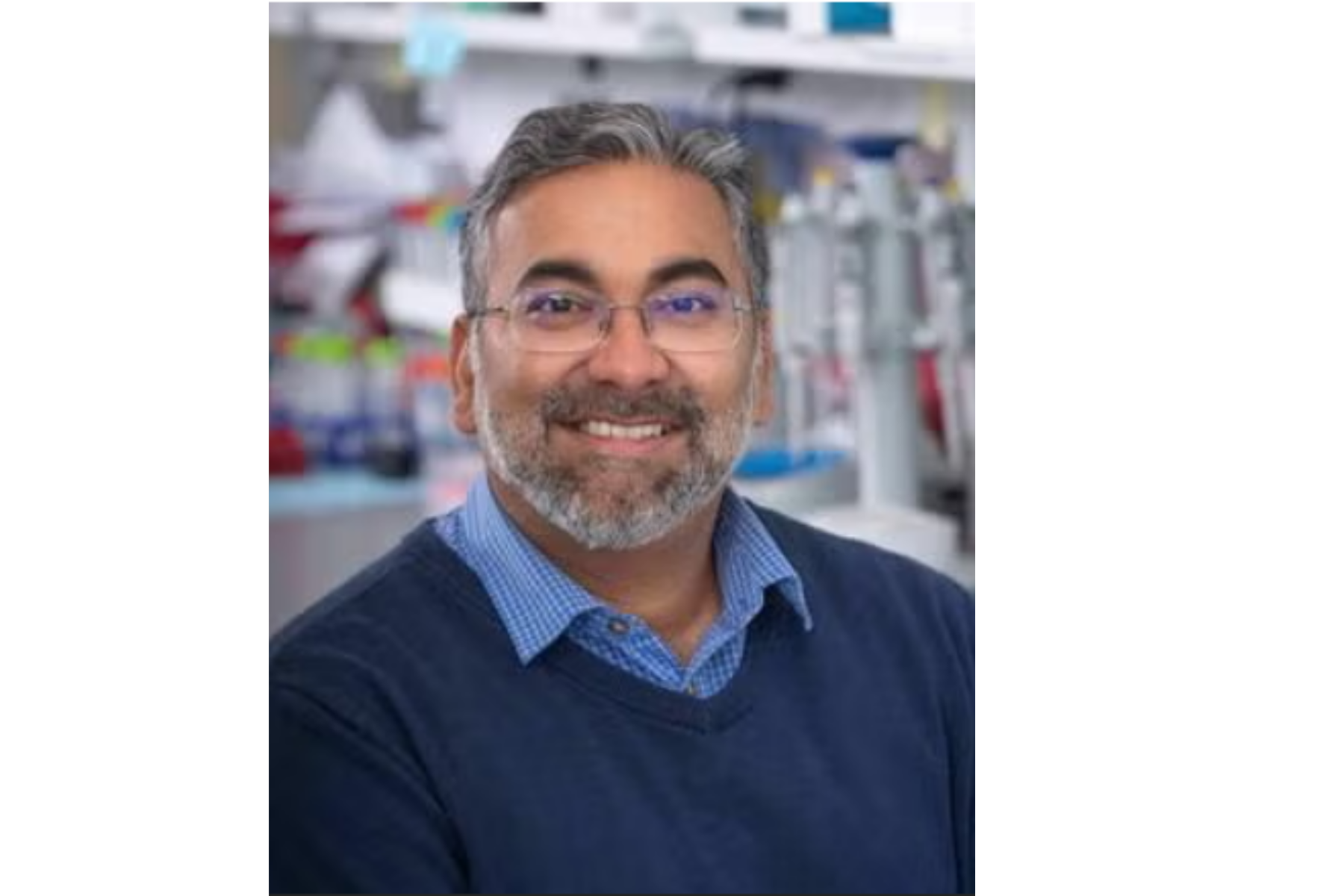
Parag Chitnis, an Indian American associate professor of bioengineering at George Mason University whose work is redefining how clinicians monitor the human body, has won a 2026 Presidential Faculty Excellence in Research Award.
Chitnis was awarded the honor as a tribute to a decade of work that bridges the gap between complex physics and bedside medicine in the innovative labs of the Volgenau School of Engineering at the Fairfax, Virginia-based university.
Since joining the university in 2014, Chitnis has transitioned from a career in nonprofit research to becoming a cornerstone of Mason’s biohealth community. His selection by a committee of peers and senior leaders marks his ten-year milestone at the institution with the university’s highest internal praise.
At the heart of Chitnis’s success is a dual-focus research portfolio. His team has pioneered “wearable ultrasound sensors” flexible, lightweight patches that track muscle movement in real-time during daily activities.
Unlike the bulky machines typically found in hospitals, these devices offer a window into muscle kinematics for amputees, potentially revolutionizing how prosthetic limbs are controlled.
Read: Indian American mathematician Anantharam Raghuram wins 2026 Simons Fellowship
Furthermore, his work in photoacoustics, using light and sound to image deep tissue, has broken barriers that traditional optics could not. By visualizing neuro-electrical activity deep within the brain, his research provides a critical tool for the early detection and management of complex neurological disorders.
This research recently culminated in a $2.1 million National Institutes of Health (NIH) grant to study seizure dynamics, expanding upon feasibility work originally supported by the National Science Foundation.
For Chitnis, the journey to the vanguard of American bioengineering is rooted in the Indian-American experience. A prominent member of the diaspora, he maintains strong ties to his heritage while contributing to the U.S. scientific landscape.
He completed his undergraduate foundation in the United States, earning dual degrees in Engineering Physics and Mathematics from West Virginia Wesleyan College before obtaining his PhD from Boston University.
Colleagues and students describe Chitnis as more than just a researcher; they see a “scholar-innovator” dedicated to mentorship. University President Gregory Washington noted that the achievements of faculty like Chitnis are “truly astounding,” reflecting a commitment to research that impacts the broader community.
Chitnis will be officially celebrated at a university reception on May 12, standing as a testament to the global talent driving American scientific excellence.