



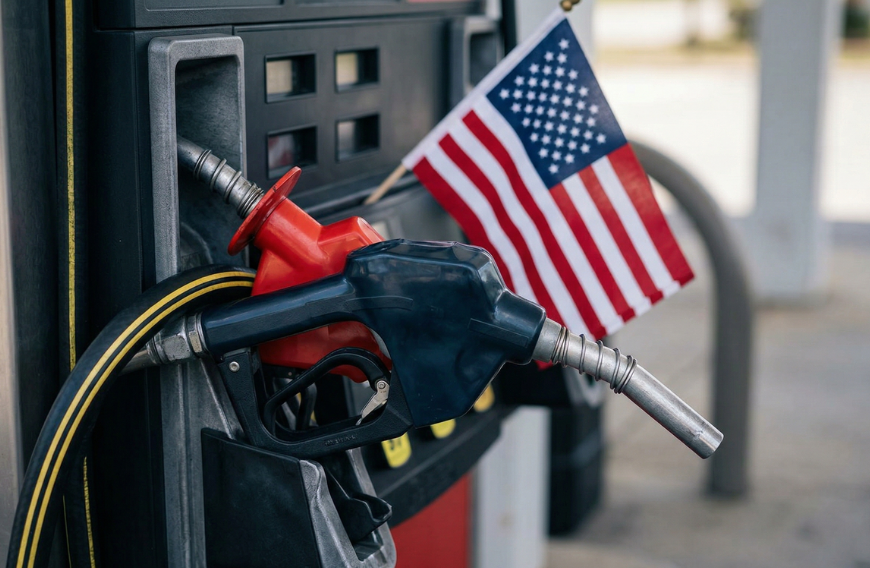
It looks like shoppers in the United States are increasingly spending their money on gas. Shoppers accelerated their spending in March from February, but they spent most of their money at the gas pump.
As per the Commerce Department’s report on Tuesday, a spike in gas prices due to the Iran war, now in its eighth week, resulted in a hefty 1.7% gain in retail sales in March after a revised 0.7% increase in February, the report marks the first read on spending to capture the effects of the Iran war.
“It’s a blowout retail sales figure for March,” Heather Long, chief economist at Navy Federal Credit Union, wrote in a report. “Stripping out the big surge in spending on gas due to the Middle East conflict, it’s a solid but more modest 0.6% increase.”
READ: Trump says US may exit Iran war in ‘two’ or ‘three’ weeks (
“Overall, the American consumer is still healthy,” she added. “Extra income from tax refunds is helping many households weather this oil shock, but that extra money won’t last forever.”
As per PBS, elsewhere, sales at department stores rose 4.2%, while sales at furniture and home furnishings stores were up 2.2%, online retailers saw a 1% gain.
U.S. consumer spending is the main driver of the economy, accounting for about two-thirds of GDP, so changes in retail sales are closely watched. When fuel prices rise, total spending increases even if people are not actually buying more goods or driving more, which can make the economy look stronger than it really is.
Excluding volatile categories like gas and cars, underlying retail sales growth was closer to 0.6%, suggesting more modest consumer demand. This reflects a “two-speed” pattern: spending on essentials such as fuel, groceries, and utilities remains steady because households cannot easily cut back, while discretionary spending on items like furniture, clothing, and electronics is more sensitive to inflation, interest rates, and economic confidence.
Consumers have remained relatively resilient due to a strong labor market, wage gains, and savings accumulated during the pandemic.
Overall, the pattern in consumer spending reflects an economy that is still expanding, but with growth that is uneven and highly sensitive to price changes. What looks like a strong increase in activity at first glance is often shaped more by inflationary pressures than by a meaningful rise in the quantity of goods and services being purchased. This makes it important to distinguish between nominal spending and real economic demand when interpreting retail data.
Households continue to prioritize essential needs even as those costs fluctuate, while being more cautious with discretionary purchases that can be delayed or reduced. This behavior typically emerges in environments where financial conditions are mixed—employment remains supportive, but higher prices and borrowing costs limit flexibility in household budgets. As a result, consumption patterns tend to shift rather than collapse, with spending redirected toward necessities.
READ: Trump threatens countries helping Iran with 50% tariffs (April 9, 2026)
Short-term boosts in consumer activity can be influenced by temporary factors such as seasonal tax-related cash flow or sudden price movements in key commodities. These effects can create an impression of stronger momentum than is likely to persist.
Over time, however, sustained growth in consumer spending depends more on stable income growth and confidence in future financial conditions than on short-term price-driven spikes.