



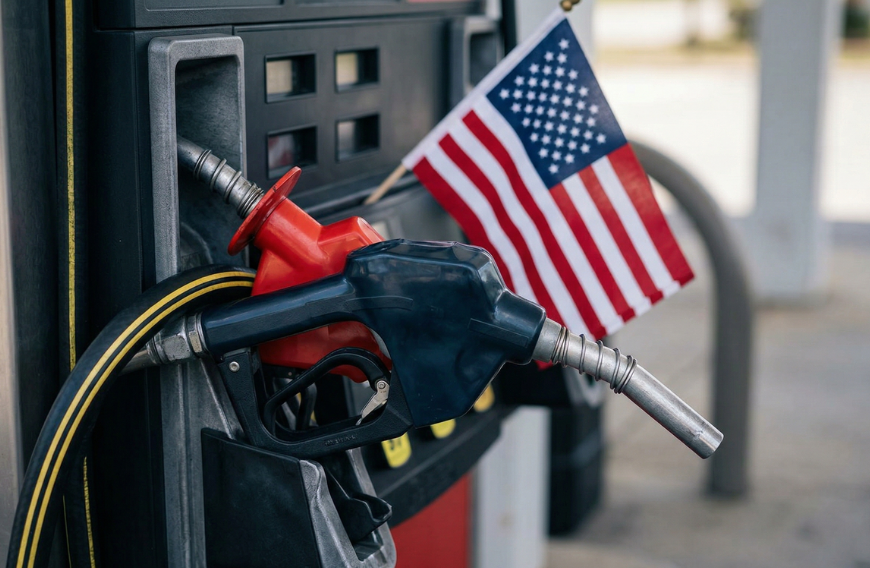
President Donald Trump said he plans to reduce the federal gasoline tax as rising fuel prices driven by the Iran conflict place growing pressure on American consumers and businesses. “Yeah, I’m going to reduce,” Trump told reporters when asked whether he would suspend the federal gas tax. Asked how long the reduction would last, he replied, “Till it’s appropriate.”
The proposal comes as gasoline prices in the United States climbed to an average of about $4.52 per gallon, the highest level since 2022, according to AAA data cited by Reuters. The increase has largely been linked to supply disruptions and market fears surrounding the ongoing conflict involving Iran and continued instability around the Strait of Hormuz, a critical global oil shipping route.
READ: Airfare alert: US–Iran tensions send jet fuel prices above $100 (April 21, 2026).
The federal gasoline tax currently stands at roughly 18 cents per gallon and helps fund road repairs and transportation infrastructure through the Highway Trust Fund. Any suspension or reduction would require congressional approval.
Republican Senator Josh Hawley said he plans to introduce legislation supporting a temporary gas tax suspension, aligning with Trump’s push for consumer relief ahead of the peak summer travel season.
The proposal has also exposed unusual bipartisan overlap. Earlier this year, some Democrats, including Senator Mark Kelly, floated similar temporary tax relief measures as fuel prices began rising. Trump’s comments come amid broader economic concerns tied to energy prices, inflation, and geopolitical instability. The administration has already taken additional steps to stabilize fuel markets, including releases from the Strategic Petroleum Reserve and temporary regulatory adjustments to fuel transportation rules.
READ: Oil prices rise again amid US-Iran deadlock (April 28, 2026).
Energy analysts, however, cautioned that suspending the federal gas tax may provide only modest short-term savings for consumers if oil supply disruptions continue.Critics also warn that reducing the tax could weaken funding for highways and infrastructure projects. The federal gas tax has remained largely unchanged since the early 1990s, even as infrastructure costs and vehicle efficiency have evolved significantly.
Several U.S. states, including Indiana, Kentucky, and Georgia, have already temporarily reduced state-level gasoline taxes in response to rising prices at the pump. The debate over fuel taxes is expected to intensify in Congress in the coming weeks as lawmakers weigh consumer relief against infrastructure funding concerns during an election-sensitive economic period.