



By Kashmira Konduparty
Foreign ministers from the Quad nations — India, the United States, Japan and Australia —met in New Delhi, India on Tuesday as the grouping sought to reinforce its strategic relevance amid rising geopolitical tensions in the Indo-Pacific region.
The meeting focused on maritime security, economic cooperation, technology partnerships and China’s growing regional influence, according to a report by Reuters. The talks come as the Quad attempts to expand beyond security dialogue into broader economic and technological cooperation.
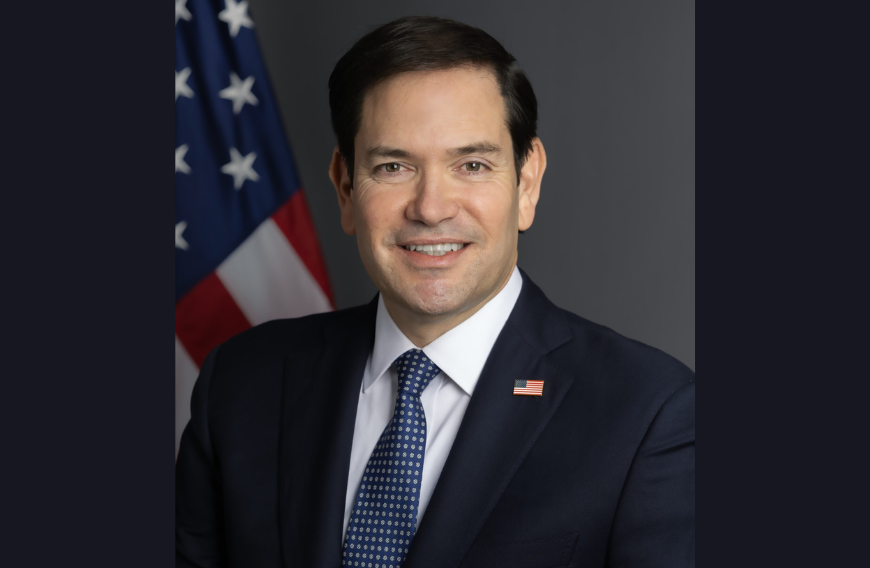
The meeting included India’s External Affairs Minister Subrahmanyam Jaishankar, U.S. Secretary of State Marco Rubio, Japanese Foreign Minister Takeshi Iwaya and Australian Foreign Minister Penny Wong. Officials discussed strengthening coordination on regional security and supply chain resilience.
READ: The Karbala moment: Iran, Trump’s bluff, and the conscience of a silent world (April 20, 2026)
Although the Quad avoided directly naming China in parts of its official language, discussions centered heavily on Beijing’s expanding military and economic influence. The ministers reportedly discussed freedom of navigation, tension in the South China Sea, cyber threats and regional infrastructure competition. Analysts say the Quad increasingly functions as a strategic counterweight to China in the Info-Pacific.
Officials emphasized cooperation in critical technologies, artificial intelligence, semiconductor supply chains, clean energy and disaster response. The grouping had been attempting to show practical economic and developmental relevance beyond military coordination. Leaders also discussed strengthening cooperation on undersea cables and telecommunications infrastructure.
Hosting the meeting highlights India’s growing role in Indo-Pacific diplomacy and global strategic partnerships. India has increasingly balanced security cooperation with Western allies, while maintaining strategic autonomy in relations with countries including Russia. New Delhi continues positioning itself as a key player in regional power dynamics.
Analysts say the Quad still faces questions about its long-term structure and effectiveness. Unlike NATO, the Quad is not a formal military alliance and lacks binding defense commitments. The member nations also maintain differing economic relationships with China, sometimes limiting how aggressively the group acts collectively.
The Quad was first formed in 2007 but became more active in recent years amid growing concerns about China’s regional influence. The alliance initially focused heavily on maritime cooperation and security exercises. It later expanded into areas including vaccine distribution, infrastructure, cybersecurity and emerging technologies.
The meeting comes during increasing competition between the United States and China over trade, technology, military influence and supply chains. Indo-Pacific partnerships have become central to U.S. foreign policy strategy in Asia. Regional nations are also navigating economic dependence on China while strengthening security ties with Western allies.
The New Delhi meeting reflects ongoing efforts by the Quad nations to strengthen cooperation in an increasingly contested Indo-Pacific region. As geopolitical tensions continue rising, the grouping is seeking to present itself as both a security partnership and a broader platform for regional economic and technological collaboration.