



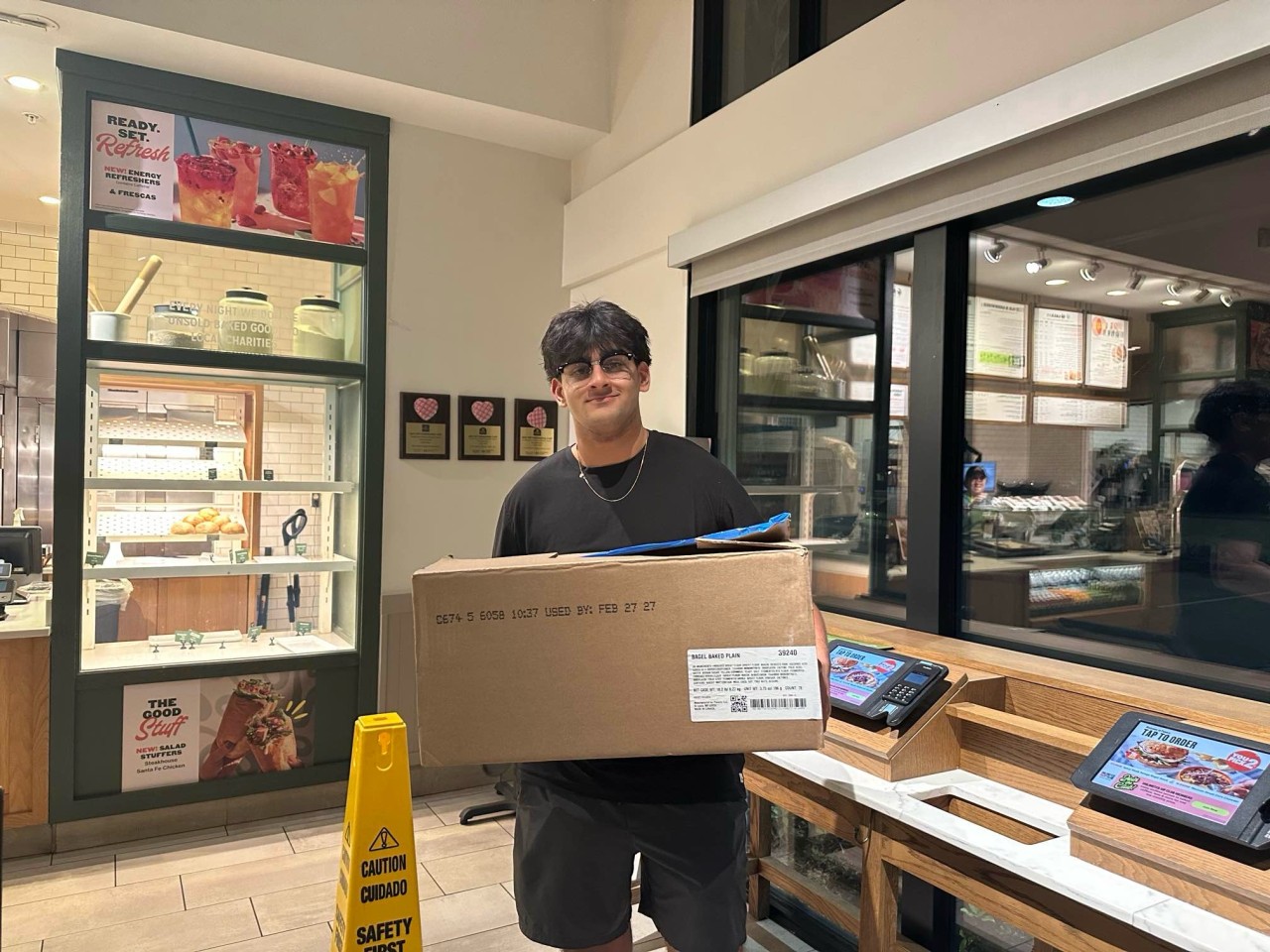
While most high school students are focused on navigating final exams, college applications and sports, Florida-based Indian American student Shaan Guru is operating on a completely different frequency. As the founder of the Green Guru Project, a registered 501(c)(3) nonprofit, Guru is tackling two of the world’s most interconnected global crises — food insecurity and environmental sustainability.
Driven by a global perspective shaped by his Indian American heritage, Guru has built a scalable ecosystem that bridges grassroots community aid with cutting-edge clean technology. Through a strategic partnership with Panera Bread’s Day-End Dough-Nation program, his nonprofit has already redirected over 750 kilograms of surplus food away from landfills and onto the plates of underserved communities. For the food that cannot be recovered, Guru utilizes advanced ZEUS biodigester technology to convert organic waste into renewable energy and high-grade fertilizer.
Yet, sustainability is only one piece of Guru’s vision. Recognizing that long-term community empowerment requires economic literacy, he has launched multi-lingual financial literacy initiatives across Florida, teaching important economic concepts in English, Spanish, and Portuguese. With plans to expand these financial programs to Mumbai by 2028, offering sessions in both Hindi and Gujarati, Guru is proving that youth-led innovations stand a chance with dedication and hard work.
The American Bazaar sat down with Shaan Guru in an exclusive interview to discuss the logistics behind his food rescue systems and how his cultural background influences his approach to environmental tech.
The American Bazaar: At just 17, you’ve launched and grown a registered nonprofit. What inspired you to start the Green Guru Project?
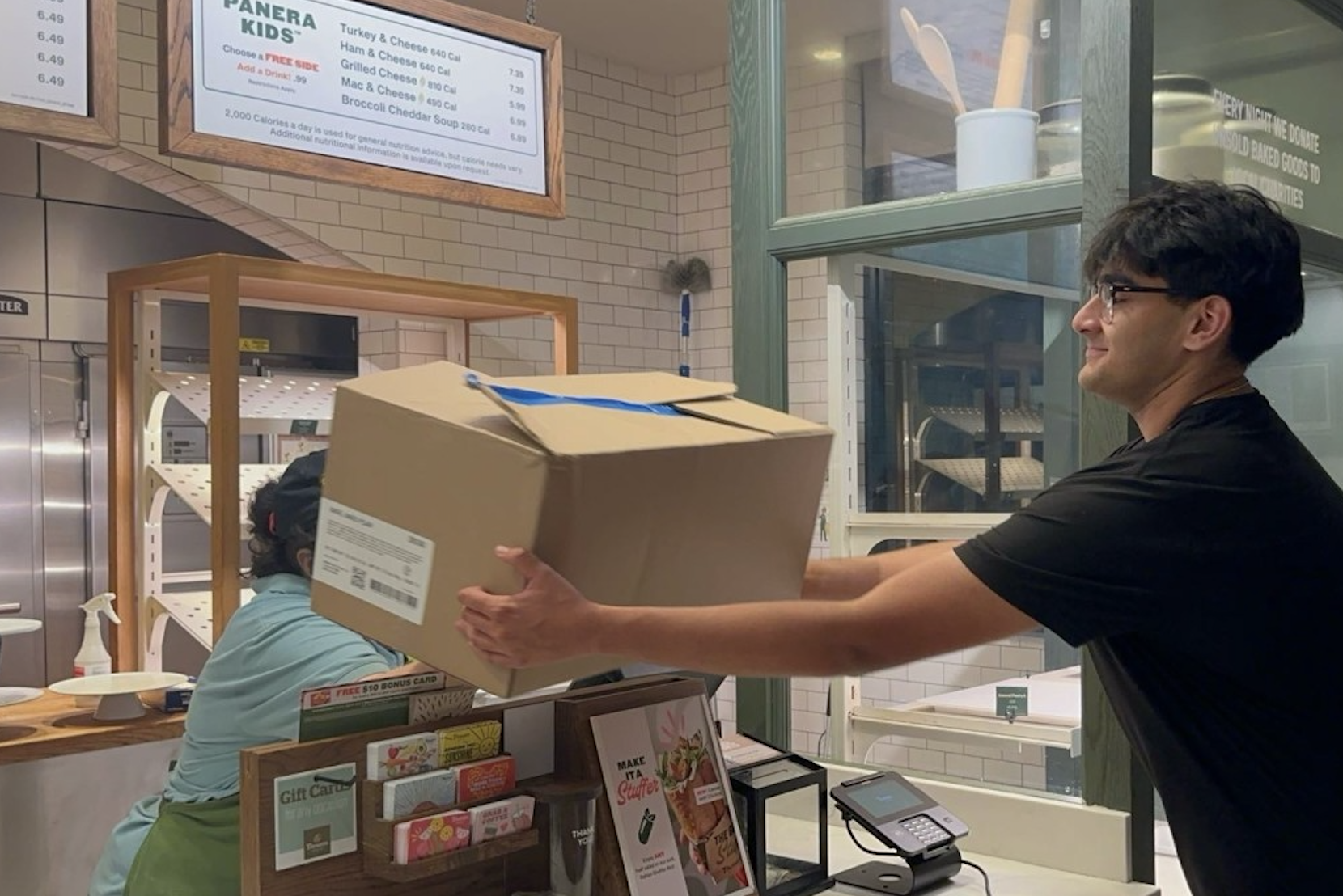
Shaan Guru: The inspiration behind the Green Guru Project was one day I was sitting outside Panera [Bread], and I noticed as they closed, a lot of the food was being thrown away. And then this led me to have the realization, there’s so much food waste, what are we doing with this food? I located a program that they have called the ‘Panera Day-End Dough-Nation’, which allows if you’re a 501(c)(3), you can pick up the food and donate it somewhere.
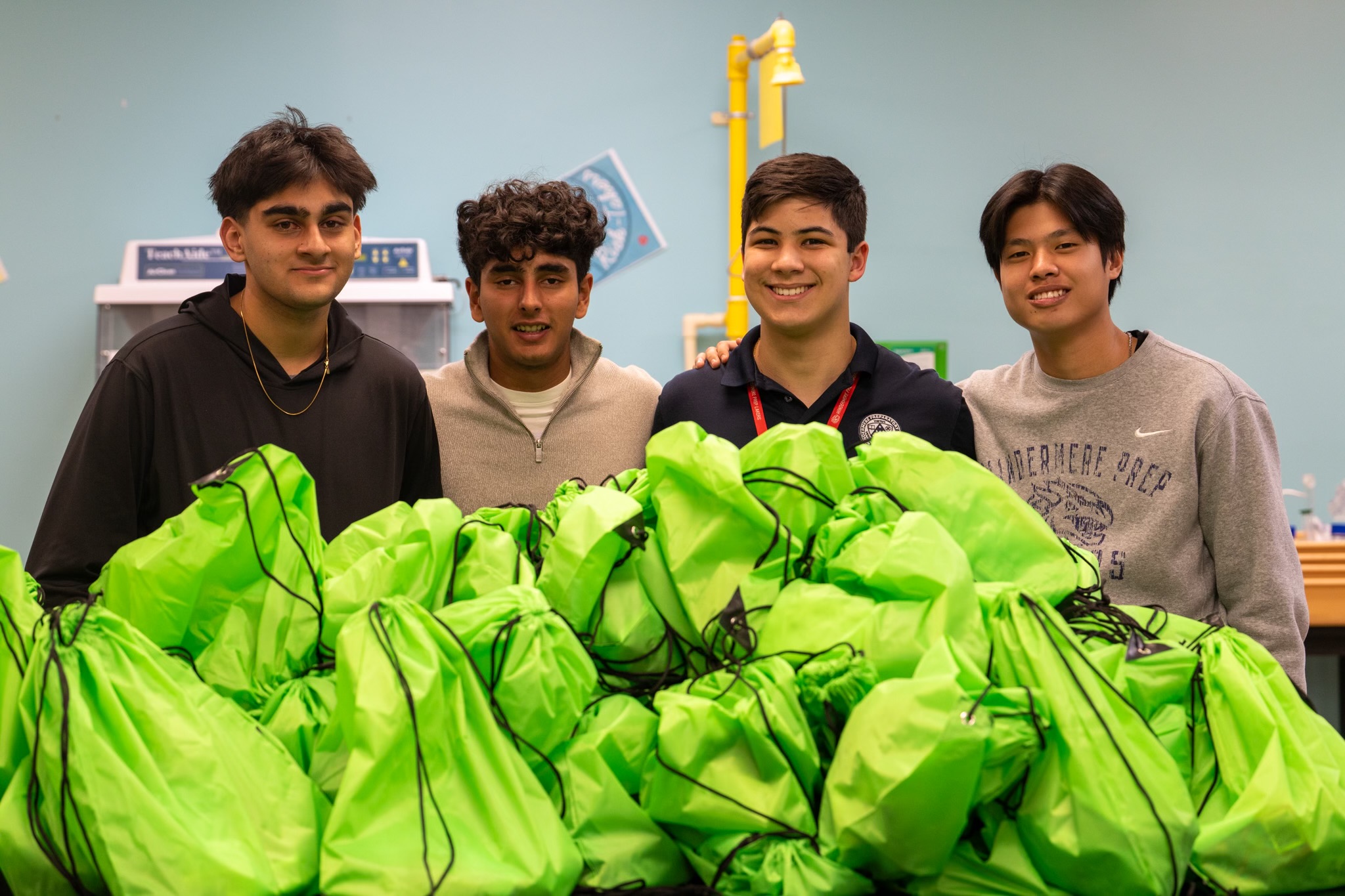
So, then I located a community food fridge for those in need in downtown Orlando. And I started facilitating a weekly pickup drop off system. And then I got my friends and other volunteers involved.
And since then, we’ve just taken off and expanded this initiative across Florida.
How did the collaboration with Panera Bread’s ‘Panera Day-End Dough-Nation’ project happen?
I talked to the Orlando operator of the Panera. I called him and he told me that in order to be authorized to do the pickup, you have to have a 501c3 organization. So that led me to actually start the nonprofit.
And then after that, I was authorized to have waivers to sign volunteers to pick up the leftover food. Then we located another NGO called the Neighbourhood Fridge, which is a community fridge. And this allowed my friends and I, we would start systems that have one day someone would drive, the other day someone would drop it off and vice versa. And it just kept going.
You mentioned your friends work with you, how many members are on your team actively working with you on this project?
In Florida, we have about 10 of us. It’s me and then nine of my classmates. And then we’re also trying to get my friends in other countries and other states in the U.S. to work on their own service initiatives based off of the pillar of sustainability.
You’re redirecting over 750 kilograms of food with Panera Bread, what was the hardest operational hurdle you had to clear to make that system actually seamless?
so obviously it looks very nice when it’s said and done with the 750. But there was a lot of work that went into this because at first it was hard to find the Orlando operator to even call him.
That was the first logistical hurdle that I conquered. And then after that, for a very long time, it was just me doing the pickup. And I noticed, OK, we’re just doing it once a week.
READ: Vinod Khosla tops 2026 Forbes Midas List with 17 Indian Americans (June 5, 2026)
That’s not enough because we need to get more, then I started putting flyers around my school and calling my friends who could drive too. And then that led to more donations.
And then we started to figure out a rhythm. And then we made a spreadsheet where we had someone doing a pickup one day, another one doing another day, and a group chat. And another issue would be it took a lot of work to actually get other Panera Bread locations because it’s a chain. we had to fill out several waivers to get multiple, and I’m honored to have such a great community.
Was there a particular moment or experience that made you realize food waste and sustainability were issues you wanted to tackle?
I actually learned in year 9 or 10 in school about the UN Sustainable Development Goals, where I learned that upcycling and food waste and landfill waste are deeply rooted in sustainability. And the two are intertwined, this means that one of the aspects of sustainability is reducing waste that could have gone to people who need it. So that’s a big pillar of how I facilitate my life and making sure that I’m not wasting any food and that everything can be upcycled.
How and why did you realize financial literacy is tied to these environmental concerns?
After we initiated the Panera program, we evolved more because we wanted to say, what more can we do in my local community to create change? And I noticed that we have a lot of people who move from South America, Asia, and specifically Brazil and Colombia. And these people come without learning the key facilities of the United States. And my parents had the same struggle when they initially moved, was not knowing a lot of the key concepts with the financial literacy and taxes and budgeting.
And I wanted to help teach these people these lessons. And it makes you realize that sustainability isn’t just the greenery and the trees, but also creating lasting skills that can ensure humanity lasts. And that was essentially what went through with financial literacy, because in order to thrive as a community, we have to have people who are well-equipped to preserve our economy.
Why was it vital for you to break the language barrier by teaching this in multiple languages rather than just English?
I think that it hit more home for these people because a lot of them were migrants from Brazil and Colombia. And when we speak in English to them, yeah, they’ll listen, but it’ll feel more welcoming and inclusive when we speak in their home language. And this really was inspired by my friend’s father, who was a Brazilian immigrant, and he first moved.
And when my friend moved from Brazil initially, he didn’t speak any English at all. And I wanted to communicate with him. That was when I was maybe five or six years old, he’s my next-door neighbour still to this day. And that’s what inspired me to actually learn Portuguese.
And then we had the same philosophy. How can we help other people who are moving from Brazil, Colombia and other countries? It’s about inclusivity.
How has your experience as an Indian American shaped your approach to solving these global challenges?
I think it’s a privilege because it’s amazing to be both, Indian and American, because I grew up in the U.S.
However, I always have my Indian roots back in Gujarat, that’s a Gujarati in Mumbai. And I frequently travel to India and participate in volunteering events. And it’s really amazing because I also attend an international school where there are many people of many different cultures, such as Americans, Brazilians, Mexicans and Indians and Chinese.
And it’s really amazing because we all work together on different projects and learn more about each other’s cultures, which allow us to be more globally minded.
You are working with ZEUS biodigester technology, how did you come across this concept to approach them?
The Ecotone Zeus was an amazing concept because it aligns directly with our mission and the UN Sustainable Development Goals. We first read about the company in a local newspaper and learned that it was looking for partners to help expand into Florida. We thought, ‘We have Disney World here. We have universities and other places that generate significant amounts of waste. We need to bring this machine near one of them to create an effective upcycling system.’
I reached out to the company by email, and we agreed that both sides would look for grant opportunities. They secured a grant with Walt Disney World, and I helped secure one through Target.
That provided some initial funding, and we are still raising money to bring the Zeus zero-emission upcycling system to Orlando.
The system takes landfill waste and converts it into soil products and renewable energy, creating a sustainable alternative to traditional waste disposal.
Did you have any issues regarding people not taking you seriously considering your age when you approached them with your ideas?
Yeah, that was the initial issue with the Orlando operator at Panera. Because the first time I called them, they heard my voice and they hung up immediately because they must’ve thought it was a prank call or something of those lines. Then I had to go there in person and explain myself with a little slideshow.
And then they were willing to listen. But I would agree that age is definitely a limiting factor, but we can’t let it stop us, we have to be persistent.
Do you see the Indian diaspora playing any larger role in solving this global issue like sustainability, hunger, financial inclusion?
I think that it’s definitely there’s a lot of people who are Indian or have Indian origins that partake in these projects. And it’s really amazing, not just in Florida, but there are Indian people all over the United States.
READ: Boston University student and CJP founder Abhijeet Dipke heads to India to lead NEET protest (June 5, 2026)
You know, the Middle East, Asia, Singapore, everywhere. And it’s really amazing because we’re all playing a role in some sort of way, making an impact even as Indians abroad.
Apart from Panera Bread, have you collaborated with others and do you have any future collaborations in mind?
One collaboration we had was with the Chicago Bears, the American football team. Their charity runs a coat drive because it’s a cold region. I helped sponsor and promote their coat drive.
That was one of the initial partnerships. We have the Panera Collaboration Neighbourhood Fridge. And then I’m hoping to collaborate with whatever university I go to grow my mission and secure more funding.
And then we also have a local temple and a church. we’re going to work with both of those to get more volunteers and facilitate more projects
What is the ultimate long-term ecosystem you hope to build through the Green Guru?
I hope to keep scaling the Green Guru project.
Even when I leave for university, I want to make a lasting impact on my local Florida community. We’re building a Green STEAM app, sign up to do the Panera program to make sure that we keep doing that program in our local area. And then in terms of when I go to university, I hope to keep scaling the Green Guru project, opening more members, more chapters and opportunities for volunteers to get involved and facilitate more projects that make us create a greener earth with economic growth.