



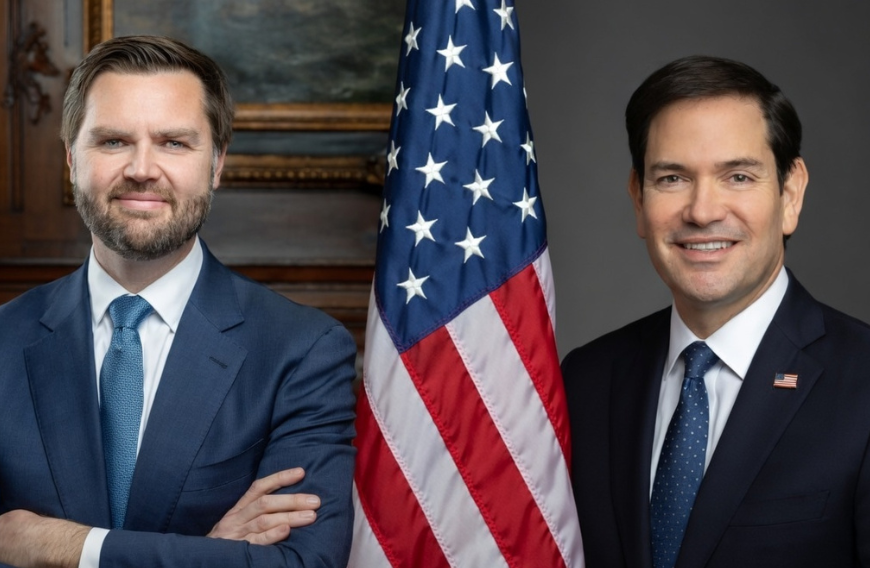
When we left Round 3 of this series, Marco Rubio remained ahead of JD Vance, but the political trajectory had begun to change. Rubio held a narrow advantage because of his experience, his position as Secretary of State, and his ability to appeal to multiple factions within the Republican Party. However, Vance had gained significant momentum by turning Medicaid fraud, government accountability, and taxpayer protection into a broader political argument that connected strongly with the Republican base.
The score after Round 3 stood at Rubio 4, Vance 3, but the gap was narrowing and many of the forces that shaped Republican politics appeared to be moving in Vance’s direction.
The past six weeks have altered that dynamic.
The important development in Round 4 is not that Rubio suddenly emerged as a new contender. Rubio was already ahead. The change is that Vance’s momentum has slowed, and some of the issues that previously strengthened his position have created new political challenges. At the same time, Rubio has benefited from a series of developments that reinforced the qualities that have always been his greatest strengths: experience, foreign policy credibility, institutional relationships, and the ability to operate as a governing figure rather than simply as a political communicator.
The result is a reversal of the trend. The defining issue of this round has been Iran.
In Round 3, Vance demonstrated his ability to take a complex policy issue and turn it into a political message. His focus on Medicaid fraud allowed him to present himself as the defender of taxpayers and the leader of a broader effort to reform government. In June, he attempted to expand that profile into foreign policy by becoming one of the administration’s most visible voices supporting its approach toward Iran.
Read the Vance vs Rubio series by Sreedhar Portarazu
For Vance, the Iran initiative represented a significant opportunity. A successful diplomatic outcome would have given him something few potential presidential candidates possess: a major foreign policy accomplishment early in his national career. It would have allowed him to argue that an America First approach could reduce global conflicts while still achieving strategic objectives.
The political risk, however, was that success and failure would both become associated with him.
As uncertainty grew over the durability of the Iran agreement and questions emerged about whether Tehran would make the concessions necessary for a lasting resolution, the initiative became more complicated politically. The issue was no longer simply whether diplomacy could work. It became a question of whether Vance had moved too quickly in presenting a potential breakthrough before the details were secure. Now the cease fire is dead and we are back at war
This is where Rubio benefited from a different approach.
Rather than becoming the central political defender of the Iran initiative, Rubio maintained the posture of a traditional Secretary of State. His focus remained on America’s alliances, regional stability, and the importance of ensuring that any agreement with Iran produced verifiable results rather than temporary promises. For Republican voters who remain skeptical of Tehran and concerned about maintaining American credibility abroad, Rubio’s cautious approach appeared increasingly attractive.
The contrast between the two men became clearer throughout June. Vance represented the newer populist approach to foreign policy, emphasizing restraint, negotiation, and avoiding unnecessary military commitments. Rubio represented a more traditional conservative foreign policy philosophy centered on alliances, deterrence, and the belief that American influence depends on maintaining credibility around the world.
Read the Vance vs Rubio series by Sreedhar Portarazu
The significance of this debate extends beyond Iran because it represents a larger question facing Republicans after Trump. The party must decide whether its future nominee should primarily represent the movement’s political energy or whether the nominee should combine that energy with the experience required to manage the responsibilities of the presidency.
Vance remains extremely effective at representing the first argument. He has a direct connection with the Republican base, understands the frustrations that fueled Trump’s rise, and has become one of the party’s strongest communicators. His ability to frame political debates around issues such as government waste, cultural change, and economic anxiety remains a major advantage.
Vance also attempted to expand his political profile during this period through the release of his new memoir, “Communion: Finding My Way Back to Faith.” Unlike “Hillbilly Elegy,” which introduced him as an interpreter of working-class struggles, this book focuses on his personal journey from skepticism and uncertainty toward Catholicism and faith. The timing of the book’s release was politically significant because it reflected an effort by Vance to broaden his public identity beyond economic populism and position himself as a leader shaped by deeper cultural and religious convictions.
The book also illustrates the complexity of Vance’s political moment. His appeal has always come from his ability to connect personal experience with larger arguments about American society, but moving from a movement leader to a potential president requires appealing to a broader coalition. “Communion” represented an effort to add another dimension to that narrative by presenting Vance not only as a political figure but also as someone engaged in a personal search for meaning and purpose.
Rubio, however, has continued to build a broader coalition. His advantage has always been his ability to occupy political territory that few Republicans can reach simultaneously. He maintains credibility with traditional conservatives, has strengthened his relationship with the Trump movement, and possesses foreign policy experience that becomes increasingly valuable when voters begin thinking about presidential leadership rather than simply political alignment.
Read the Vance vs Rubio series by Sreedhar Portarazu
The early July comments from billionaire investor Ken Griffin added another important signal in the race. Griffin’s preference for Rubio over Vance did not determine the future of the Republican Party, and one donor cannot decide a presidential nomination. However, the significance of the comments was symbolic because they represented a growing willingness among influential Republicans to consider alternatives to Vance rather than treating his path to the nomination as inevitable.
That perception matters because presidential campaigns are shaped long before voters cast their first ballots. Donor networks, elected officials, policy advisers, and activists begin making calculations years in advance. A candidate who appears unstoppable gains additional support, while a candidate whose momentum slows must prove that the setback is temporary.
That is the challenge facing Vance after Round 4.
He has not lost his political strengths, and he remains the sitting vice president with a powerful connection to the Republican base. However, the past six weeks have demonstrated that being the most visible advocate for a policy position also means becoming responsible for defending its results.
Rubio’s strength has been different. He has allowed his responsibilities to build his profile. While Vance has often been the administration’s most prominent political voice, Rubio has increasingly been viewed as someone managing complex challenges and preparing for the responsibilities of higher office.
After Round 3, Vance was closing the gap.
After Round 4, that momentum has slowed.
The score now stands at Rubio 4 and Vance 2, reflecting a race that remains competitive but has shifted back in Rubio’s favor. The battle for the future of the Republican Party is far from decided, but June and early July demonstrated an important lesson in presidential politics: visibility can create opportunity, but governing credibility often determines longevity.
Round 1: Vance vs Rubio: Who will grab the ring from Trump?
Round 2: Vance vs Rubio: The Anteambulo strategy
Round 3: Vance vs Rubio: Medicaid fraud, India, and the battle for the GOP’s future