



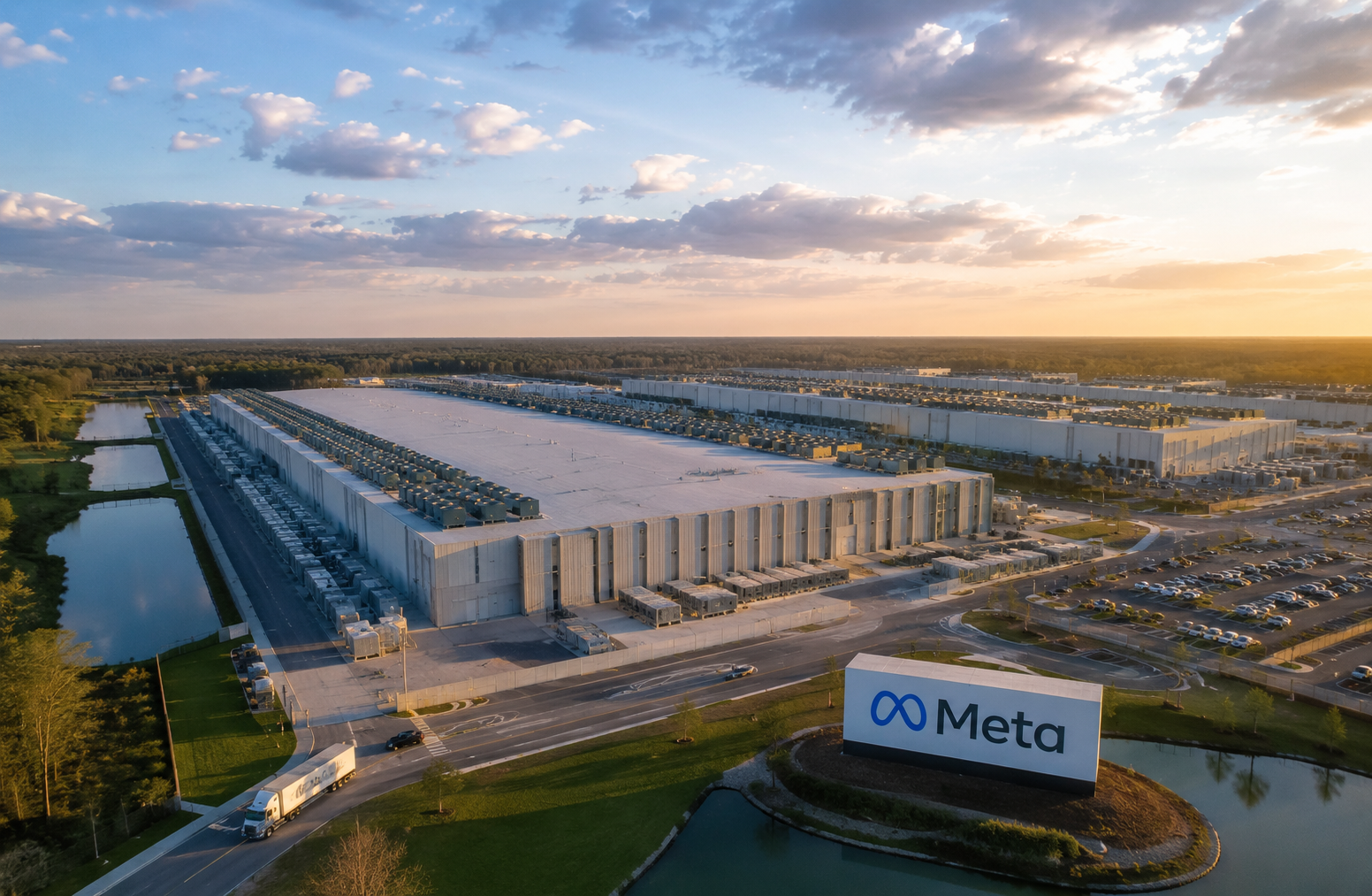
Meta’s massive artificial intelligence data center in rural northeastern Louisiana has become a symbol of the extraordinary infrastructure race unfolding behind the rapid expansion of AI, with the project drawing scrutiny over its scale, energy needs, financing arrangements and the secrecy surrounding the deal that brought it to the region.
The project, known as Hyperion, is expected to represent an investment of more than $50 billion and span nearly 10 million square feet, making it the largest data center in Meta’s global fleet. The facility is designed to provide 5 gigawatts of computing capacity for AI workloads, including the training and development of large AI models.
The development has transformed Richland Parish, a predominantly rural area in northeast Louisiana, as Meta and its partners build the infrastructure required to support increasingly power-intensive AI systems.
The scale of the project has also raised questions about how the deal was negotiated. According to reporting reviewed for the story, Meta representatives, Louisiana Gov. Jeff Landry’s administration, local officials and energy company Entergy worked on the agreement for months before the project was publicly announced. The negotiations were conducted with a high degree of secrecy, allowing the parties to move quickly on a project that officials have presented as a major economic opportunity for the state.
Landry has defended the secrecy surrounding the negotiations, saying officials needed to move quickly to secure the investment and arguing that greater transparency could have jeopardised the deal.
READ: Meta set to finalize $30 billion financing deal for Louisiana data center (October 17, 2025)
The project’s enormous energy requirements have become another source of debate. Meta’s expanded facility is expected to require a power supply on a scale rarely seen for a single industrial project. The company has worked with Entergy to develop an energy arrangement intended to support the data center’s operations. The broader expansion of AI infrastructure has prompted growing concerns about pressure on electricity grids and the cost of new power generation.
Meta has said the project will provide significant economic benefits to the region. The company estimates that construction could support more than 7,500 jobs at peak activity and that the completed facility will support about 1,000 operational roles. Louisiana officials have also highlighted investments in local infrastructure and economic development associated with the project.
But the rapid development has also created challenges for some residents. The arrival of large numbers of construction workers has increased demand for housing in the area, contributing to higher rents and pressure on local accommodation, according to reporting on the project.
The Louisiana project illustrates the increasingly complicated trade-offs surrounding America’s AI boom. Technology companies are racing to build computing capacity as demand for AI services grows, but the infrastructure required to run those systems requires vast amounts of electricity, land and water, while also placing new demands on local communities.
Meta’s decision to expand Hyperion from an earlier projection of more than 2 gigawatts to 5 gigawatts underscores the pace of that growth. The company has said the expansion will make the Louisiana campus its largest AI infrastructure site and one of the biggest data centers ever built.
Meta’s Louisiana AI data center upends local community (November 25, 2025)
For Richland Parish, the project could bring long-term investment and employment to a region that has historically had fewer large-scale economic opportunities. But the development is also forcing residents and policymakers to confront questions about who ultimately benefits from the AI infrastructure boom, who bears its costs and how much public oversight should accompany projects of unprecedented scale.
As Meta continues construction, the Hyperion data center is likely to remain a test case for how the United States balances its push to lead in artificial intelligence with concerns over energy consumption, infrastructure, transparency and the impact of technology investment on local communities.