



Cultivating crops in arid climates often presents complex operational challenges for farmers, but coordinated robotic systems could soon provide essential support.
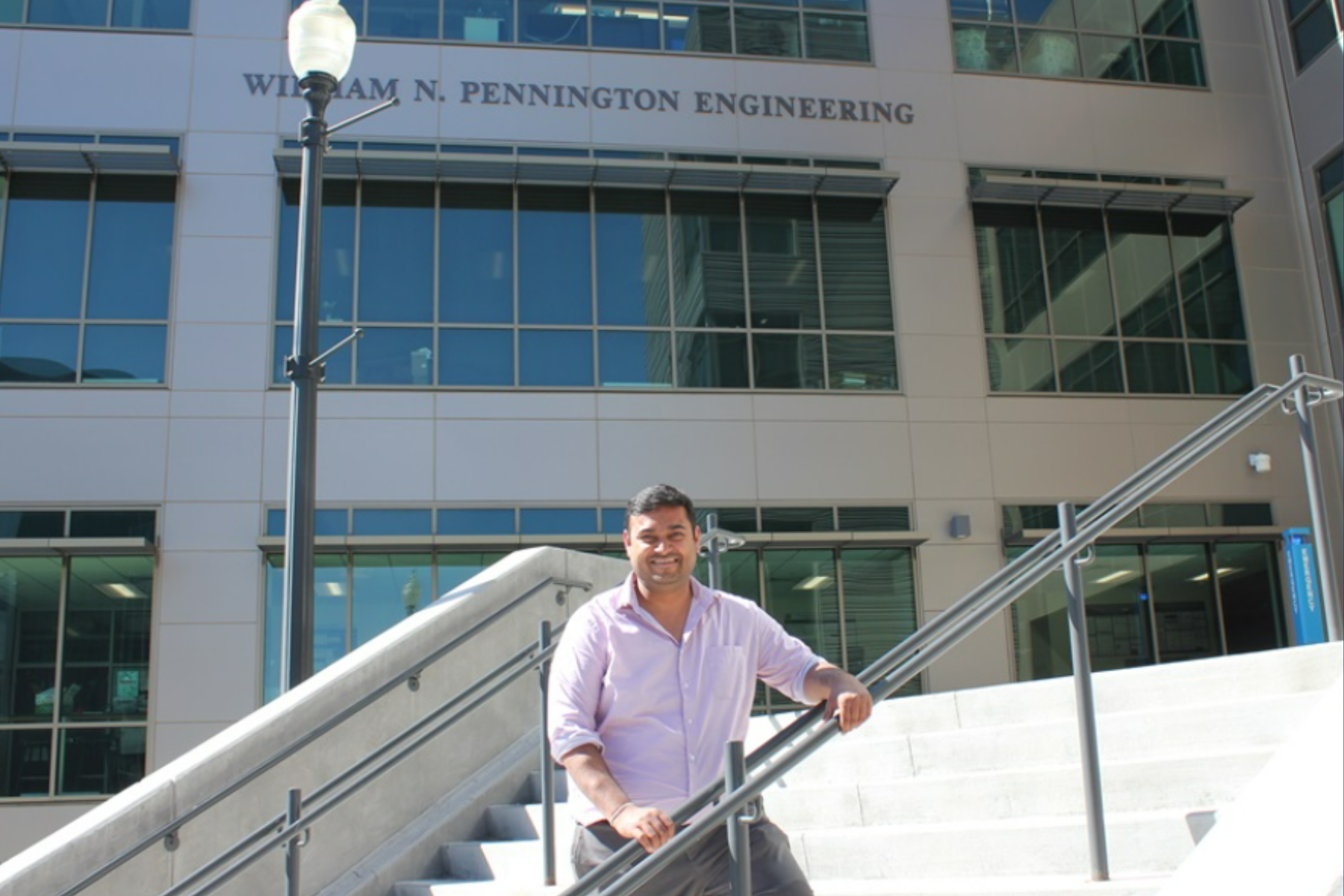
At the University of Nevada, Reno, Assistant Professor Parikshit Maini is leading a research initiative that pairs aerial drones with unmanned ground rovers to transform how agricultural producers monitor and manage fields.
Maini secured a five-year, $618,201 National Science Foundation CAREER Award to fund his project, titled “From Fields to Decisions: Planning and Sensing Cooperative Teams of Air and Ground Robots in Precision Agriculture.”
The Faculty Early Career Development Program recognition is the NSF’s most prestigious honor for early-career faculty who effectively integrate cutting-edge research with community outreach.
Read: Three Indian American researchers earn NASA awards for visionary technology concepts (July 31, 2026)
Maini’s academic foundation began in India, where he completed his Bachelor of Technology in Information Technology at Guru Gobind Singh Indraprastha University in 2012, followed by a Master of Technology in Computer Science and Engineering in 2014 at the Indraprastha Institute of Information Technology Delhi.
He remained at IIIT-Delhi to complete his PhD in Computer Science and Engineering in 2020. After completing his doctoral degree, Maini moved to the United States to work as a postdoctoral associate at the Minnesota Robotics Institute at the University of Minnesota from 2019 to 2023.
He joined the faculty at the University of Nevada, Reno in 2023, where he serves as an assistant professor in the Department of Computer Science and Engineering and directs the Systems and Algorithms for Robot Autonomy Lab.
Maini’s CAREER project addresses key technical hurdles in field robotics, such as battery limitations, unreliable wireless communications, and task unpredictability. In his setup, aerial drones gather top-down perspectives of crops while ground vehicles capture side views.
Read: Two Indian American digital trailblazers among 2026 TIME100 Creators
(July 24, 2026)
Combining these distinct angles generates comprehensive health models for individual plants, helping growers minimize excess fertilizer and pesticide application. To overcome limited flight times, the system allows drones to dock onto ground vehicles for mobile battery recharging during field surveys.
While agriculture remains a central focus, Maini noted that the core algorithmic capabilities apply to diverse fields, including national defense, infrastructure inspection, and space exploration.
In a separate initiative, he is collaborating with university colleagues to develop autonomous worker robots designed to prepare construction sites on the moon and Mars.
Rooted in his university’s land-grant mission, Maini actively involves students and local youth in robotics. He mentors university teams in national student design competitions and leads outreach efforts through 4-H programs, summer camps, and classroom visits across Nevada.