



Uber Technologies will cut about 3,300 jobs, or roughly 10% of its global workforce, in its largest round of layoffs since the COVID-19 pandemic as the ride-hailing company seeks to simplify its management structure and prepare for growing competition from autonomous vehicles.
The layoffs were announced on September 2, 2026, as Chief Executive Officer Dara Khosrowshahi told employees that Uber had become increasingly complex following years of rapid growth. The restructuring will eliminate management layers, combine teams and reduce organizational bureaucracy, according to Reuters.
Uber had about 34,000 employees worldwide at the end of 2025. The latest cuts therefore represent approximately one-tenth of its workforce. The company last carried out a larger workforce reduction in May 2020, when the pandemic-driven collapse in transportation demand led Uber to eliminate about 6,700 jobs.
Khosrowshahi said the restructuring is intended to make Uber faster and more efficient.
“A leaner organization will mean clearer ownership, faster decisions, and more time spent building rather than coordinating. It will also generate savings that we intend to reinvest in growth, innovation, and the capabilities that will matter most over the coming years,” he said in a message to employees.
The company plans to reduce by 20% the number of employees who are seven or more reporting layers below the CEO. It will also nearly halve the number of teams with only one or two direct reports and consolidate some teams under fewer leaders.
Uber is also changing its workplace policy. Fully remote positions will be limited to about 1% of the workforce, while the company will continue its policy requiring most employees to work from the office three days a week.
READ: Uber sells entire stake in Serve Robotics, citing ‘different goals’ (August 12, 2026)
Robotaxis reshape Uber’s strategy.
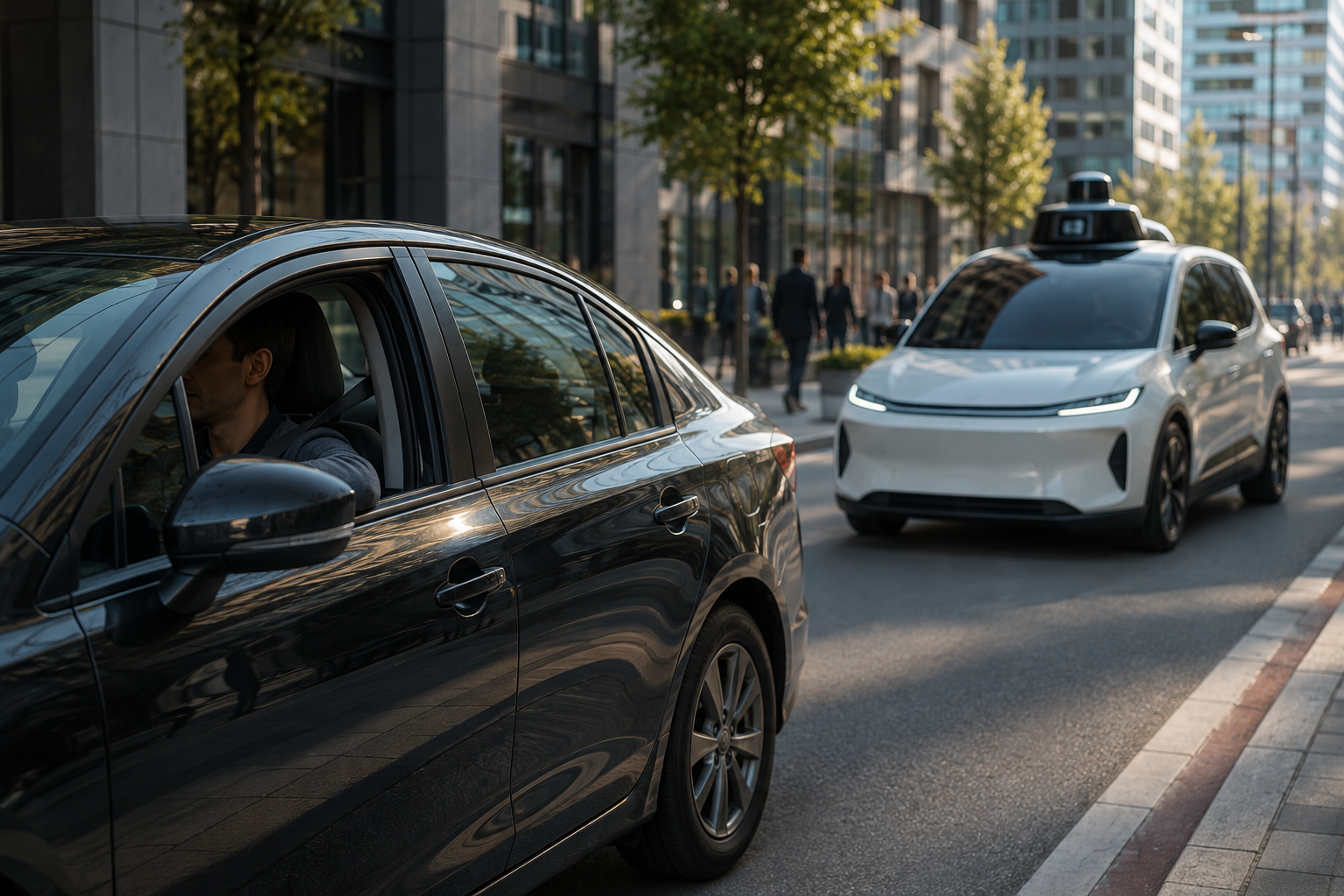
The restructuring comes as autonomous vehicles become an increasingly important part of Uber’s long-term strategy.
Waymo, the leading U.S. robotaxi operator, already operates vehicles through Uber’s platform in Austin and Atlanta, while expanding its own services into additional markets. Tesla and other autonomous-driving companies are also developing competing robotaxi networks.
That creates a potential challenge for Uber’s traditional business model, which relies on connecting passengers with human drivers. If autonomous vehicles take a larger share of the ride-hailing market, Uber could face pressure on its role as an intermediary between drivers and passengers.
Uber plans to invest more than $10 billion in robotaxis in the coming years. The company is backing autonomous-driving companies and positioning its platform as a marketplace for driverless transportation.
The shift could also change the type of workforce Uber needs.
“As AV tech and relationships grow and expand – there is a different type of employee needed to scale that business than one built around human drivers and all the cost to serve entailed with that, including management layers,” said Adam Ballantyne, an analyst at Uber shareholder Cambiar Investors.
Uber’s restructuring is not being presented as an artificial intelligence-driven layoff. Khosrowshahi did not blame AI for the job cuts, even as companies across the technology industry have reduced headcount while adopting AI tools and seeking productivity gains.
Uber is, however, facing rising AI-related expenses. According to media reports cited by Reuters, employees had already used the company’s entire 2026 AI budget within the first four months of the year.
READ: Uber to cut 10% of customer service roles citing AI (July 23, 2026)
Pressure beyond ride-hailing
Uber’s restructuring also reflects competitive pressure in its delivery business.
Uber Eats faces competition from DoorDash, Instacart and other local delivery platforms. Uber has sought to strengthen its position through acquisitions, including its $14.8 billion deal for Delivery Hero.
At the same time, Uber’s stock has underperformed the broader S&P 500 and rival Lyft this year, declining nearly 8% amid investor concerns about competition and the future of mobility. Uber shares rose nearly 2% following news of the restructuring.
The job cuts therefore come at a turning point for Uber. The company is seeking to reduce organizational complexity while redirecting resources toward autonomous transportation, technology and growth areas that could determine its position in the next phase of the mobility industry.
For employees, the restructuring represents one of Uber’s largest workforce reductions since the pandemic. For the company, it is an effort to build a leaner organization before robotaxis and other technology-driven changes fundamentally reshape the ride-hailing business.