



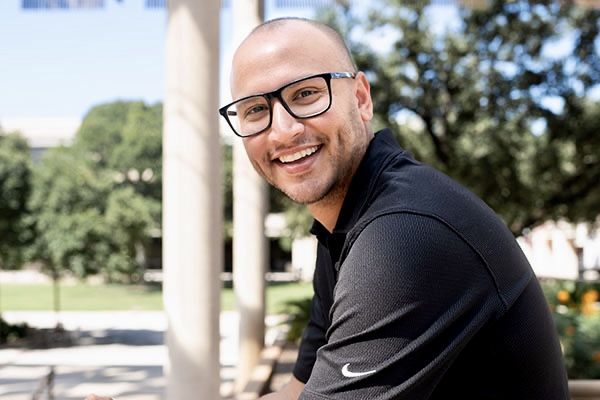
Arkajyoti Roy, an Indian American professor at the University of Texas at San Antonio, has received a $250,000 grant from the Cancer Prevention and Research Institute of Texas to improve AI-powered radiation therapy to revolutionize cancer care and healthcare equity.
“AI has obviously become very popular, and it is widely adopted in healthcare,” said Roy, interim chair and associate professor in the Department of Operations and Analytics in the Carlos Alvarez College of Business. “I think the part that hasn’t been really explored from a research perspective is how do we deal with errors and uncertainties from AI models.”
Radiation therapy is used to deliver high doses of radiation to cancer tumors while protecting nearby healthy organs. To do this safely, doctors must outline the tumor and organs on a patient’s computed tomography (CT) scan.
This step can be slow and requires skilled medical expertise, which can be challenging in underserved communities. These challenges are amplified in adaptive radiotherapy, which requires repeated imaging, re-contouring and re-planning throughout the treatment.
Read: Aeris names Indian American techie Suresh Sathyamurthy CMO (September 4, 2026)
AI tools can help by automatically outlining these structures. However, AI models often make mistakes when they are trained on limited datasets. These errors can affect the accuracy of the radiation plan and, in some cases, may lead to the tumor receiving too little radiation or healthy organs receiving too much.
“This project aims to make AI-guided radiation therapy safer and more reliable, especially for patients treated in clinics with limited resources. We will then use this information to create robust treatment plans that remain safe even when the AI-generated outlines are imperfect,” said Roy.
The first step of this two-year multidisciplinary effort involves increasing the volume and diversity of data that the AI model receives and estimating the confidence level of the model. They will test this approach using head-and-neck cancer cases, which are especially challenging because tumors are close to critical organs.
“We will develop an AI model that is not just going to take into account historical CT scans,” he said. “We’ll train it by including diverse data sources like doctor’s handwritten notes. This is a newer version of AI called vLLMs.”
Read: Indian American professor Thimmasettappa Thippeswamy wins Zoetis Research Award (September 1, 2026)
Vision-based LLMs or vLLMs can input images and videos in addition to text in the standard AI model. Roy will use both open source data as well as local data from Mays Cancer Center to improve the accuracy of the model.
“If successful, this work can fill a critical gap in radiation therapy,” said Roy. “It will improve the quality and consistency of radiation treatment and reduce disparities in cancer care across Texas and beyond. We don’t want to replace clinical judgment, but support them in making those decisions.”
Roy’s research interests focus on the use of optimization under uncertainty and machine learning to improve end-user outcomes in healthcare and in sustainable services. In healthcare, he closely collaborates with clinicians to develop robust models for radiotherapy, data-driven tools for treatment evaluation and quality control, as well as scheduling models for diagnostics and operations.
Roy earned his PhD from the School of Industrial Engineering at Purdue University and conducted research as a visiting research fellow in the Department of Industrial Engineering and Management Sciences at Northwestern University.