



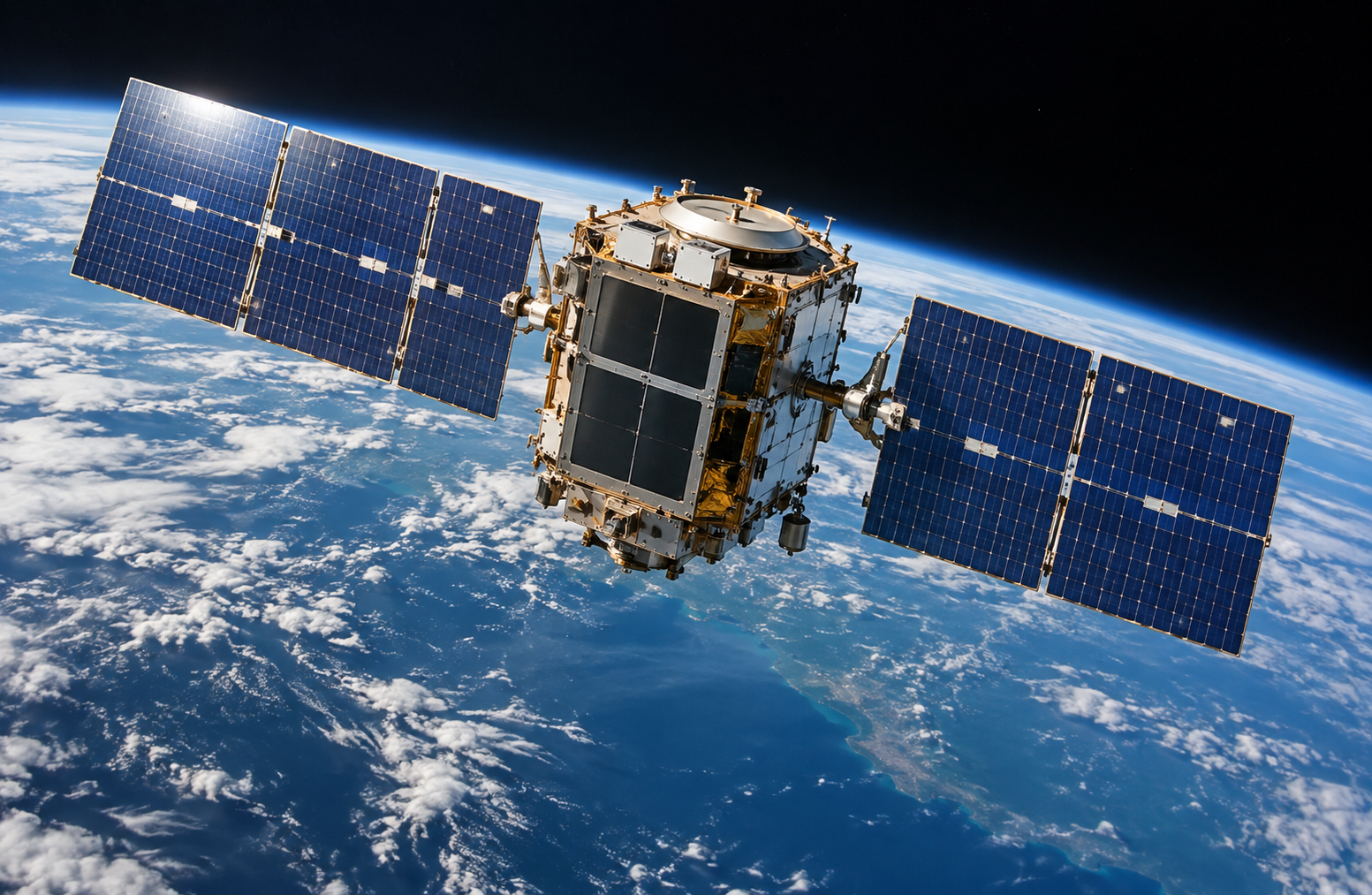
Google plans to launch a prototype satellite next week to conduct its first in-orbit test of artificial intelligence chips under Project Suncatcher, a research effort exploring whether large-scale AI computing infrastructure could eventually operate in space.
The mission will send a satellite carrying Google’s Tensor Processing Units (TPUs) into low Earth orbit aboard SpaceX’s upcoming Transporter-18 rideshare mission, in partnership with satellite company Planet Labs. The test will examine whether Google’s AI hardware can withstand the harsh conditions of space, including launch forces, radiation and extreme temperatures.
Google explores AI computing beyond Earth
Project Suncatcher is part of a broader push to investigate whether space could help address some infrastructure challenges created by rapidly expanding AI workloads.
READ: US bank allegedly fires 80 India employees in five-minute Google Meet call, Reddit user claims (September 17, 2026)
Companies including SpaceX and Starcloud are exploring concepts for data centers in low Earth orbit. Such systems could potentially take advantage of near-continuous sunlight for energy-intensive computing while reducing dependence on terrestrial electricity infrastructure.
Google has already tested its TPUs while running AI workloads at a facility at the University of California, Davis. However, the company says an orbital test is necessary to understand how the chips perform in the actual space environment.
One of the key concerns is radiation. Space radiation can disrupt or degrade electronic components and cause data errors known as bit flips. Google will also test how to remove heat from its power-intensive chips in space, where conventional air-based cooling does not work. The prototype will use a cooling approach combining heat pipes and radiators to manage the chips’ thermal load.
First mission is not an orbital data center
Google said the initial Suncatcher mission is designed primarily to gather in-orbit data and identify potential failure points. It is not intended to demonstrate a fully operational data center in space.
The company plans additional testing in 2027, including the launch of two satellites to examine high-bandwidth laser communications. Such links could eventually be used to connect computing clusters operating in orbit.
READ: DOE finalizes $1.9 billion loan to restart Iowa nuclear plant backed by Google (September 9, 2026)
The commercial viability of orbital AI infrastructure remains uncertain. Reuters reported that high launch costs, engineering constraints and bottlenecks in satellite production could keep the technology years away from commercial deployment.
The Suncatcher experiment nevertheless represents Google’s effort to investigate a potentially new architecture for AI computing as demand for processing power and electricity continues to grow.