



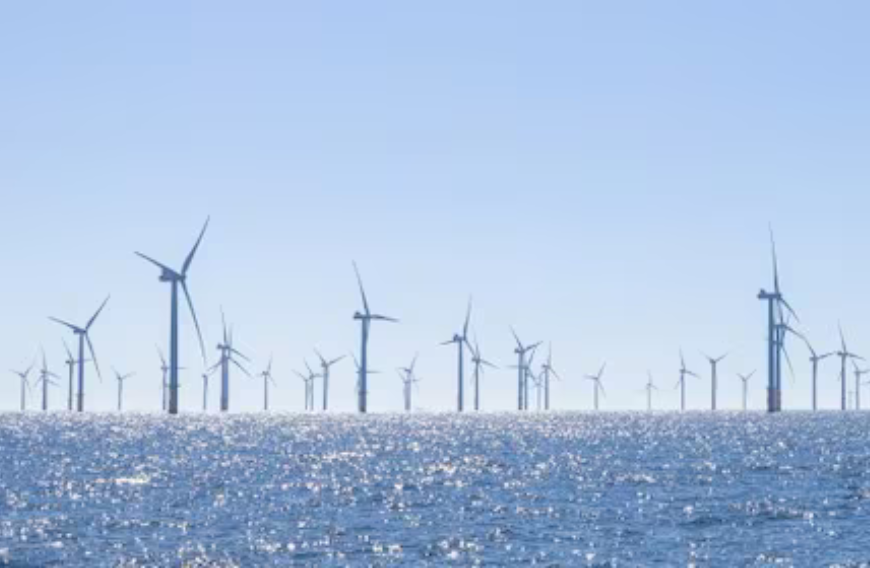
President Donald Trump has suffered a setback on his anti-climate change agenda. A federal judge on Monday struck down Trump’s sweeping ban on new wind power projects in the U.S., a major victory for an industry that has been singled out by the White House since the administration’s first day.
In early 2025, President Trump issued an executive order that effectively halted the development of new wind energy projects on federal lands and in federal waters. The order suspended leasing, environmental reviews, and permitting for both onshore and offshore wind construction.
The administration framed the move as part of an energy policy shift favoring fossil fuels and reducing what Trump described as “harmful and unnecessary” renewable energy mandates. As a result, multiple offshore wind projects, some already years into planning, were frozen, and several companies warned of major financial losses and job disruptions.
READ: Shell US president calls Trump’s offshore wind freeze ‘very damaging’ (
The policy faced immediate legal challenges from states, clean energy groups, and developers who argued that the president lacked the authority to issue such a sweeping halt without proper administrative procedure.
Judge Patti Saris of the U.S. District Court for the District of Massachusetts ruled that Trump’s ban is “arbitrary and capricious and contrary to law,” tossing out the president’s action in its entirety. But, the extent to which all permit reviews actually resumed immediately after the ruling is uncertain, as different agencies may have implemented the decision at different speeds. In addition, it is unclear how many of the paused offshore projects will ultimately restart, since some developers signaled they might withdraw due to financial risk.
The court decision was widely celebrated by environmental groups and renewable energy advocates, who viewed it as a crucial victory for the future of U.S. clean energy expansion. However, the degree to which the administration may use indirect measures, such as funding changes or altered review criteria, to slow wind development remains uncertain, leaving the industry cautious about long-term stability.
Trump issued a memorandum on Jan. 20 halting permits and leases for offshore and onshore wind farms, pending federal review. Saris said that federal agencies had failed to provide a reasoned explanation for such a drastic change in U.S. policy.
READ: US Judge directs better living standards at NYC immigration facility (
The court’s decision to strike down President Trump’s ban on new wind energy projects marks an important reaffirmation of the limits of executive power and the need for consistent, legally grounded energy policy.
Seventeen states led by New York Attorney General Letitia James sued Trump in May to overturn the president’s ban. They argued that it created “an existential threat to the wind industry.”
“This is a big victory in our fight to keep tackling the climate crisis and protect one of our best sources of clean, reliable, and affordable energy,” James said in a post on social media platform X.
While the ruling represents a clear victory for the wind industry and for states seeking to preserve the momentum of renewable energy development. The administration’s broader skepticism toward clean energy means additional indirect obstacles—such as funding changes or altered review practices, may still emerge, creating potential challenges for developers.
At the same time, the controversy highlights the growing tension between national policy shifts and long-term investment planning for energy companies. The decision reinforces the principle that major changes to national energy strategy must be justified, transparent, and legally defensible, offering the wind energy sector a measure of stability.