



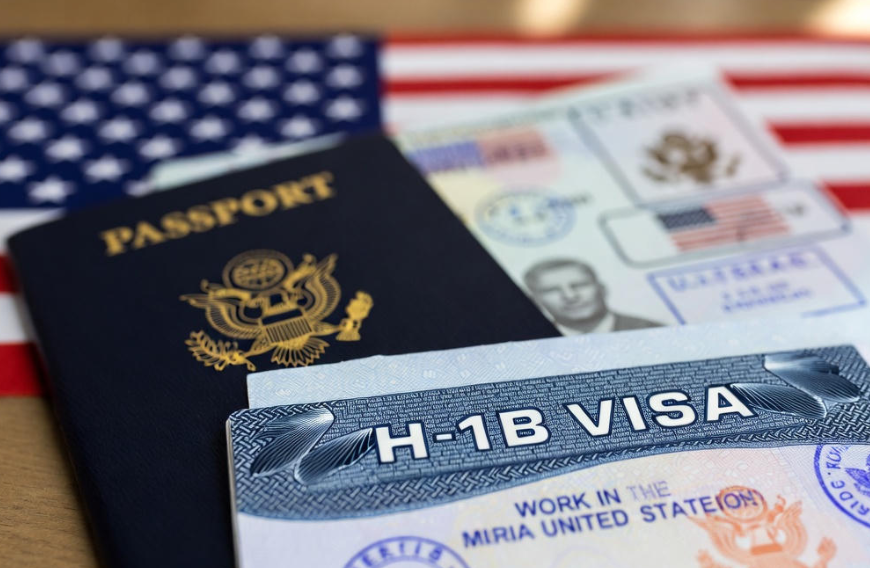
The internet appears to be becoming a harsher space for South Asians, with anti-Indian slurs and anti-H-1B rhetoric continuing to spread across online forums and social media.
Last year, the term “Pajeet” emerged as a derogatory slur used against Indian and Sikh men in the U.S. Now, a new term — “Latrinas” — is being used online to target Indian women.
The term has appeared in posts by some anti-Indian users and proponents of stricter visa rules on platforms including X and Threads. Several accounts have used “Latrinas” as a racial epithet targeting Indian women.
One X account, @Pratyusha, posted: “Poopjeets for men, Latrinas for women.” The account later wrote, “Latrinas is now a mainstream slur.” Another user replied, “Latrinas is too funny, it’s going to catch up.”
Several posts featuring images of Indian women at public events and tourist landmarks were subsequently reposted using the term.
READ: ‘Go back to India’ to online threats: South Asian Americans face rising hostility as anti-immigrant sentiment grows (September 6, 2026)
“Latrina” has its linguistic roots in the Latin word latrina, meaning a toilet or public washroom. The related English word “latrine” dates to the mid-17th century. In several languages, including French, Spanish and Portuguese, related forms of the word refer to a toilet or latrine.
With hundreds of thousands of posts published every minute on platforms such as X, according to Internet Live Stats, tracing the origin and spread of a new online slur can be difficult.
Searches across Threads, TikTok and X show a growing number of posts using “Latrinas” alongside images of Indian women in the U.S., including at public festivals. However, it remains unclear where the term originated or who first used it in this context.
One possible link is a recent X post that said, “Indian girls are the new Latinas.” Some subsequent users appear to have distorted “Latinas” into “Latrinas” and begun using the altered term as a slur against Indian women, particularly Indian immigrants in the U.S.
Twittrend, a tracker of X trends worldwide, listed “Latrinas” among the platform’s global trending topics at No. 65 on Sept. 25, with approximately 1,000 posts associated with the trend.
The spread of the term has prompted reactions from Indian Americans and other users.
“Being called, Latrinas, by white supremacists, is the most disgusting thing ever. So much for contributing to American economy,” Seattle-based Anu A. told The American Bazaar, although she said she had not personally encountered the slur online.
One post using the term that received significant attention came from X user @RealTrouble_Man, who wrote: “Saw someone call Indian girls ‘latrinas’ & now I can’t refer to them as anything else.”
The post had received approximately 1.6 million views and 20,000 likes as of Sept. 27. Another user, Count Dankula, later wrote, “New slur dropped,” in a post that also received thousands of engagements.
The development follows the renewed spread of another anti-Indian slur, “Pajeet,” which gained traction online last year after President Donald Trump announced a $100,000 fee for new H-1B applications.
READ: ‘Pajeet’, a racist slur against Indians, is spreading across the internet (November 16, 2025)
The term had already circulated in some online communities but gained wider attention after variations such as “Poopjeet” and “Jeetas” began appearing in posts targeting Indian professionals, including H-1B visa holders.
The origin and evolution of “Pajeet” have been debated online. The term is widely believed to be a distortion of the Punjabi word “Paaji,” an affectionate term for an older brother or male elder commonly used among Punjabis, including Sikhs. It later came to be used more broadly against Indian men in racist online discourse.
The latest development comes amid concerns over increasing anti-South Asian rhetoric in the U.S., including attacks targeting immigrant communities and work-based visa holders.
A recently released report by Stop AAPI Hate found that anti-South Asian slurs increased by 109% between January 2023 and December 2025 in online spaces associated with targeted violence. The report also said January 2025 recorded the highest monthly total of anti-Asian slurs since monitoring began in 2022, with nearly 88,000 slurs recorded.
The spread of such language suggests how racist rhetoric is spilling beyond keyboards, contributing to a broader climate of hostility toward immigrant and ethnic communities in the United States.