



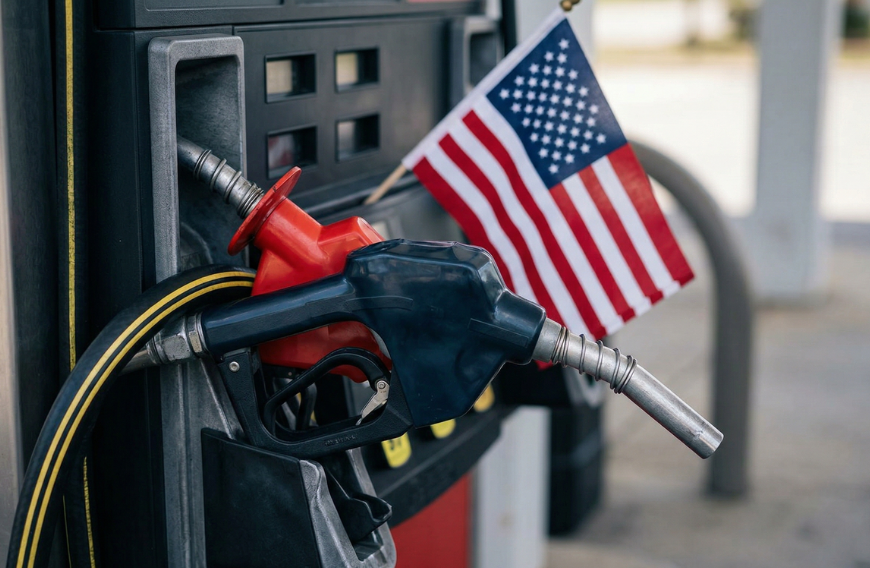
The average price of gasoline in the U.S. has fallen below $4 per gallon for the first time since July, offering relief to consumers as crude oil prices continue to decline amid hopes of easing tensions between Washington and Tehran.
The national average price of regular gasoline dropped to $3.90 per gallon on Tuesday, according to data from AAA. The decline comes after months of elevated fuel costs driven by geopolitical tensions and the ongoing war. Falling gasoline prices coincide with a broader decline in international crude oil markets.
Brent crude, the global oil benchmark, briefly dropped to approximately $89 per barrel, extending a downward trend that began in late October. The benchmark has retreated substantially from its Oct. 30 high of approximately $118 per barrel.
Oil prices have come under pressure amid expectations that the U.S.-Iran war could move toward de-escalation. President Donald Trump’s recent comments on the conflict have also boosted market optimism.
On Monday, Trump indicated that he did not see an immediate need to resume large-scale military strikes against Iran.
READ: US gas prices reach $4 a gallon as conflict with Iran renews (July 20, 2026)
“Iran, militarily, is effectively over. We’re just keeping it the status quo,” Trump told reporters at the White House after meeting with Sheikh Mohammed bin Abdulrahman bin Jassim Al Thani, the prime minister of Qatar.
In a post on Truth Social, Trump wrote, “We are seeing positive momentum toward an end to this Conflict and will ensure that America’s interests are at all times protected.”
Trump’s remarks have strengthened investor expectations that the war may not escalate further, easing concerns about potential disruptions to global oil supplies.
However, analysts say the decline in gasoline prices is not solely attributable to Trump’s comments. Seasonal factors have also played a role. The transition from summer-blend to winter-blend gasoline by U.S. retailers has contributed to lower prices. Winter-blend gasoline is generally less expensive to produce because it is subject to less stringent restrictions on fuel evaporation.
Despite the recent decline, gasoline prices remain above typical seasonal levels.
READ: Gas prices jump in the US, and drivers are going the extra mile to save (March 10, 2026)
Since the war began in late February, crude oil prices have surged. According to AAA, the national average price of gasoline reached approximately $4.56 per gallon earlier this year. Although prices have since declined, they remain considerably higher than before the U.S.-Iran war began.
Diesel prices have also eased, falling from $6.28 to $6.12 per gallon.
Despite the current decline, uncertainty continues to cloud global energy markets. Attacks on commercial vessels near the Strait of Hormuz remain a threat to global supply chains. Fuel supplies have also faced disruptions from increased Ukrainian strikes on Russian oil refineries and reduced exports from countries such as China.
The political implications of the conflict could also come into focus following the November midterm elections, as Democrats may seek greater congressional scrutiny of Trump’s war policies.
Nevertheless, the decline in gasoline prices offers some relief to American consumers, potentially lowering transportation costs and easing pressure on household budgets.