



For seven million Syrians displaced by the atrocities committed by the Assad regime during the last sixteen years may be a matter of hope and liberation.
By Iqbal S. Hasnain
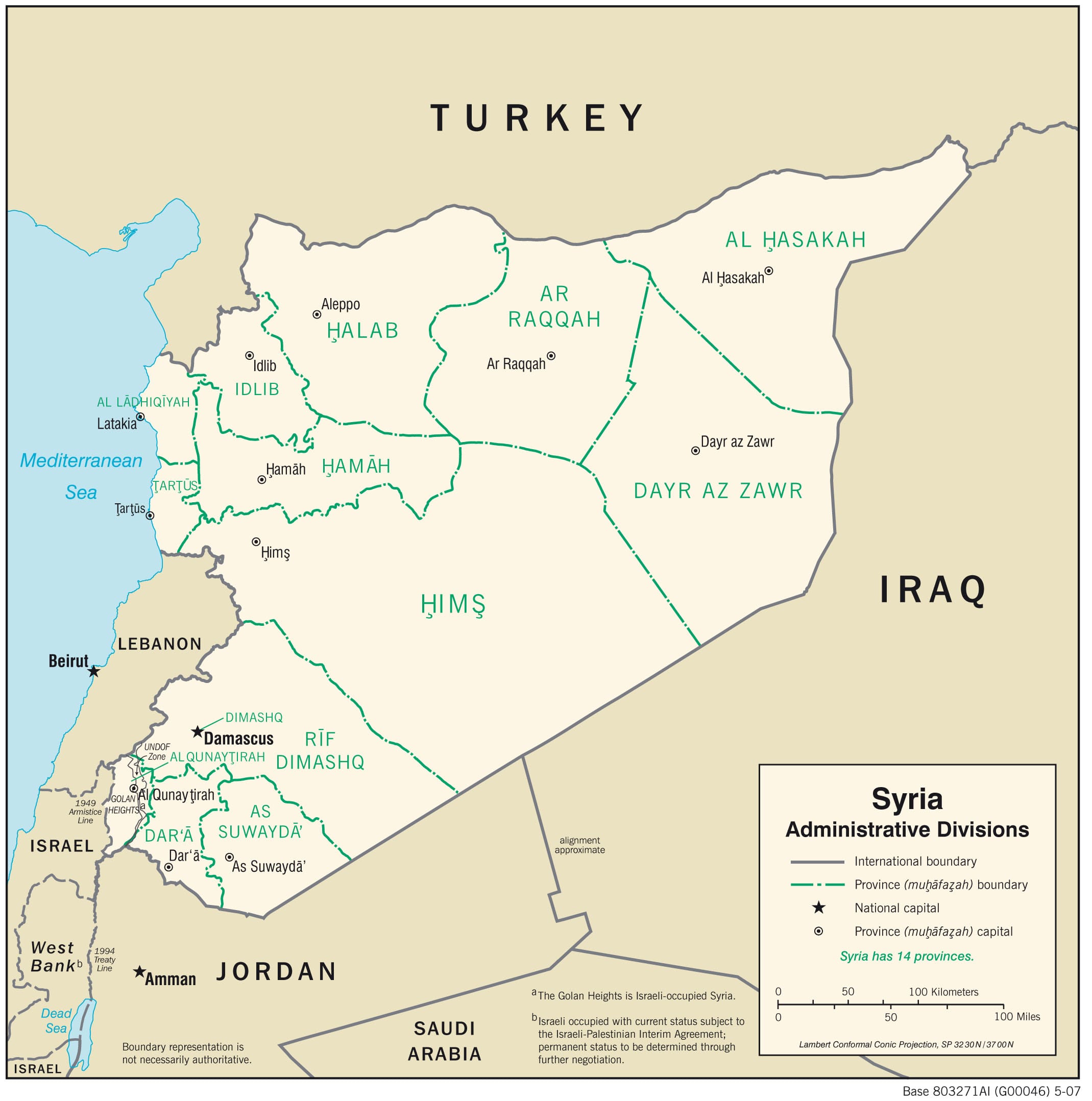
The Assad family regime has fallen after 50 years of uninterrupted rule in Syria. Armed rebellion began on November 27, 2024, at lightning speed from the conclave in Idlib, the northwestern part of Syria, under the leadership of Abu Mohammad al-Jolani, a Saudi Arabia-born jihadist. Al-Jolani had traveled to Iraq during the American occupation, where he joined al-Qaida fighters. He was later instructed by Abu Bakr al-Baghdadi to return to Syria and organize ISIS-linked cells.
Having served in Mosul and rising through the ranks after the death of Abu Musab al-Zarqawi in 2006, al-Jolani became a key figure in the jihadist movement. In 2011, under his leadership, Jabhat al-Nusra was formed, with initial funding and support from the Iraq-based ISIS. During its early stages, al-Jolani and other core members of al-Nusra established its ideological foundation and religio-political objectives, focusing on the conflict in Syria. The group’s initial strategy included high-impact attacks in Aleppo and Homs to undermine the Assad regime’s security forces. By 2016, Jabhat al-Nusra rebranded itself as Hay’at Tahrir al-Sham (HTS), with a broader mission to liberate the Levant.
Hasnain: Afghanistan: a country of million tragedies (August 19, 2021)
In 2017, al-Jolani consolidated various Islamist factions under the HTS banner, which now governs significant parts of Idlib. While HTS continues to adhere to elements of Sunni Wahhabi Islamist ideology, its leader has increasingly sought alliances with other rebel groups, including some supported by Turkey, and has moderated some of the group’s positions.
The rebel forces had been preparing for their offensive for over a year, capitalizing on Hezbollah and Iran’s deep involvement in the Gaza war and President Vladimir Putin’s entanglement in Ukraine. This preparation allowed the rebel fighters and their allied groups to become better armed, more organized, and more disciplined.
READ: RFK Jr.’s appointment as HHS secretary is a dangerous step backward for public health (November 17, 2024)
Over time, many foreign governments scaled back their support for the Syrian rebels due to concerns over the rise of extremist factions, shifting geopolitical priorities, and the growing dominance of Assad’s forces, bolstered by Russia, Iran, and its major proxy, Hezbollah.
The rebel forces in Syria ultimately succeeded in overthrowing Bashar al-Assad’s regime, aided by aggressive Israeli strikes that weakened Hezbollah and Iran, two of Assad’s primary supporters. However, the main rebel group, led by al-Jolani, is rooted in hardline Islamist ideology, raising fears of a potential resurgence of jihadism at the heart of the Middle East.
The Syrian opposition was always diverse, encompassing secular and moderate factions as well as Islamist and extremist groups. Moderate groups, such as the Free Syrian Army (FSA), advocated for a democratic and inclusive government but often struggled with limited resources compared to Islamist factions. Groups like al-Nusra and ISIS were better funded and more organized, thanks in part to support from private donors and external sponsors. Some rebel factions espoused Wahhabi ideologies, often receiving backing from Gulf states like Saudi Arabia. Should these factions dominate a post-Assad Syria, Wahhabi-inspired governance could emerge, especially in regions under their control.
The civil war deepened sectarian divisions between Syria’s Sunni and Shia communities. In the event of a rebel victory, the Sunni majority—possibly led by Wahhabi-leaning factions—might enact policies that marginalize other sects, such as the Alawites (Assad’s sect), Druze, and Christians, who collectively comprise about 30% of Syria’s population. This could further intensify sectarian conflict.
Other Sunni Islamist groups, such as the Muslim Brotherhood or less extreme Salafist factions, might contest Wahhabi dominance. Secular rebels and regional actors like Turkey could also work to counterbalance Wahhabi factions to avoid alienating international allies. The international community, wary of extremist governance, might intervene diplomatically or militarily to prevent the emergence of a Wahhabi-dominated Syria.
READ: Why it’s not a good idea for India to join the BRICS common currency (December 5, 2024)
Wahhabi-style governance might take hold in territories controlled by ultra-conservative factions but would likely face resistance in more diverse regions. A rebel victory could result in a fractured Syria, with different zones governed by competing ideologies. In areas influenced by Wahhabi groups, regional rivalries—particularly with Iran—would likely escalate, potentially increasing radicalization in neighboring countries.
In conclusion, while Wahhabi Sunni Islam could emerge as a significant force in a rebel-dominated Syria, its dominance would depend on the relative strength of ultra-conservative factions compared to other rebel groups, as well as the balance of influence among international and regional powers.
Iran and Hezbollah, key supporters of the Assad regime, have been severely weakened by their conflicts with Israel and the loss of top leadership figures. Some Israeli commentators have noted that jihadist groups, if they gain power in Damascus, could pose an even greater threat than Iran.
Prominent journalist Nicholas Kristof observed in his December 8 column in The New York Times: “Sometimes what follows a terrible regime is just as bad, or even worse.” President Joe Biden echoed this concern, stating: “Make no mistake, the rebel groups that took down Bashar al-Assad have their own grim record of terrorism and human rights abuses.”
For the seven million Syrians displaced by the atrocities of the Assad regime over the past sixteen years, this moment might seem like one of hope and liberation. However, as seen in Afghanistan, Iraq, and Libya, regime change is often followed by infighting and chaos.
(Prof. Iqbal S. Hasnain is a former Vice Chancellor of the University of Calicut, Kerala, India and author of the book on Fault Lines in the Faith.)