



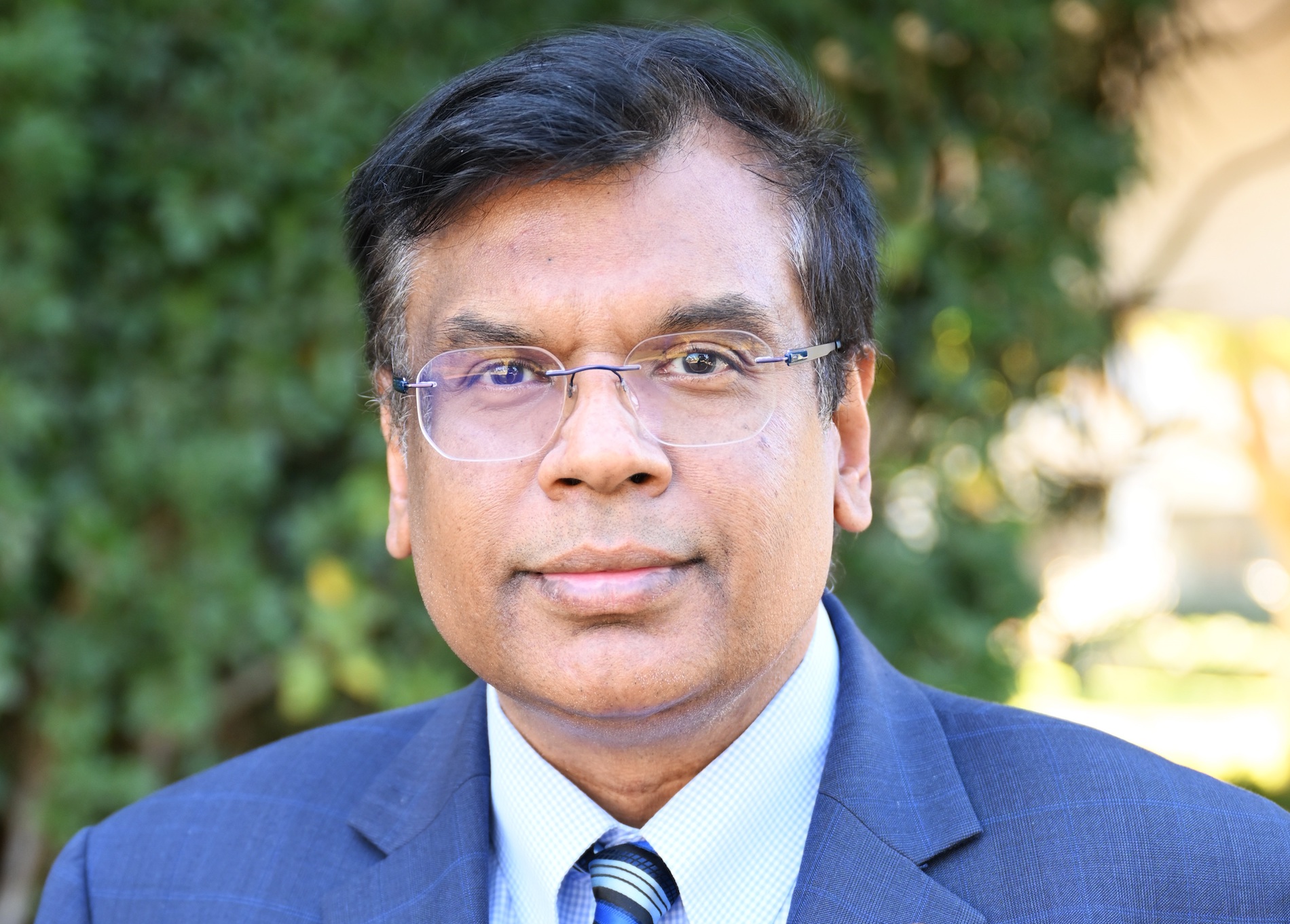
Dr. Vivek Lall is a pioneer in the defense and aviation industries, currently serving as Chief Executive of General Atomics Global Corporation. With a career spanning more than three decades, he is widely regarded as one of the most influential figures in aerospace and defense.
Lall has held various leadership roles, including vice president at Boeing and Lockheed Martin, and oversees operations across five continents. He was appointed to the Quad Investors Network Advisory Board by The White House in 2023 and has served on the NATO Science and Technology Organization’s technical team through the Pentagon. He is also a member of the Industry Advisory Board of ASME and the International Advisory Group of the U.S. Chamber of Commerce.

(Editor’s note: “Leaderspeak with Rajesh Mehta” is a new interview series by The American Bazaar, spotlighting leaders from diverse fields.)
Lall sits on the boards of the U.S.-Japan Business Council, the Global Board of Directors of the U.S.-India Business Council, and advises the Center for Commerce and Diplomacy at the University of California, San Diego.
Lall earned a bachelor’s degree in mechanical engineering from Carleton University in Canada, a master’s degree in aeronautical engineering in Florida, a Ph.D. in aerospace engineering from Kansas, and an MBA from Washington.
Recognized for his contributions, he received the President’s Lifetime Achievement Award in 2022 and the World Leader Award from the UK’s House of Lords in 2023. Lall is also a Distinguished Visiting Fellow at Stanford University’s Hoover Institution. A trained private pilot, Lall has authored more than 100 articles and was president of the Mathematical Association of America. He also holds honorary titles, including Ambassador of Arkansas and Kentucky Colonel, and was named among the 2,000 Outstanding Scientists of the Twentieth Century by Cambridge.
In an exclusive interview with Rajesh Mehta, a Contributing Editor for The American Bazaar, Lall discusses the future of the defense and aerospace industries, emerging technologies, U.S.-India relations, Trump’s second term, and more.
The American Bazaar: How do you see ICET (Initiative on Critical and Emerging Technologies between U.S. and India) contributing to defense and aerospace in the two countries?
Dr. Vivek Lall: As the capitals of large and vibrant democracies, Washington D.C. and New Delhi are natural partners that share many of the same broad goals for peace, stability and security throughout the globe. We see the partnership between the two countries as one of the most important of the 21st century.
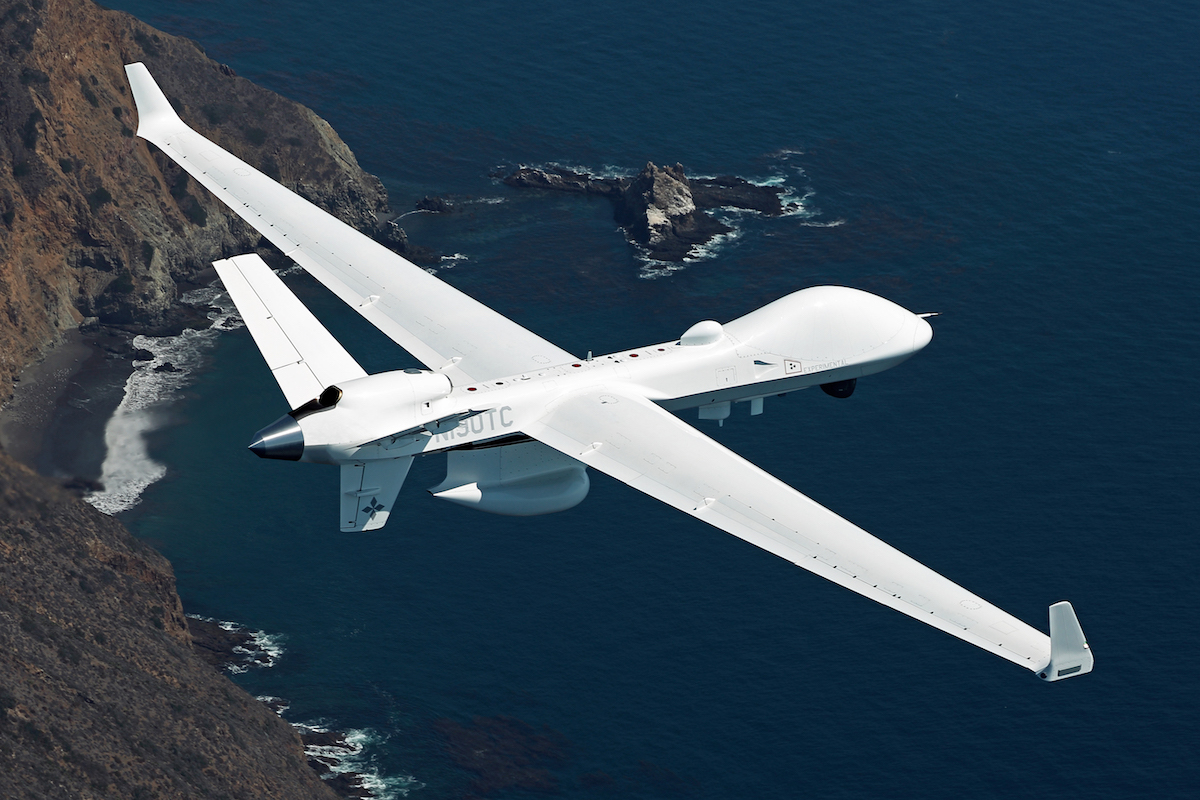
How does a $4 billion deal with General Atomics (GA) for drones strengthen U.S.-India ties?
The countries already help each other in many ways, and the scope for this work will only increase as we build on the recently announced contract between the U.S. and India for MQ-9B SkyGuardians and SeaGuardians from General Atomics that provide a strategic capability that will significantly enhance India’s security.
Could you tell me about GA projects in India around AI, semiconductors, drones, and other emerging tech?
As part of ICET, we are partnered with two Indian startup companies who are working on important emerging technologies: 114ai for AI and 3rdiTech for semiconductors.
With 114ai, we are looking forward to working on nextgen AI technologies. AI is an important area of cooperation between the U.S. and India and GA sees the capabilities demonstrated by the 114ai team as extremely valuable for military operators. Their technology, track record and tenacity with customers in the U.S. and U.K. has stood out to us. We expect many world-leading products to come out of this partnership.
As for semiconductors, working with 3rdiTech is pivotal to us as semiconductors are really the defining technology of this era. The team and capability being developed at 3rdiTech are representative of the new India under Prime Minister [Narendra] Modi’s leadership.
GA-ASI will work with 3rdiTech, one of the inaugural winners of the Indian Ministry of Defense’s flagship iDEX Program, to transition this cutting-edge capability onto some of India’s platforms.
I’ll also mention Bharat Forge, the largest repository of metallurgical know-how, design and engineering expertise, and manufacturing prowess in India. With over five decades of experience in manufacturing a wide range of high-performance, critical safety components, Bharat Forge provides full-service supply capability from concept to product design, engineering, manufacturing, testing, and validation.
GA is committed to Modi’s “Make in India” strategy and we’re looking forward to much more cooperation with Indian companies as we move forward.
How does the upcoming Trump administration differ in its attitude towards India and ICET from the current Biden administration?
One of the most important dimensions of the U.S.-India alliance is the bipartisan support and cooperation on security and defense from the U.S.
What is the number one learning that the Indian defense industry can learn from the American defense industry, given your experience in both?
I’d say the number one learning that the fledgling Indian defense industry can take away from the American defense industry is the importance of public-private partnerships and collaboration.
The U.S. defense industry has successfully leveraged partnerships between government, private sector, and academia to drive innovation and growth. This approach has enabled the development of cutting-edge technologies and solutions, which have been critical to the U.S. military’s success.
READ: How Jagadish Nadig and Wastelink are turning food waste into opportunity (December 2, 2024)
With the Indian government’s push for “Make in India,” and increasing focus on indigenization, there is growing recognition of the need for public-private partnerships to drive growth and innovation in the defense sector.
The India-U.S. Defence Accelerator Ecosystem (INDUS-X) is a great example of this collaboration in action. Launched in 2023, INDUS-X aims to promote defense industrial cooperation between our two countries, with a focus on co-development and co-production of defense systems. The initiative has already shown promising results, with several Indian startups and private sector companies partnering with U.S. defense majors to develop innovative solutions.
By embracing public-private partnerships and collaboration, the Indian defense industry can tap into the expertise and resources of the private sector, academia, and foreign partners, and accelerate its growth and development.
What are the biggest challenges the global defense sector currently faces?
The global defense sector is facing numerous challenges, but some of the most significant ones include rapidly evolving technology. The pace of technological advancements, particularly in areas like artificial intelligence, autonomy, robotics, and cybersecurity, is making it challenging for defense competitiveness to keep up. This is compounded by the need to ensure the sufficient availability of recruits, which is being impacted by aging populations.
The changing nature of warfare is another challenge as the traditional battlefield is evolving, with a growing emphasis on collaborative combat, multi-army and multi-platform collaboration, and the use of emerging technologies. This requires defense forces to adapt and transform their strategies and capabilities.
Defense budgets are under pressure, leading to tensions between demand and supply. This is resulting in delayed equipment upgrades, reduced support teams, and increased pressure on maintenance services.
The increasing reliance on digital technologies is creating new cybersecurity risks and challenges. Defense organizations must develop robust digital platforms and ensure the secure collection, analysis, and dissemination of data. The defense sector is facing a critical pivot point in terms of workforce planning and skills. The industry needs to prepare proactively for changing workforce requirements, including the need for more digital and technical skills. The global defense sector is operating in a time of significant uncertainty, with shifting power dynamics and emerging threats. Defense organizations must be able to adapt and respond to these changes.
These challenges require defense organizations to be agile, adaptable, and responsive to changing circumstances. They must also develop more mature decision-making frameworks, focus on strategic workforce planning, and build deep and trusted partnerships with industry and international partners.
How do you see the defense and aerospace industry transforming over the next decade?
For GA and the unmanned aircraft market, the Collaborative Combat Aircraft (CCA) represents a new future in global unmanned aerospace, and we expect to be a big part of that. So, the work we’re now doing is important to us intellectually and functionally. We’re an aerospace engineering company and CCA is important to us, because our people love designing and building airplanes and we want to support the warfighter.