



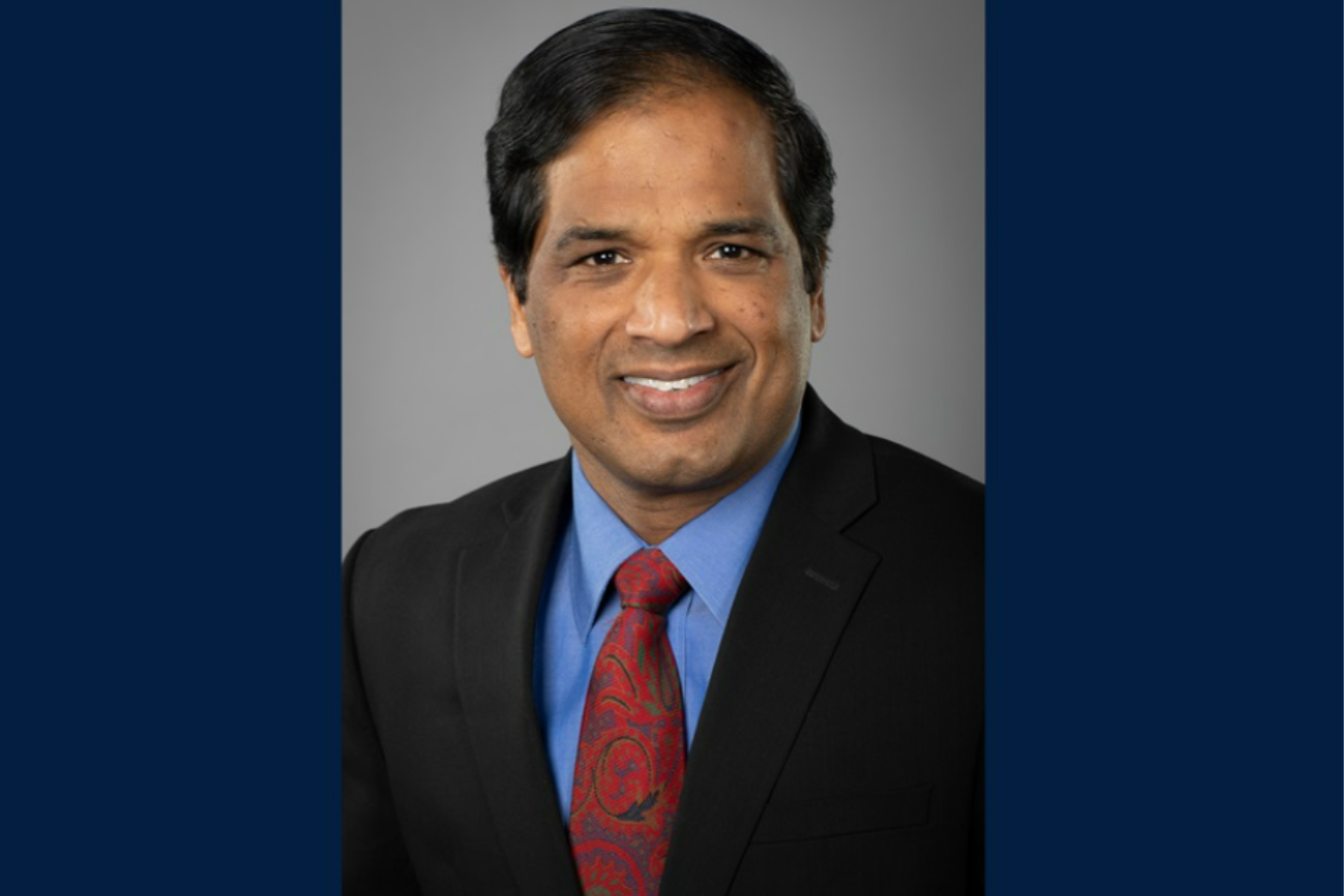
When Krishna Pagilla first walked the campus of Osmania University in Hyderabad, India, he was an aspiring engineer looking to solve the foundational challenges of infrastructure. Decades later, that journey has reached the pinnacle of American environmental policy.
Pagilla, a distinguished professor of civil and environmental engineering at the University of Nevada, Reno (UNR) has been appointed to the U.S. Environmental Protection Agency’s Science Advisory Board (SAB).
The appointment anoinced by EPA Administrator Lee Zeldin April 17, places Pagilla among an elite group of 37 scientists tasked with providing the “gold standard” of independent expertise to guide the agency’s mission of protecting human health.
For Pagilla, the appointment is a continuation of a career defined by “circular” thinking, specifically, how to turn waste back into a resource. As the director of the Nevada Water Innovation Institute, he has spent years pioneering research into water reclamation and the “water-energy-resource nexus.”
“Water is not just a utility it is the lifeblood of our communities,” Pagilla has frequently noted in his research. His work ensures that as urban centers grow, their water systems remain resilient through innovative treatment and reuse technologies.
Read: Indian American scholar maps the Milky Way’s hidden worlds
His path to this national stage began in Hyderabad, where he earned his Bachelor of Engineering from Osmania University in 1987. Seeking to deepen his expertise, he moved to the United States, earning a Master’s degree from the University of Oklahoma and eventually a PhD from the University of California, Berkeley.
This blend of Indian foundational education and American research rigor has made him a leading voice in global environmental biotechnology.
Pagilla is no stranger to the EPA’s advisory roles, having served on the board during both the first Trump administration and the Biden administration. His reappointment underscores a rare level of bipartisan respect for his scientific objectivity and technical depth.
At UNR, Pagilla’s impact is felt through his leadership in the Scrugham Engineering and Mines building, where he mentors the next generation of engineers. Colleagues describe him as a bridge-builder who successfully connects academic research with the practical, daily needs of local water agencies.
As Nevada and the American West face increasing challenges from drought, Pagilla’s expertise in potable water reuse will be vital. His work ensures that the water cycle does not end at a treatment plant, but remains a sustainable loop for future generations.