



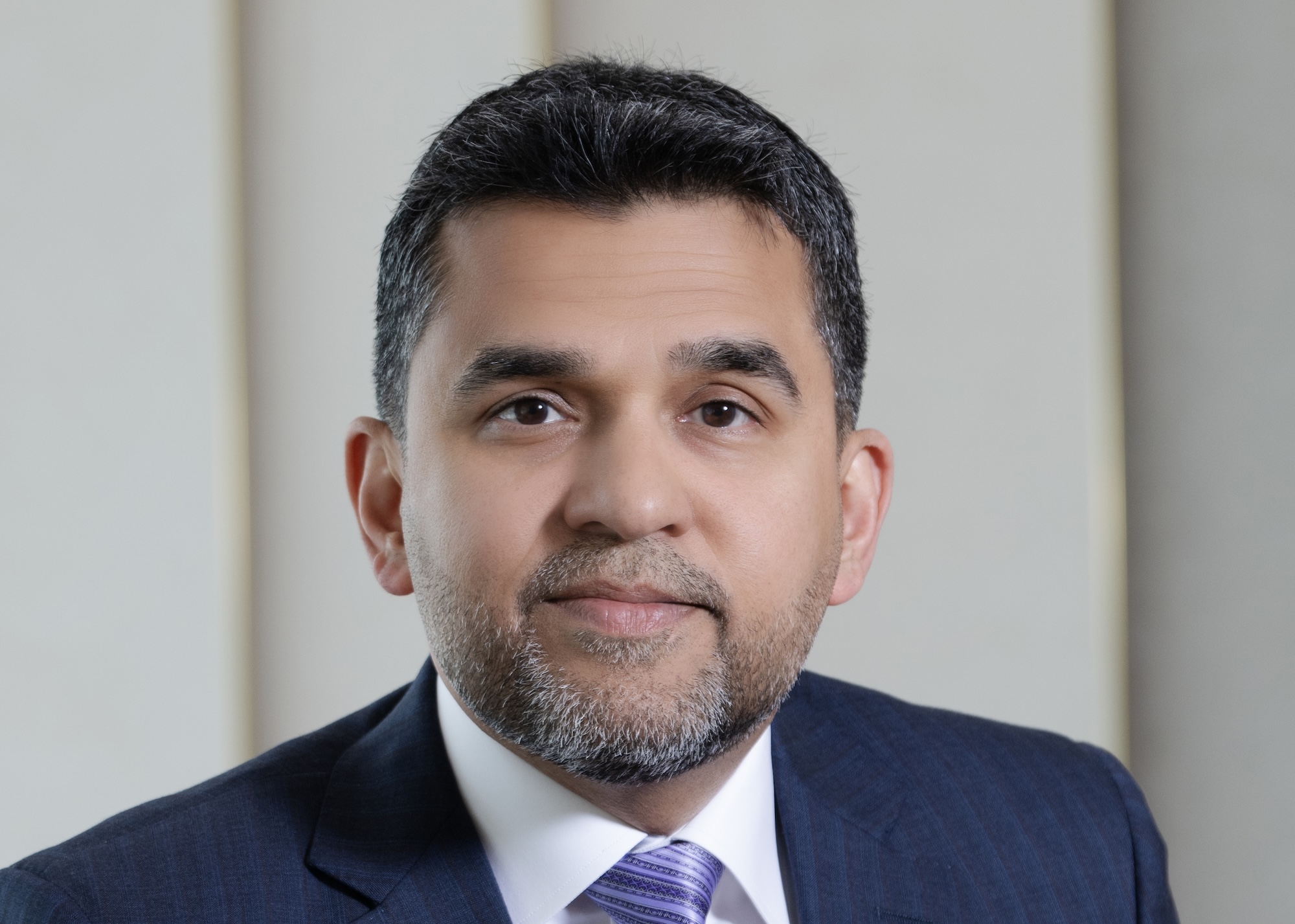
As Axiom 4 launches to the ISS, Burjeel — founded by Indian billionaire Dr. Shamsheer Vayalil — is backing a landmark diabetes experiment in microgravity to expand access to future space missions.
Among the 60-plus scientific experiments planned for Axiom Mission 4, one standout is a landmark study on managing diabetes in space.
The joint initiative — between Axiom Space and UAE-based Burjeel Holdings LLP, a super-specialty healthcare provider founded by Abu Dhabi-based Indian billionaire Dr. Shamsheer Vayalil — is seen as a significant step forward in managing chronic conditions both in space and on Earth.
Four astronauts from the United States, India, Poland, and Hungary will embark on a 14-day mission to the International Space Station aboard a SpaceX Falcon 9 rocket.
Their journey, originally scheduled for late May, is now expected to begin as early as 8:00 a.m. ET Wednesday, June 11, from the NASA Launch Complex 39A at the Kennedy Space Center in Cape Canaveral.
The Ax-4 mission is the latest in a series of crewed spaceflights launched in collaboration with NASA and Elon Musk’s SpaceX.
READ: Tejpaul Bhatia becomes Axiom Space CEO (May 5, 2025)
The Burjeel-Axiom study, dubbed “Suite Ride,” will test advanced medical technologies, including Continuous Glucose Monitors (CGMs) and insulin delivery systems, in microgravity. These technologies are standard in diabetic care on Earth but have never been comprehensively evaluated in the unique conditions of space.
The project aims to support the eventual inclusion of astronauts with insulin-dependent diabetes mellitus (IDDM) — a condition traditionally considered incompatible with spaceflight — in future missions.
Building on earlier breakthroughs, including a successful test on Galactic 07 that demonstrated the efficacy of insulin pens in microgravity, the Ax-4 mission will expand research on both the performance of CGMs and the stability of insulin during and after space travel.
Dr. Mohammad Fityan, chief medical officer at Burjeel Holdings, said innovations from the mission could help reshape care delivery in underserved and hard-to-reach areas worldwide. “Microgravity offers a unique testbed for remote healthcare solutions,” he said. “The findings from this mission will benefit millions, particularly across the MENA [Middle East and North Africa] region where diabetes rates are climbing rapidly.”
Fityan, who will be at the launch, said that “by understanding blood glucose patterns, validating CGM reliability, assessing insulin stability, and evaluating data transmission, this research will help ensure the safety of astronauts with insulin-dependent diabetes in future missions.”
“This collaborative effort between Axiom Space and Burjeel Holdings is very exciting and will advance Axiom Space’s goal of making space accessible for all,” said Dr. Mike Harrison, chief medical officer at Axiom Space, in a press release. “The technologies and advances that could result from this project could also improve our ability to provide remote care for patients with diabetes and other health conditions on Earth.”
Harrison noted that while NASA prohibits space travel for insulin-dependent diabetics, there are no official restrictions for those with non–insulin-dependent diabetes, and so far, “no astronaut with diabetes has traveled to space.”
Newsmaker: Shubhanshu Shukla to pilot Axiom Space’s fourth mission to ISS (January 30, 2025)
Burjeel-Axiom researchers will examine not only the accuracy of glucose monitoring in space but also how circadian rhythm disruptions — common in orbit — affect diabetes management. Data gathered from inflight and postflight protocols will inform future missions and help refine care strategies for extreme environments, including Earth-based settings like oil rigs, deserts, and disaster zones.
The Ax-4 mission is expected to serve as a springboard for future studies involving astronauts with non-insulin-dependent Type 2 diabetes and, eventually, those with IDDM. The long-term goal is to prove that with the right technology and protocols, diabetes should no longer be a barrier to space travel.
“This mission is about redefining what’s possible,” said Harrison. “We’re not just pushing the boundaries of space medicine — we’re bringing those advancements home to Earth.”
The International Diabetes Federation estimates that by 2045, one in eight adults globally — around 783 million people — will be living with diabetes. In the MENA region alone, cases are expected to surge by 87%, underscoring the urgent need for scalable and innovative healthcare solutions.
Burjeel was founded by Dr. Shamsheer Vayalil, a Kerala-born radiologist with a net worth exceeding $2 billion.
According to its website, Burjeel operates 77 hospitals, clinics, and physiotherapy centers across the UAE, India, and other countries.
Other ventures Vayalil owns include RPM, LifePharma, Ziva, Keita, and the Educare Institute.
Space diplomacy
Ax-4 is the first-ever mission to the International Space Station for India, Poland, and Hungary. The astronauts aboard are American Peggy Whitson, Indian pilot Shubhanshu Shukla, Polish mission specialist Sławosz Uznański-Wiśniewski, and Hungarian mission specialist Tibor Kapu, a mechanical engineer from Hungary.
Shukla serves as a pilot with the Indian Space Research Organization (ISRO).
The mission will conclude with a water landing off the California coast.
The Ax-4 mission is being closely followed in the UAE, home to Burjeel Holdings.
On National Space Day, the country’s embassy in Washington, D.C., highlighted the latest UAE-U.S. collaboration in a social media post, deepening its collaboration with NASA through a pivotal contribution to the upcoming Gateway lunar space station, further cementing its position as a leader in global space exploration.
A centerpiece of this partnership is the UAE’s development of the “Emirates Airlock,” a vital module of NASA’s Gateway — the lunar outpost that will support Artemis missions aimed at returning humans to the Moon and establishing a long-term presence in deep space. The airlock will enable astronauts to exit the station for research and maintenance activities in the harsh environment of cislunar space.
The UAE’s involvement in Gateway builds on a growing track record of international collaboration, including shared human spaceflight missions and its historic Mars mission — the first by an Arab nation. It also underscores the country’s commitment to the Artemis Accords, a multilateral framework promoting peaceful and cooperative exploration of the Moon and beyond.
(Editor’s Note: A previous version of this story stated that the Axiom Mission 4 launch was scheduled for Tuesday. The launch has since been rescheduled to Wednesday, June 11.)