



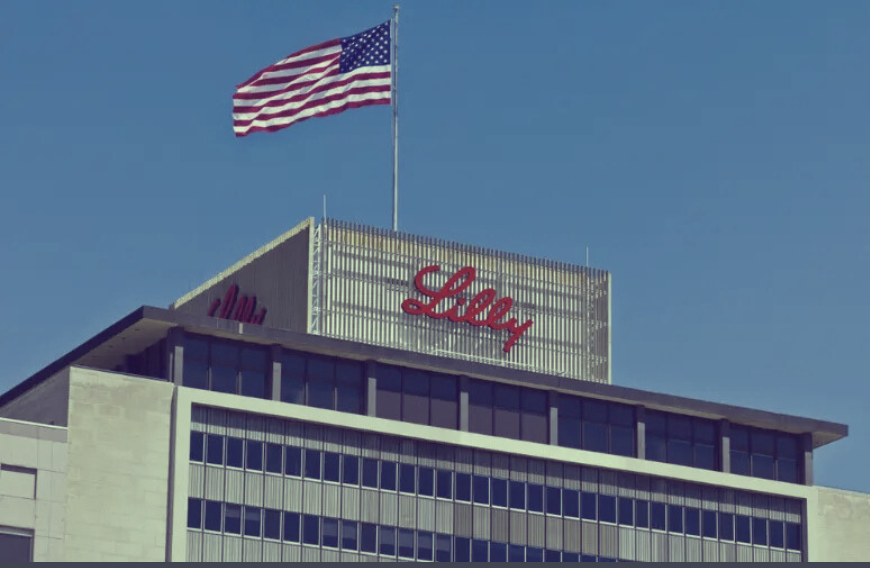
Eli Lilly has become the first healthcare company to hit a $1 trillion market value, entering an exclusive club dominated by tech companies. The company briefly hit the $1 trillion mark in morning trading before retreating. It was last trading around $1,048 a share. Eli Lilly is the second nontechnology company to reach the coveted $1 trillion mark in the U.S. after Warren Buffett’s Berkshire Hathaway.
There has been a more than 35% rally in the company’s stock this year, driven by the staggering growth of the weight loss market. Highly effective obesity treatments hit the market in the past two years, making it one of the most lucrative areas in healthcare.
READ: Eli Lilly to buy SiteOne for $1 billion (
Sales of Lilly’s tirzepatide, marketed as Mounjaro for Type 2 diabetes and Zepbound for obesity, have also topped Merck’s Keytruda as the world’s best-selling drug. While Novo Nordisk initially had the lead in the space, Mounjaro and Zepbound later surged in popularity.
In the latest reported quarter, Lilly posted combined revenue of more than $10.09 billion from its obesity and diabetes portfolio, accounting for more than half of its total revenue of $17.6 billion.
“The current valuation points to investor confidence in the longer-term durability of the company’s metabolic health franchise. It also suggests that investors prefer Lilly over Novo in the obesity arms race,” said Evan Seigerman, analyst at BMO Capital Markets.
Lilly lifted its annual forecast revenue in October by more than $2 billion at the midpoint on surging global demand for its obesity and diabetes drugs. According to Wall Street estimates, the weight loss drug market will be worth $150 billion by 2030, with Lilly and Novo together controlling the majority of projected global sales.
Investors are now focused on Lilly’s oral obesity drug, orforglipron, which is expected to be approved early next year. Citi analysts said in a note last week that the latest generation of GLP-1 drugs have already been a “sales phenomenon,” and orforglipron is poised to benefit from the “inroads made by its injectable predecessors.”
Lilly will be benefiting from a deal with the Trump administration and its planned billions in investment to boost U.S. production. Analysts have said the pricing deal with the White House may weigh on near-term revenue but significantly expands access, adding as many as 40 million potential U.S. candidates for obesity treatment.
In September, Eli Lilly announced a significant investment in Houston. David Ricks, Lilly’s CEO and chairman, joined Texas Gov. Greg Abbott to officially announce that the pharmaceutical giant will build a $6.5 billion manufacturing plant in the Generation Park development.