



By Keerthi Ramesh,
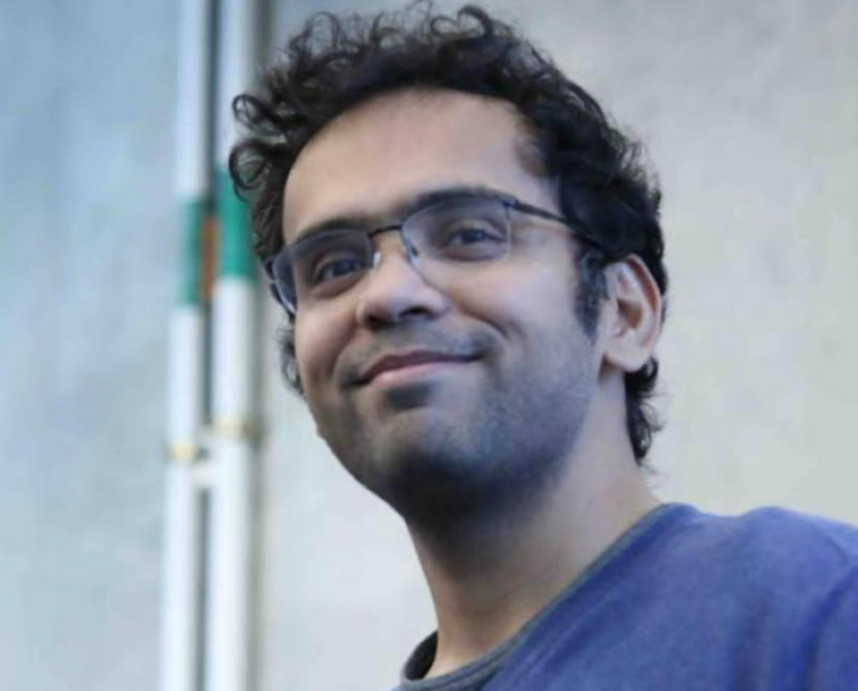
Sanjiban Choudhury, an Indian American robotics researcher, who is creating robots that learn new skills the way humans do, has won a National Science Foundation Faculty Early Career Development Award.
Choudhury, assistant professor of computer science in Cornell University’s Ann S. Bowers College of Computing and Information Science will use his $400,000 award to support his work, according to a press release from the Ithaca, New York-based private university.
The award supports early-career faculty who “have the potential to serve as academic role models in research and education and to lead advances in the mission of their department or organization,” according to the NSF. Each project must include an educational component.
Robots can provide assistance at home, in hospitals and on farms, but most robots can only do tasks that are pre-programmed ahead of time. They cannot handle new situations or learn from people.
Read: Boston Dynamics trains AI-powered robots to do factory work (January 6, 2026)
Choudhury’s project supports research to create robot helpers that learn new skills by watching people, trying tasks and improving from feedback. His work could make robots more helpful and flexible, in order to solve harder problems in the real world. It also intends to help us understand how robots can learn and adapt.
The project looks to improve robots for homes, health care and agriculture, and includes educational programs with interactive robotics activities for K-12 students. It provides accessible online resources to increase participation in STEM and robotics research.
Choudhury’s research focuses on reinforcement learning (RLHF), imitation learning (IRL), and foundation models for planning, robotics, and code generation. He also leads the Portal group, which builds everyday robots for everyday users and has a mission to make robots accessible, user-friendly, and practical for tasks from cooking to cleaning.
Choudhury did his postdoctoral research at the University of Washington and his MA and PhD at Carnegie Mellon University. He earned his BS and MS in electrical engineering from the Indian Institute of Technology, Kharagpur.