



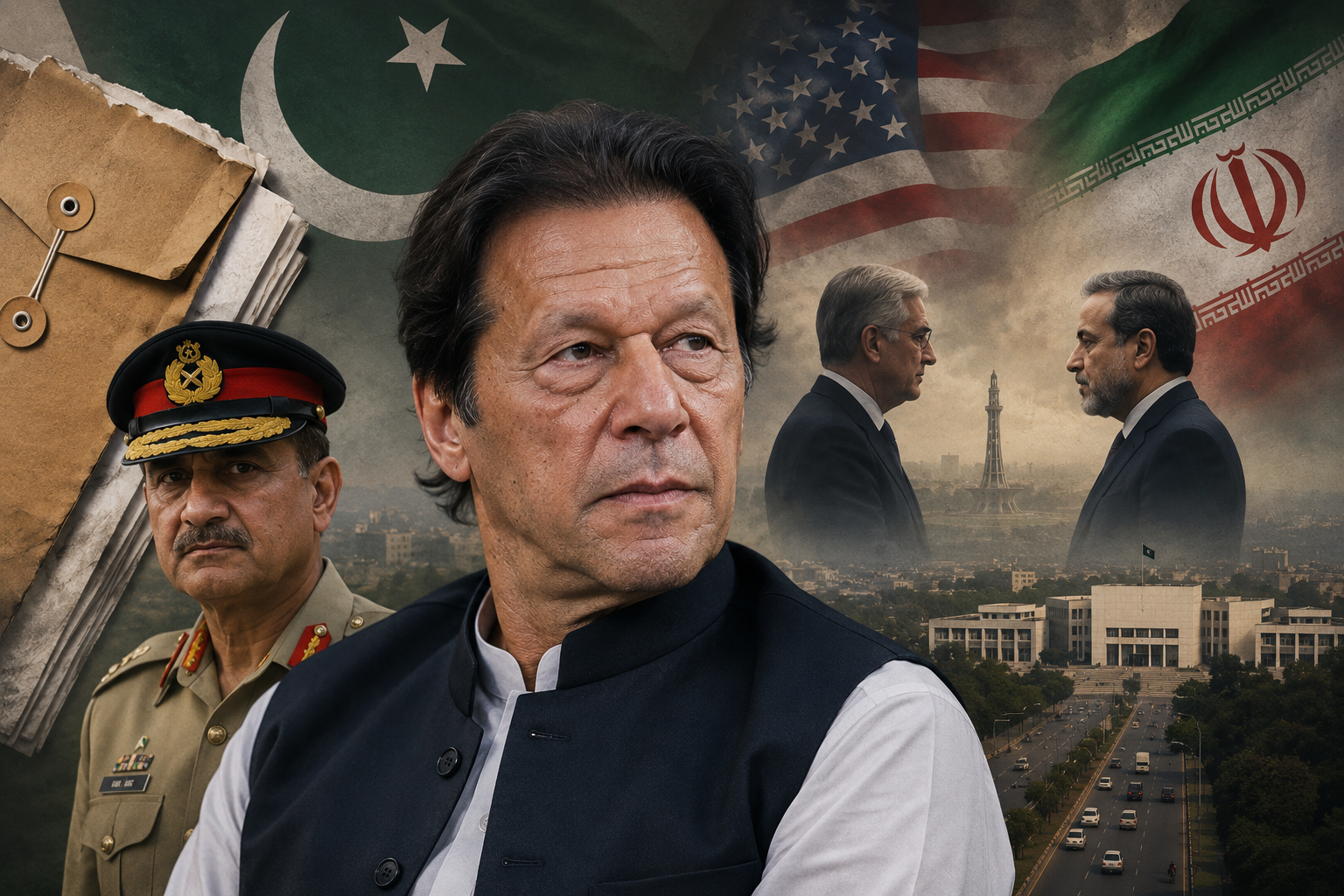
A classified diplomatic document that opponents say triggered the removal and eventual imprisonment of former Pakistani Prime Minister Imran Khan has resurfaced at the center of renewed geopolitical scrutiny. Reports suggest Pakistan quietly played a key intermediary role between the United States and Iran during escalating regional tensions.
A report published by Drop Site News linked Pakistan’s recent diplomatic engagement with the Trump administration and Iran to longstanding political tensions surrounding Khan’s ouster, which his supporters have consistently described as externally influenced and backed by Pakistan’s military establishment.
The controversy traces back to a leaked diplomatic cable, commonly referred to in Pakistan as the “cipher,” which Khan publicly cited in 2022 as evidence of foreign pressure tied to his removal from office. He pursued what he described as an independent foreign policy.
Khan alleged the cable documented concerns from U.S. officials about his government following his visit to Moscow shortly before Russia invaded Ukraine. American officials denied involvement in Pakistan’s domestic politics, while Pakistan’s military leadership later distanced itself from Khan’s allegations.
READ: The indispensable fragility: Pakistan and the unmaking of the old Middle East (May 15, 2026)
Pakistan emerges as diplomatic intermediary
The issue gained fresh attention after Drop Site News reported that Pakistan’s military and civilian leadership had quietly facilitated communication between Washington and Tehran during heightened tensions involving Iran’s nuclear program and military activity in the Gulf.
A related post published by Drop Site News on X described Pakistan as sitting “at the center of one of the most dangerous geopolitical confrontations in the world,” while linking Islamabad’s diplomatic role to internal political negotiations involving Khan and Pakistan’s military leadership.
According to the report, Pakistani officials helped support indirect diplomatic contacts involving President Donald Trump’s administration as Washington sought to avoid wider regional escalation.
Pakistan has publicly called for de-escalation between Iran and the United States while attempting to preserve relationships with Tehran, Gulf Arab allies, China, and Washington simultaneously.
“Pakistan is trying to maximize strategic flexibility,” said Michael Kugelman, a Washington-based South Asia analyst. “But balancing all sides becomes increasingly difficult as regional tensions intensify.”
READ: From ceasefire collapse to blockade: How Pakistan rose and India stood still in the US-Iran crisis (April 13, 2026)
Trump, Khan and Pakistan’s military leadership
The report also renewed attention on Trump’s reported interest in Khan’s political situation.
Drop Site News said Trump privately urged Pakistan’s army chief, Field Marshal Asim Munir, to “resolve” Khan’s detention during discussions last year. Khan remains imprisoned following multiple convictions and legal cases that his supporters say are politically motivated.
Khan’s Pakistan Tehreek-e-Insaf party continues to accuse Pakistan’s military establishment of orchestrating his removal after relations deteriorated between the former prime minister and senior military leaders.
Pakistan’s government and military deny political interference in judicial proceedings involving Khan.
The issue remains politically sensitive inside Pakistan and among Pakistani diaspora communities abroad, particularly in the United States and Britain, where Khan retains strong support.
Questions over Pakistan’s neutrality
Pakistan’s expanding diplomatic role has also raised questions among some American and Israeli officials over whether Islamabad can simultaneously act as a neutral mediator while maintaining close relations with Iran.
Reports alleging Iranian aircraft used Pakistani facilities during periods of military escalation intensified those concerns, though Pakistani officials denied providing operational support to Tehran.
Analysts say Islamabad’s motivations are driven largely by economic and security concerns. Pakistan shares a long border with Iran and fears that a prolonged regional conflict could severely damage energy supplies, trade routes, and domestic stability.
Meanwhile, online reactions to the latest reports reflected continuing polarization over Khan’s legacy and Pakistan’s geopolitical alignment.
Supporters described the resurfacing of the cipher controversy as validation of Khan’s claims that foreign policy disagreements contributed to his removal. Critics argued that Pakistan’s internal political crisis cannot be reduced solely to external influence or diplomatic disputes.
Despite the controversy, Pakistan continues to publicly position itself as a stabilizing regional actor advocating diplomacy over military escalation as the political aftershocks of Khan’s removal remain deeply unresolved.