



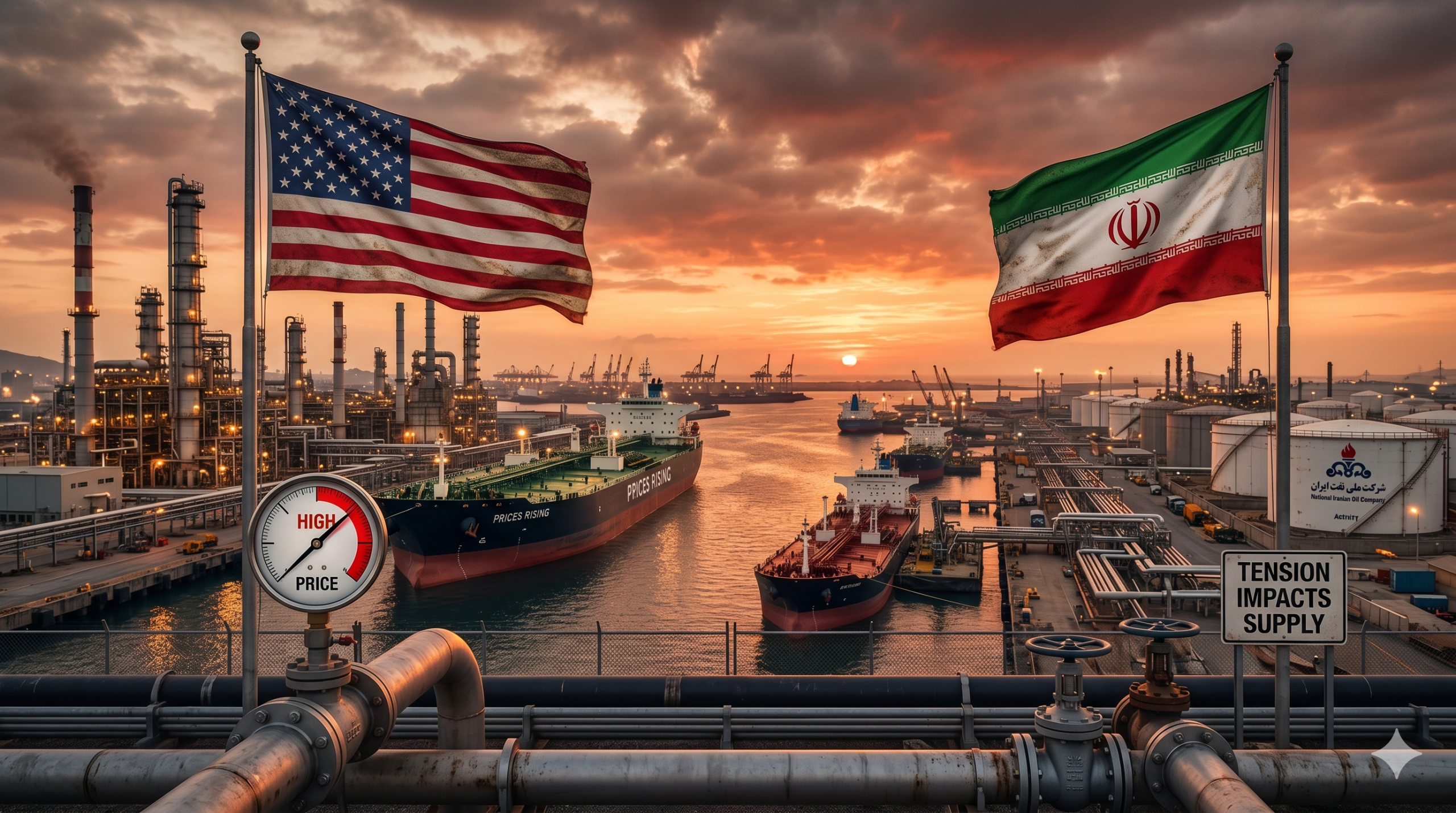
A report by Reuters revealed that oil prices settled at $1 higher after rising more than 5% earlier in the session on Monday as Iran and Israel said they had halted attacks on each other following an appeal from President Donald Trump. Tehran, however, said it will resume attacks if Israel continues to attack Lebanon, targeting Hezbollah.
Prices had previously gained more than 5% earlier on Monday after renewed Israeli strikes on Iran and attacks on Lebanon had reduced hopes of the war coming to an imminent end.
Israel hit a petrochemical plant in southwestern Iran that it said was used to produce ballistic missiles, and Iran’s Islamic Revolutionary Guard Corps said the country retaliated with a strike aimed at a similar Israeli facility in the city of Haifa. This came after Israel hit strongholds of Iran-backed Hezbollah in Beirut over the weekend. Tehran said that any deal with Washington to end the conflict must include a halt to Israel’s campaign in Lebanon.
READ: Oil prices rebound above $100 amid renewed US-Iran tensions (May 27, 2026)
“Crude futures are trading higher this morning in a nervous trade as Iran and Israel traded missile attacks over the weekend,” said Dennis Kissler, senior vice president of trading at BOK Finance.
The report said that Trump demanded on Monday that Israel and Iran “immediately stop ‘shooting.'” UBS analyst Giovanni Staunovo said that because of the strikes, investors were concerned that flows through the Strait of Hormuz might remain restricted for longer. Around 20% of the world’s supply of oil and liquified gas passed through the strait, before the conflict began with the U.S.-Israeli airstrikes on Iran in February.
READ: Oil prices rise again amid US-Iran deadlock (April 28, 2026)
OPEC+ on Sunday agreed its fourth oil output target increase in four months amid the supply crisis. Analysts said the decision would have little impact since most members of OPEC+, which groups the Organization of the Petroleum Exporting Countries and allies including Russia, cannot meet their targets. They said that this was because of the closure of the strait, as well as—in the case of Russia—Ukrainian drone attacks that have eroded its production capacity.
“In the current market, the physical impact of such a decision would be close to zero,” Jorge Leon, Rystad Energy’s head of geopolitical analysis, said in a note to clients. Meanwhile, Saudi Arabia cut its official selling prices for crude oil to Asia in July for a second month.