



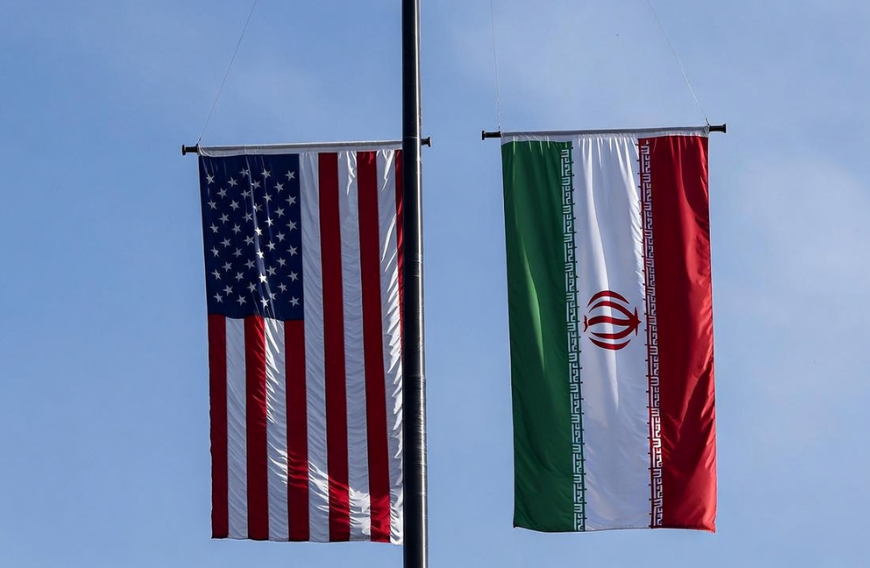
Two U.S. officials have said the U.S. and Iran will “stand down” for now as talks remain “on track.” This comes after the two sides exchanged fire near the Strait of Hormuz.
Iran’s position on the matter remains unclear, according to CNN. The recent military action tested an initial agreement that was supposed to halt hostilities during 60 days of negotiations.
The report also mentioned that traffic through the Strait of Hormuz remains a fraction of pre-war levels. Different authorities are vying to organize the transit of vessels, leaving operators with a difficult choice over which path to take. Iran’s foreign minister said the waterway will remain under Tehran’s “exclusive management.”
Iran had also demanded a full withdrawal of Israeli forces from Lebanon as part of the deal with the U.S, however fighting continued between Hezbollah and Israel in the weekend.
READ: Iran says talks with US have advanced but agreement is not near (May 25, 2026)
Last Thursday, Iran attacked a cargo ship on Thursday near Oman, just outside the Strait of Hormuz, and the U.S. responded with attacks. Iran then struck U.S. military and naval bases in Kuwait and Bahrain, respectively.
The attacks also reportedly disrupted attempts to evacuate thousands of seafarers through a route near Oman following months of war and closure of the vital waterway.
Iran’s Revolutionary Guard, which was not involved in clearing the route near Oman, warned Thursday that ships that do not coordinate passage with its naval forces “will be dealt with” as violators. Iran’s deputy foreign minister Kazem Gharibabadi, however, was quoted by Iranian media on Monday saying that while consultations continue with mediator Qatar, technical talks with the U.S. are not yet planned for this week and will be held only “when the conditions are met.”
According to CNN, traffic at the strait of Hormuz is effectively partitioned into multiple routes. Iran insists that vessels use its own designated corridor, and has fired on ships using other routes.
READ: Google, Amazon, Meta could be charged by Iran for using Hormuz internet cables (May 18, 2026)
Observers say that the weekend’s escalation triggered a significant drop in the number of ships transiting the strait, following a week of optimistic traffic recovery in the corridor. But as vessels pull back from the other routes, traffic through the Iran-approved route remains steady, shipping experts say.
However, maritime experts remain optimistic. They believe that the return-to-calm is a sign that an all-out conflict is unlikely. “The Strait of Hormuz remains the principal flashpoint, but also the principal focus of ongoing negotiations,” Dimitris Maniatis, CEO of maritime risk consultancy Marisks told CNN, adding that Washington and Tehran “demonstrated a willingness to retaliate while simultaneously preserving the diplomatic track.”
Maniatis said that as long as dialogue continues, there “remains a realistic window of opportunity for commercial transits under carefully managed conditions,” although the “security environment remains fragile and capable of changing with little warning.”