



By Rajwa Quasim
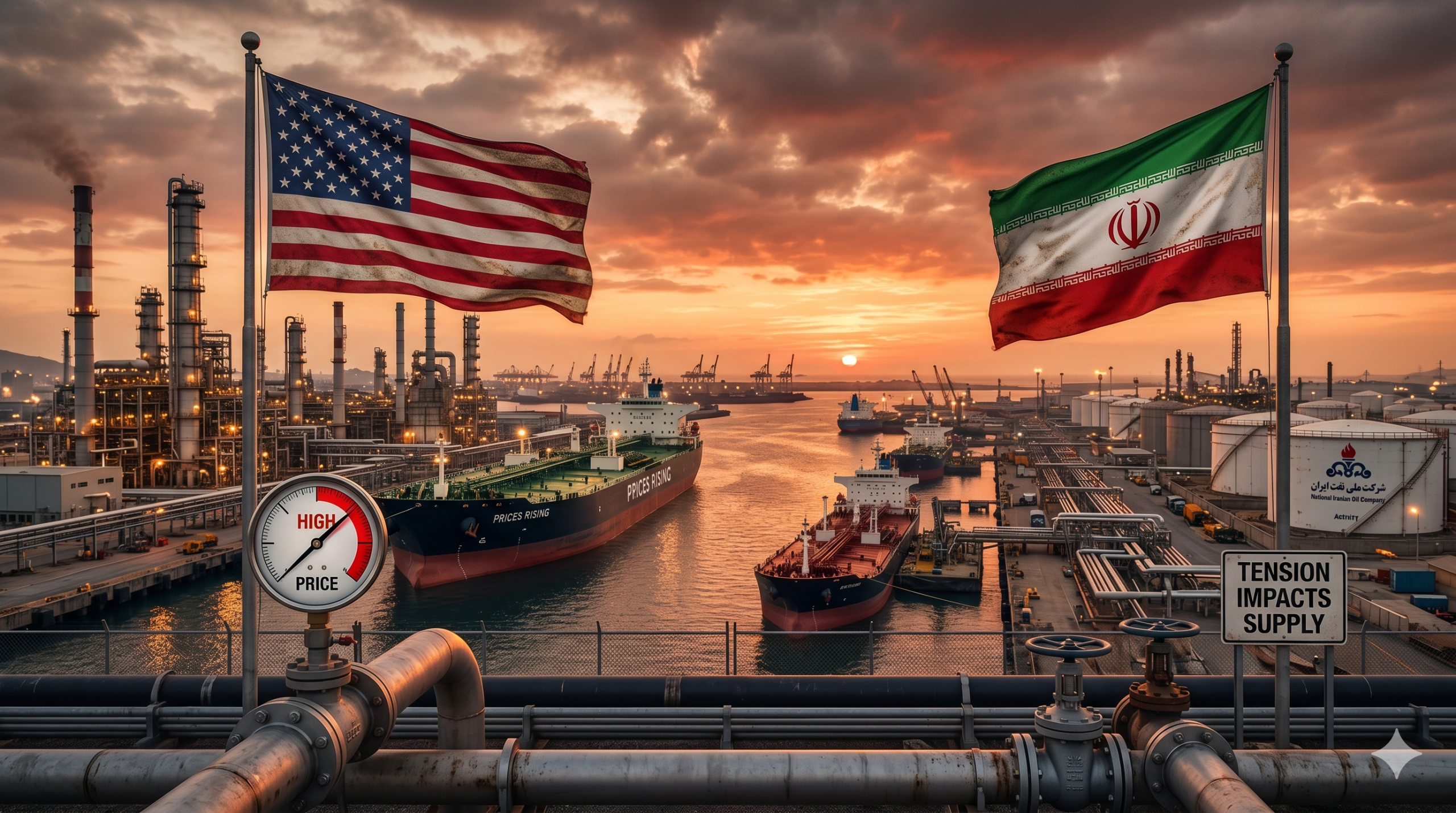
Oil prices edged higher Thursday following reports of attacks on oil tankers off the Saudi coast in the Red Sea and renewed U.S. warnings of possible escalated military action against Iran. For the first time since early June, the U.S. benchmark crude oil price rose above $90 a barrel.
Brent crude futures for July delivery rose 4.6%, making it $98.44 per barrel – the highest since late May. This has also put Brent crude futures for a monthly gain of 35.3%, the third largest monthly rise in 10 years. Meanwhile, the U.S. West Texas Intermediate (WTI) Crude futures gained 3.8% to $90.14 a barrel, also set for its third-biggest monthly rise in 10 years, climbing about 30% during the month.
According to the UK Maritime Trade Operations post on X, around 70 nautical miles southwest of Al Shuqaiq (Red Sea), a tanker was attacked resulting in fire. But no causalities have been reported yet. The responsibility of the attacked was claimed by Iran-backed Houthis of Yemen. They targeted two tankers for allegedly violating their maritime blockade.
READ: Brent crude jumps more than 4% amid latest US-Iran strikes (July 13, 2026)
President Donald Trump had warned that if Iran attacks a vessel in the Strait of Hormuz, the U.S. will destroy an Iranian brigade or power plant.
“From this point forward, any time the Islamic Republic of Iran shoots at a ship in the Strait of Hormuz, whether it be by Missile, Rocket, Drone, or any other device or weapon, the United States will bomb and destroy ONE BRIDGE OR POWER PLANT,” Trump said.
Tehran countered it by saying “if the Americans target a bridge or a power plant in Iran, Iran will, in turn, strike infrastructure and bridges in the region, including energy facilities where the United States has interests,” an unnamed Iranian military source told state-run Tasnim News Agency.
This strike by Houthis came hours after Trump’s warning to Iran in the Strait of Hormuz.
The Red Sea, which has become critical path for oil trade due to attack in the Persian Gulf could also see traffic like Strait of Hormuz, which handled nearly a fifth of global oil trade. Saudi Arabia has pushed its east-west pipeline, which transports crude oil from the Persian Gulf to the Red Sea port of Yanbu close to its maximum capacity. The pipeline had been carrying up to 5 million barrels of crude oil per day, which is then shipped through the Bab-el-Mandeb strait. Bab el-Mandeb strait connects Red Sea to the Gulf of Aden, which further connects to the Indian Ocean. According to Goldman Sachs, over nine million barrels per day of crude oil have passed through this strait over the past month.
READ: World reacts to US, Iran striking a peace deal to end war (June 15, 2026)
Joseph Westphal, former U.S. ambassador to Saudi Arabia in his CNBC interview stated that While the U.S. is spending a “tremendous amount of money.” Washington does not have the resources to continue the war with Iran and also protect shipping through the Red Sea. “The Secretary of War has been testifying before Congress, requesting greater funding for the war. Congress is very, very anxious about that. They don’t feel that there’s enough of a strategy and a plan to provide these additional funds,” he added.
U.S. Secretary of State Marco Rubio on Wednesday accused Iran of not taking negotiations with Washington seriously. He further added that the U.S. remained committed to pursuing diplomacy in the Middle East.