



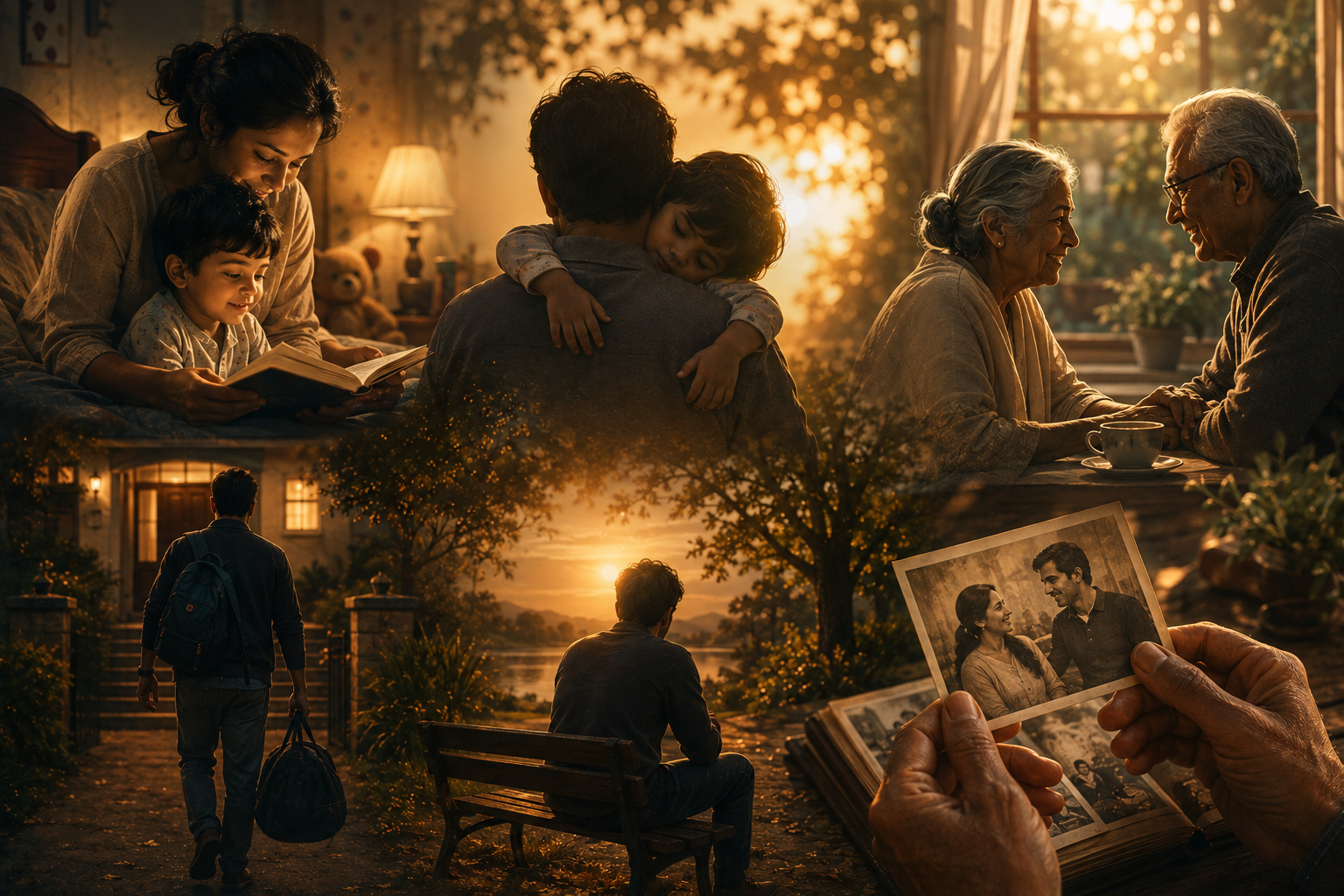
There is a version of our parents that was once younger than we are today, and as we grow older, that realization becomes increasingly difficult to ignore. We tend to remember our parents only as our parents, as the adults who seemed to have everything figured out, the people who were always there when we needed them. We rarely stop to imagine them as young people themselves, with their own uncertainties, ambitions, disappointments, financial pressures and dreams that existed long before we entered their lives.
Many of them came to this county, like mine in their twenties knowing very little about the world. None of them knew anything about parenthood and were forced to figure it out at an age that today seems impractical and that was passed on to our generation .
There was a version of our parents who stayed up late telling us stories even though they were exhausted from the demands of their own day. There was a version of them who carried us from the car into the house while we pretended to be asleep, perhaps because we were too tired to walk or simply because we wanted to be carried. They did it while thinking about bills that needed to be paid, deadlines that had to be met, responsibilities that never seemed to end and problems they often chose not to share with us. We saw the parents who carried us. We did not see the person who was carrying the weight of an entire life on their shoulders.
That is one of the strange things about childhood. We experience our parents almost entirely through the narrow lens of being their children. To us, they seem permanent. They seem older, wiser and somehow protected from the same passage of time that affects everyone else. We do not understand that while we are growing up, they are growing older. We are becoming someone new while they are becoming someone different too.
Eventually, we begin to notice. Their hands change. Their hair changes color. Their steps become slower. Conversations that once seemed endless become shorter. The house that once seemed full of activity becomes quieter. And somewhere along the way, we realize that the people who once seemed so large in our lives are themselves becoming fragile.
READ: Sreedhar Potarazu | Employers still can’t Get Off The Dime to beat healthcare costs (August 21, 2026)
Perhaps the most painful part is that there was a period when our parents were our entire world, and we did not know how brief that period would be.
When we are young, we think life is measured in years. We assume there will always be another birthday, another holiday, another family dinner, another opportunity to sit with our parents and ask them questions. We believe there will always be time to know them better. We rarely recognize that childhood is not simply the beginning of our lives. It is also the only period when our parents occupy such a complete and irreplaceable place in them.
I lost my mother before I was 35. As I watch friends and peers celebrate their parents well into their 80s and 90s, I find myself reflecting on how little time we are actually given, even when we are fortunate enough to have our parents for many years. When I look at my own life and count the years I truly had with one of my parents, taking into account the years spent away from home and the changes that come with adulthood and marriage, the number is surprisingly small. It was hardly eighteen years in total.
Eighteen years sounds like a lifetime when you are a child. It feels like almost nothing when you look backward from adulthood.
That realization has changed the way I think about time. There are people who would give anything for another conversation with a parent. There are children who never had the privilege of being carried into the house by someone who loved them unconditionally. There are people who never heard their mother’s voice or experienced the reassurance of a father’s presence. And there are those of us who had our parents for a meaningful period of our lives but were often too busy growing into ourselves to fully appreciate what we had.
That is why I believe this reflection has particular relevance for Gen Z and for the generations that will follow.
Ambition is important. There is nothing wrong with wanting to build something, achieve something, change something or become something greater than what came before. Young people today have extraordinary opportunities to create lives that previous generations could barely imagine. But ambition can also become a kind of blindness. In our pursuit of what comes next, we can fail to recognize the value of what is already in front of us.
We are also living through an extraordinary moment in human history. Artificial intelligence is rapidly changing how we work, communicate, learn and create. The two letters “AI” increasingly represent a new technological order that will reshape enormous parts of our lives. We are going to witness capabilities that previous generations could never have imagined.
READ: Sreedhar Potarazu | How 3 Harvard dropouts ‘Etched’ a $20 billion company in just 4 months (August 19, 2026)
But in the middle of all this technological transformation, we should remember that there are things no technology will ever be able to give back to us.
AI may be able to preserve a person’s photographs, recordings, writings and even aspects of their voice. It may someday be able to reconstruct remarkably convincing representations of people who are no longer alive. But it cannot give us another evening with our mother. It cannot give us another conversation with our father. It cannot recreate the feeling of being a child sitting beside someone who made the world feel safe.
Technology can preserve information about a person. It cannot restore the time we had with them.
That distinction matters because we are entering a period in which our ability to create, preserve and simulate experiences will become extraordinary. We may be able to reconstruct aspects of the past with a sophistication that seems almost indistinguishable from reality. But the past itself remains unreachable.
That is why perhaps the most important lesson for the next generation is not about how to use AI, but how not to lose sight of being human while using it.
We should encourage young people to pursue ambition, but also to understand that some of the most valuable experiences in life will never appear on a résumé. There is value in sitting with your parents without looking at your phone. There is value in listening to a story you have heard before. There is value in asking your mother what she was like at your age, or asking your father what he dreamed about before he became a parent. There is value in discovering that the people you knew only as Mom and Dad were once young people trying to figure out their own lives.
Those conversations can reveal an entirely different dimension of our parents. We begin to understand that they were not simply the people who raised us. They were people who had their own fears and aspirations. They made mistakes. They experienced disappointment. They worried about money. They wondered whether they were making the right decisions. They were trying to become better versions of themselves at the same time we were learning to become ours.
Perhaps that is why losing a parent changes our understanding of our own history. When a parent dies, we do not simply lose someone we love. We lose one of the few people who remembers us from before we became the person the world knows today. They remember the child behind the professional, the student behind the career, the awkward teenager behind the confident adult. They remember versions of us that no one else may remember in quite the same way.
READ: Sreedhar Potarazu | Who wrote this? The crisis of authorship — Vedas, Shakespeare and now, AI
(August 18, 2026)
So for those who still have their parents, the lesson is not to live in fear of losing them. It is to live with an awareness of their presence while you still have the privilege of it. Call them. Visit them. Ask questions. Listen to their stories. Learn who they were before you arrived. Let them tell you about the dreams they had when they were younger than you are now.
Because someday, perhaps decades from now, you may find yourself looking backward and realizing that the ordinary moments you barely noticed were among the most important moments of your life.
We spend so much of our lives preparing for the future that we sometimes forget that the future is not the only place where our lives are happening.
If we are fortunate, we eventually become old enough to understand what our younger selves could not.Our parents were never simply getting older. They were living their one life, just as we are living ours.
And the greatest lesson may be that while we are busy building the future, we should not become so consumed by what is coming next that we fail to recognize the extraordinary people who are still here with us today.
AI may transform the future of humanity.
But it will never replace the experience of being loved by a parent.
And there is no technology, no algorithm and no artificial intelligence that can give us back a moment we failed to appreciate while it was still ours.