



By Rajwa Quasim
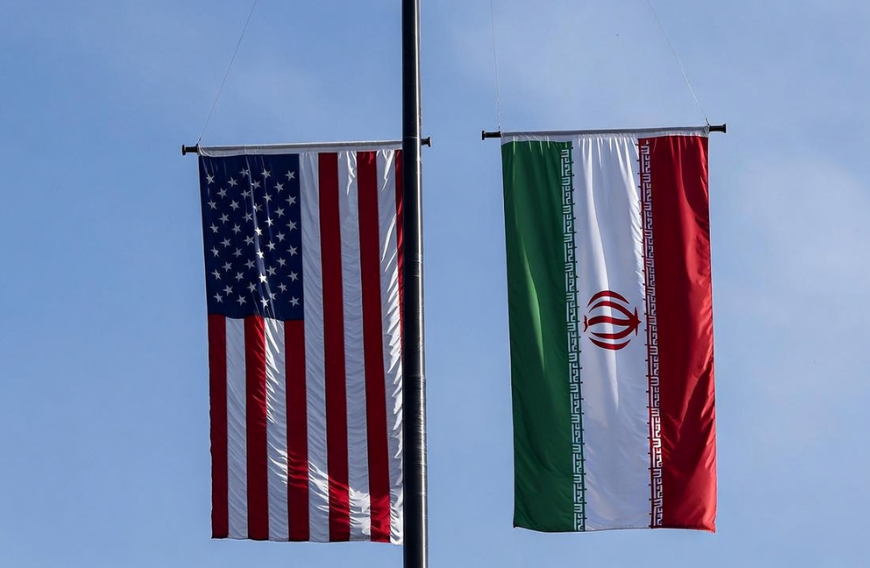
The Trump administration is planning to impose further economic sanctions on Iran, which President Donald Trump called “economic D-Day.” Trump said Monday that Iran was “collapsing” as the U.S. prepared to announce tougher sanctions against Tehran. Treasury Secretary Scott Bessent described the measures as the “greatest financial offensive ever marshalled against an adversary.” The new strategy aims to increase economic pressure on Iran’s leaders and push them toward ending the nearly six-month war between the two countries.
Bessent was expected to unveil the new measures Monday during a news conference. The move signals a shift from political pressure to a much broader economic campaign against Tehran. Bessent also urged Iran’s allies to sever ties with the country, saying doing so would help them gain U.S. support, better access to global capital and strengthen their positions in the global economy and investor confidence.
Meanwhile, the head of Iran’s Supreme National Security Council, Mohsen Rezai, said that not only the U.S., but any country that supports the sanctions would be considered an enemy by Iran. He said on state television, “We declare to all countries … do not join the economic war waged by the United States. Any country participating in the imposition of economic restrictions against us is considered an enemy. If the countries concerned refuse to “distance themselves” from the United States, Iran would “harm” their interests.”
READ: Reopening the Strait of Hormuz is only the first step; return to ‘pre-war levels’ could take ‘months’ (June 15, 2026)
Rezai further said that Iran had not yet attacked any American economic interests and still had more cards to play in the war. Iran has maintained that it has withstood various economic sanctions for years and will continue to do so.
Iran’s Central Bank Gov. Abdolnaser Hemmati compared the “economic D-Day” with previous U.S. sanctions. He said, “I was also the head of the Central Bank from 2018 to 2020. Our circumstances were almost exactly like this. They imposed maximum pressure, imposed secondary sanctions, sanctioned all our banks, sanctioned all our agriculture, sanctioned all our oil purchases — they sanctioned everything. The country stood and got through that period. It is the same now. We stood through those conditions, and, in practice, they were unable to do anything.”
A memorandum of understanding was signed between the two countries in June, setting a 60-day deadline for ending the war and reaching an agreement on Iran’s nuclear program. The 60-day deadline ended last week, with little or no progress and tensions rising on both sides. There are still no signs of an agreement on reopening the Strait of Hormuz, a key global shipping route.
READ: Iran peace deal nears amid fresh Hormuz tensions (June 14, 2026)
Iran and Oman are still holding talks over control of the Strait of Hormuz. Representatives from the two countries were scheduled to meet Tuesday for further discussions. Iran wants to maintain control of the strategic waterway, while the U.S. opposes the move.
Iranian President Masoud Pezeshkian defended the MoU and said he believed it was the best way to end the ongoing war between the two countries. He said, “There is not a single provision in this agreement that amounts to capitulation. The supreme leader sets the policies, and we will follow that path.”
Greece moved one of its Patriot missile defense systems to the island of Crete on Monday amid threats from Tehran to attack U.S. bases across Europe. According to local media reports from Tehran, the move was intended to pressure the Trump administration over its military pressure related to the Strait of Hormuz. Greece’s Defense Ministry did not comment on the reported deployment.
In a post on Truth Social on Monday, Trump said, “IRAN IS COMPLETELY COLLAPSING!!!” without offering further context.
Amid the ongoing war, Iran’s currency hit a record low against the dollar. In the informal market, $1 was worth about 2.02 million Iranian rials, while the Central Bank’s official rate was lower, at about 1.5 million Iranian rials per dollar.