




NEW YORK – The last act of the Jaipur Literature Festival USA, New York – an intense and virtuoso solo dance performance by Mayuri Bhandari, set to recorded sonic “music,” along with an ensemble of musicians on stage, titled “HeartBeat” — provided the thread that strung together the riveting kaleidoscope of talks and discussions held at venues in New York City, on September 29-30, into a cohesive piece.
Conceptualized by Christopher Janney, “HeartBeat” is the actual heartbeat of Bhandari, heard through onstage speakers as she danced at an improvised pace; pulsations and rhythmic beats fluctuated as she transitioned from slow to energetic to frenzied. The ensemble chimed in periodically.
Bhandari’s excellent emotive dance performance at the Asia Society, in Manhattan, captured the essence and mood of the festival, also held at the National Arts Club and The Center for Fiction: a pack of diverse writers with fascinating books, who lent plenty of introspection, immediacy and poignancy to a variety of critical subjects, at an unsettling, chaotic time for people around the world, not least for those in New York City, and in America.
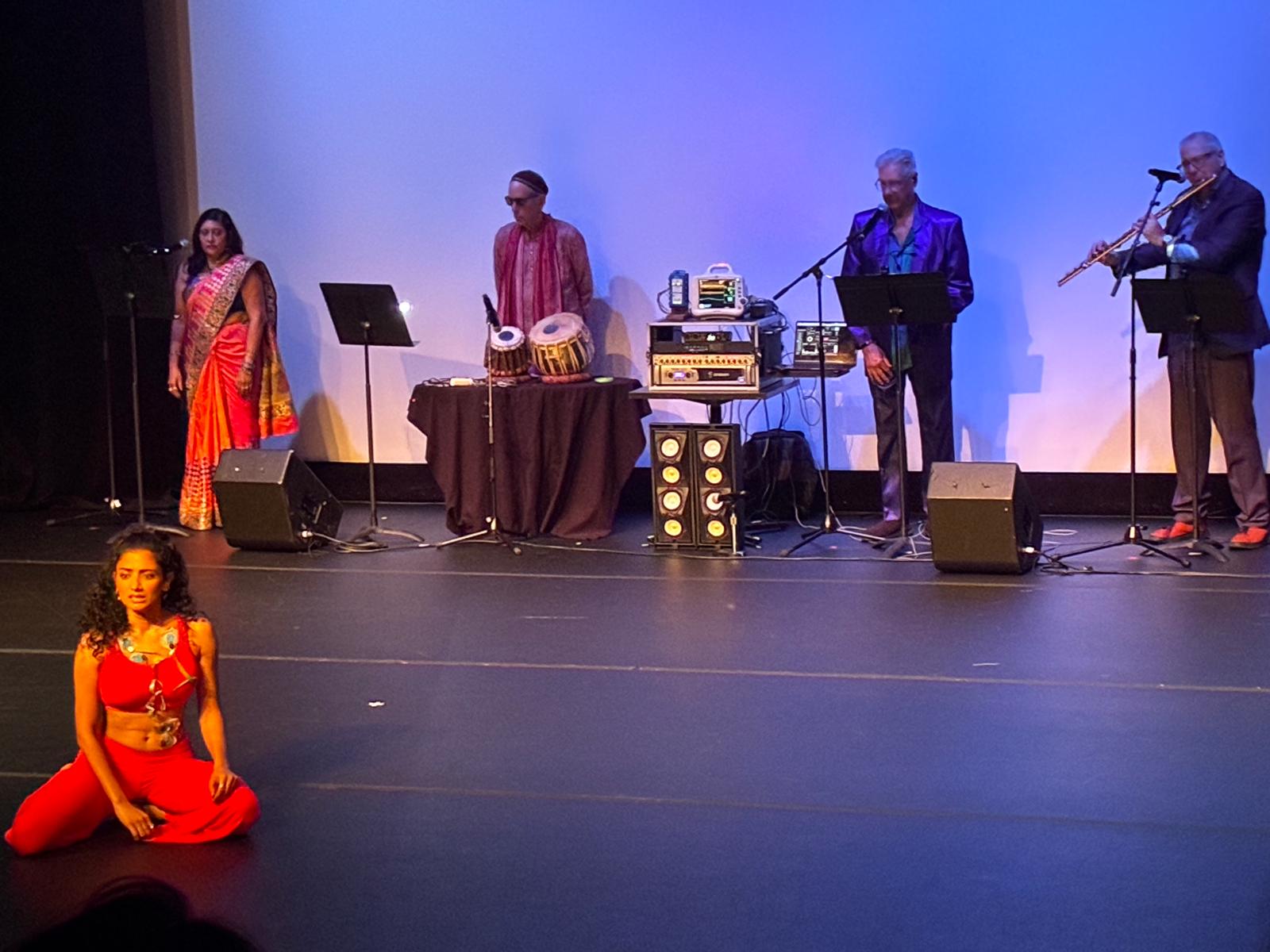
As Bhandari wound down her performance, the audience at Asia Society must surely have breathed a sigh of relief that her heartbeat stabilized and returned to normal after a frenetic time on stage, that at times seemed suspensefully close to devolving into chaos. Her heartbeat became the heartbeat of the audience. It’s likely a thought resonated around the auditorium: the world, too, will soon do an encore; calm and peace will reign again.
After listening to writers and hosts talk animatedly of vicious political struggles, deadly conflicts and gargantuan wars, bloody partitions that created a dozen nations and a new geopolitical order in Asia; murderous British colonial oppression in Africa with scant regard for humanity – the scale of which even put the brutal Ugandan dictator Idi Amin to shame; startling, abominable levels of corruption and power grabs, the dark age of McCarthyism during the “red scare” of the 1940s and 1950s when the mafia thrived and rogues like Roy Cohn were in the limelight in America; possible extinction of human life on earth because of AI, as well as pondering the quintessential question of whether humans would even stay human in the age of “Super Intelligence,” to meandering ghosts who traverse continents, and of course, discourses on vexatious immigration woes and President Donald Trump, the audience badly needed some succor and relief: “Heartbeat” gave that. Things returned to normal, even if at least for that fleeting moment and the evening that unfolded.
READ: JLF Los Angeles examines the New World Order (
The remarkable aspect of the Jaipur Literature Festival is that in the two decades since its inception in Jaipur in 2006, by historian and writer William Dalrymple and writer Namita Gokhale, the festival’s expansion has been relentless, driven by a global vision, while the quality of writers and hosts at every gathering has remained impressive.
It’s no wonder that even this edition of JLF New York was sold out. JLF’s flagship meet in India is touted as the largest annual literary festival in the world; a cultural phenomenon that draws hundreds of thousands of people to its venue in the Pink City every January.
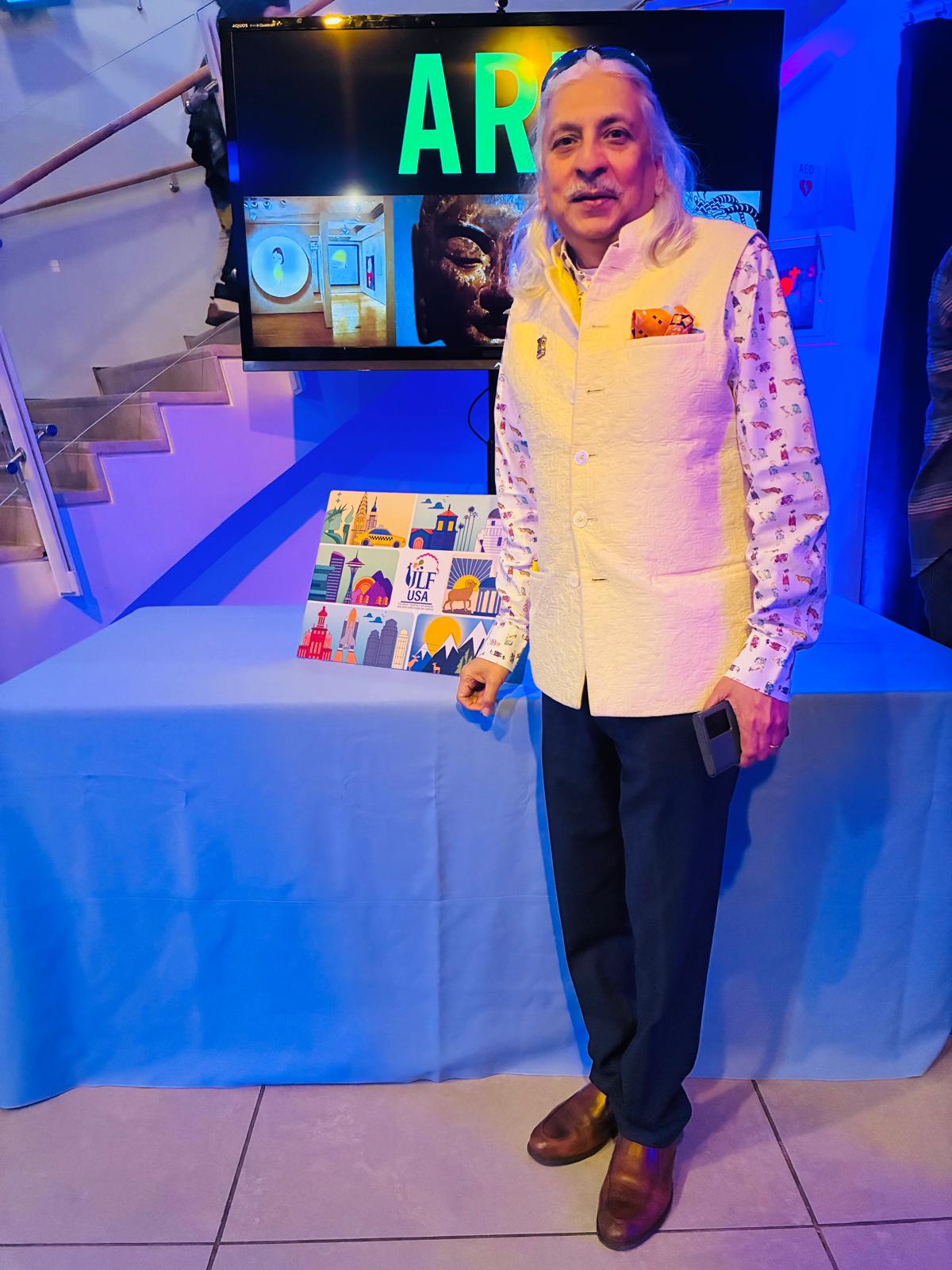
Much of JLF’s global popularity can be credited to Sanjoy Roy, Managing Director of Teamwork Arts and producer of the festival. JLF, a Teamwork Arts brand, now has 16 editions around the world.
Teamwork Arts produces more than 30 festivals across 42 cities worldwide.
The dapper and eloquent Roy, who usually is found busy managing the show from the sidelines, has now become even more inextricably linked to the festival with an engaging memoir of his making the rounds of the book world. Roy, in a conversation with the activist and writer Sohaila Abdulali, talked about the supernatural in his debut book, “There is a Ghost in My Room,” which also details an “encounter” he had in Boulder, Colorado, which led to JLF making its debut in America.
Another writer who made his recent debut in the publishing world, and was a speaker at the meet, has a long connection to the festival through his father.
The historian Sam Dalrymple, son of William Dalrymple, launched his debut book, “Shattered Lands: Five Partitions and the Making of Modern Asia,” last year. Conversing with the writer Prashant Jha, the younger Dalrymple delineated the partitions carved into the continent by the British, which fractured not only the subcontinent, with Pakistan and Bangladesh sprouting from India, but also Myanmar, Aden, and some Gulf nations. It ultimately turned out dramatically to be the British colonial empire’s unmaking too.

The themes of British colonialism and Uganda’s turbulent postcolonial journey were explored in another panel, by Mahmood Mamdani, the illustrious Columbia University professor who is now better known as the father of the Mayor of New York City, Zohran Mamdani. There was a surge in the crowd trying to grab seats in the auditorium and excited murmurs reverberated with expectations that perhaps the mayor might walk in nonchalantly to watch his father speak on stage, or even perhaps the director Mira Nair might show up to applaud her husband’s new book.
READ: Isheeta Ganguly’s ‘Three Women’ takes center stage at JLF New York (
Neither made an appearance, but in the same clinical fashion that Indian parliamentarian and writer Shashi Tharoor has criticized the British for their atrocities of the past, Mamdani made it clear that, in his view, the British played a greater role than Amin in laying the groundwork for corruption and the expulsion of Indian and Asian populations from Uganda and elsewhere in Africa.
As he told his Columbia University colleague, Prof. Neeraj Kaushal, during a conversation, his book “Slow Poison: Uganda and the Afterlives of Empire” is a recollection of his years spent in the country. However, Mamdani made it clear that “there is a memoir in the book, but the book is not a memoir”, loaded as it is with deep research and political analysis.
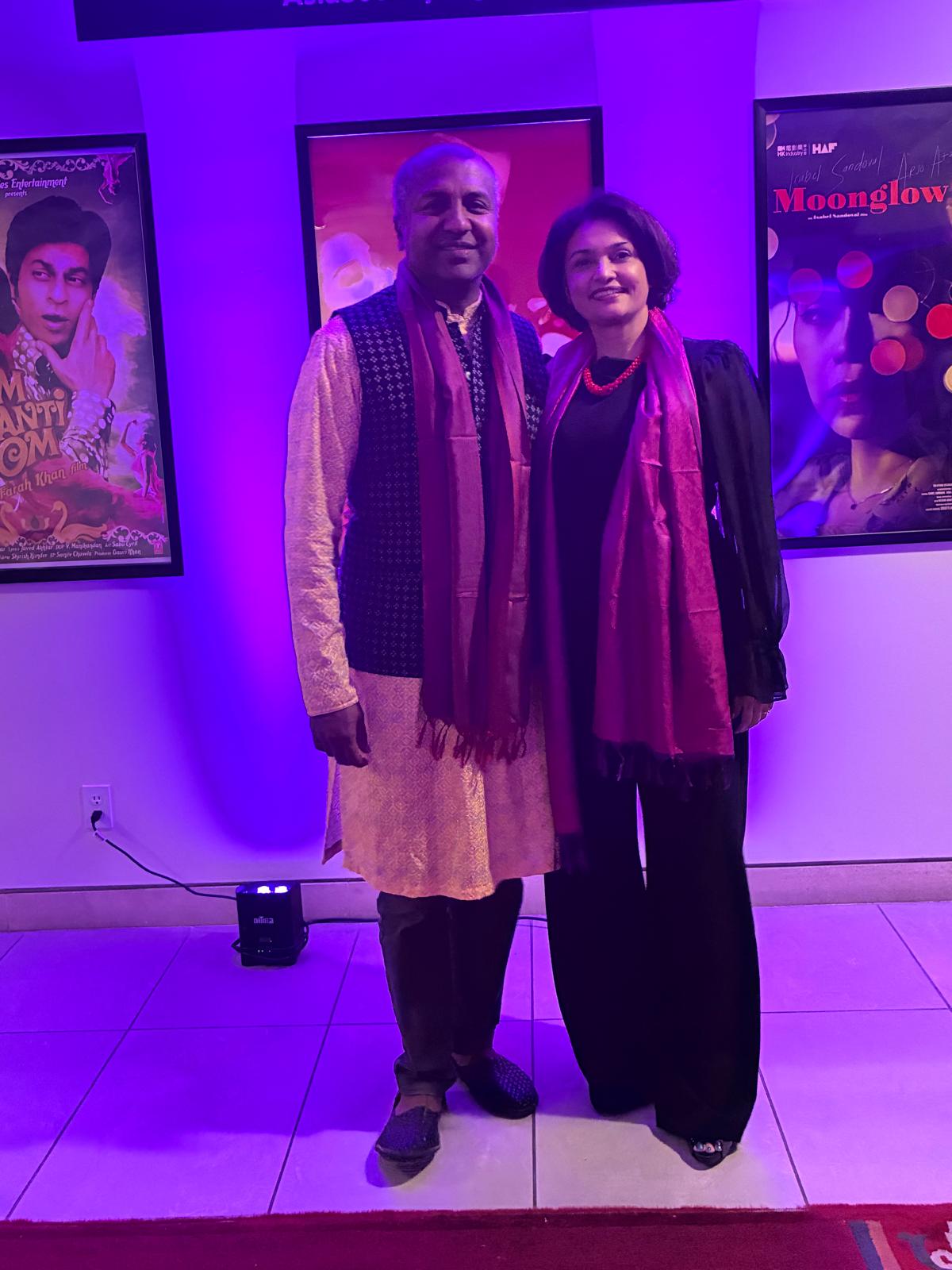
A standout feature of the festival was also the appearance of the power couple from New York City, Sreenath (Sree) Sreenivasan and his wife Roopa Unnikrishnan, each of whom separately hosted a panel.
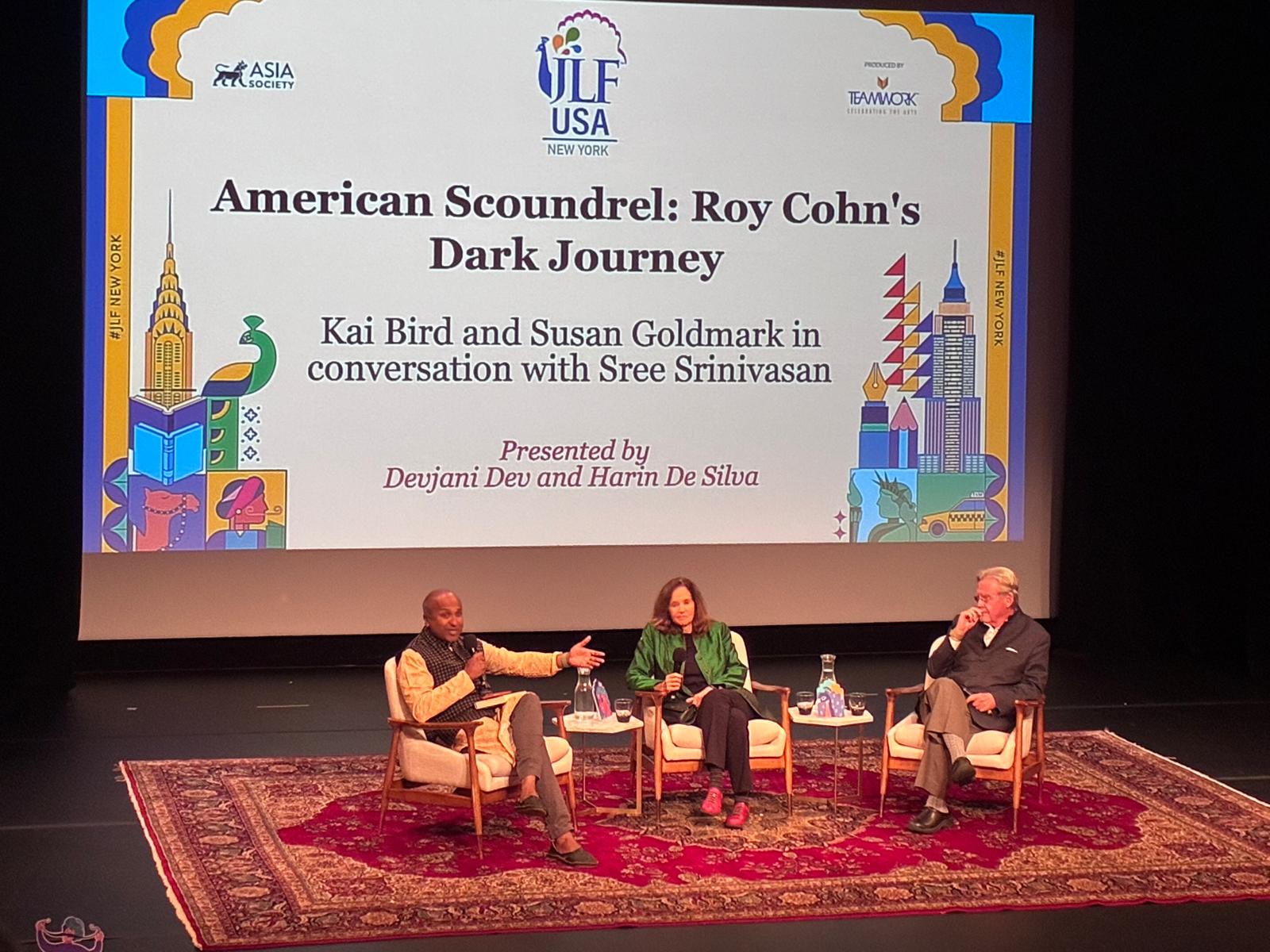
Sreenivasan, a tech entrepreneur and versatile journalist, with several avatars under his belt, ranging from being a professor, Dean and Chief Digital Officer at Columbia University, to being the Chief Digital Officer of the Met Museum and later, holding the same office at New York City, closed out the talks for the festival, engaging with the Pulitzer Prize-winning biographer Kai Bird and his wife and researcher Susan Goldmark, on their new book which is likely destined to be a bestseller: “American Scoundrel: Roy Cohn’s Dark Journey.”
Bird’s enthralling account chronicles Cohn’s extraordinary life as a ruthless and unscrupulous lawyer who worked with all five Mafia families during his time and became one of the most infamous political operators and society figures to shape modern American politics, including during the era of McCarthyism. The narrative gains contemporary relevance from Cohn’s relationship with President Trump, who was his client and protégé. There are also salacious details of Cohn’s colorful sex life and insatiable libido. According to the book, Cohn slept with a different man every night.
Unnikrishnan, who like her spouse is an extraordinary individual of many talents, conversed with three experts in the realm of technology and AI – Nitin Seth, the prolific writer, entrepreneur and former COO of Flipkart, who has become a fixture over the years at book panels and speaking engagements because of his bestselling works in India on business innovations; Vinita Gupta, the Silicon Valley-based veteran tech entrepreneur; and Meredith Broussard, a data journalism professor at New York University, and author of books on tech bias and AI.
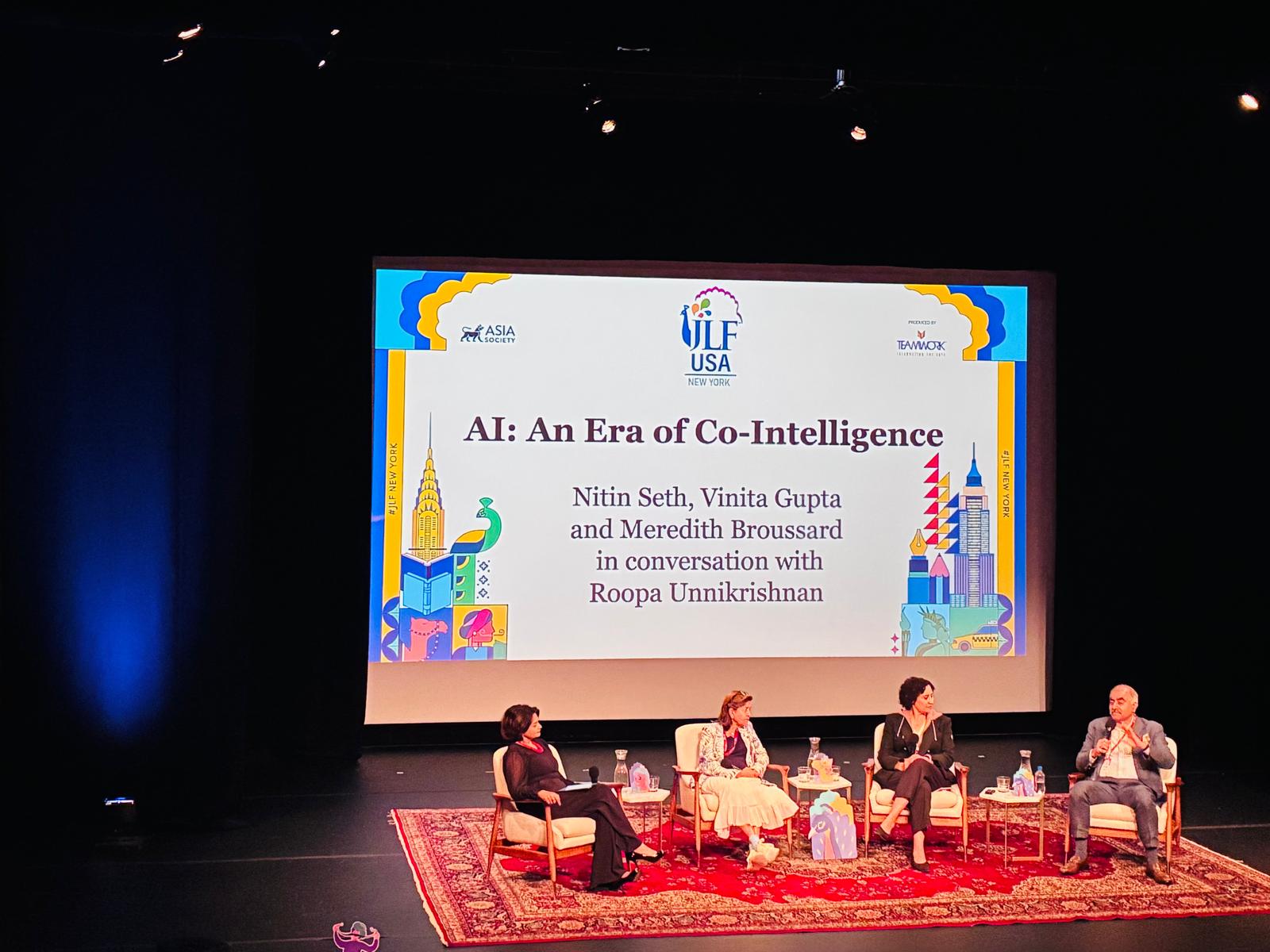
The panel, “AI: An Era of Co-Intelligence,” threw many curveballs with its eclectic range of viewpoints. Unnikrishnan, whose accolades include receiving the Arjuna Award after becoming the first Indian woman to win a gold medal in shooting at the 1998 Commonwealth Games, in the 50-meter rifle prone event, is now an author and senior vice president of strategy and corporate development at IDEX Corporation.
She asked several pertinent questions of the panelists, but their answers confirmed what many in the audience already knew: There are, at the moment, far more questions about AI and its seemingly unfathomable powers than there are meaningful and concrete answers.
Unnikrishnan made a telling remark when she pointed out the need to ensure that AI systems are developed from diverse perspectives.
The danger of that not happening would be likely devastating, for future generations.
(Sujeet Rajan is a Columnist for The American Bazaar)