



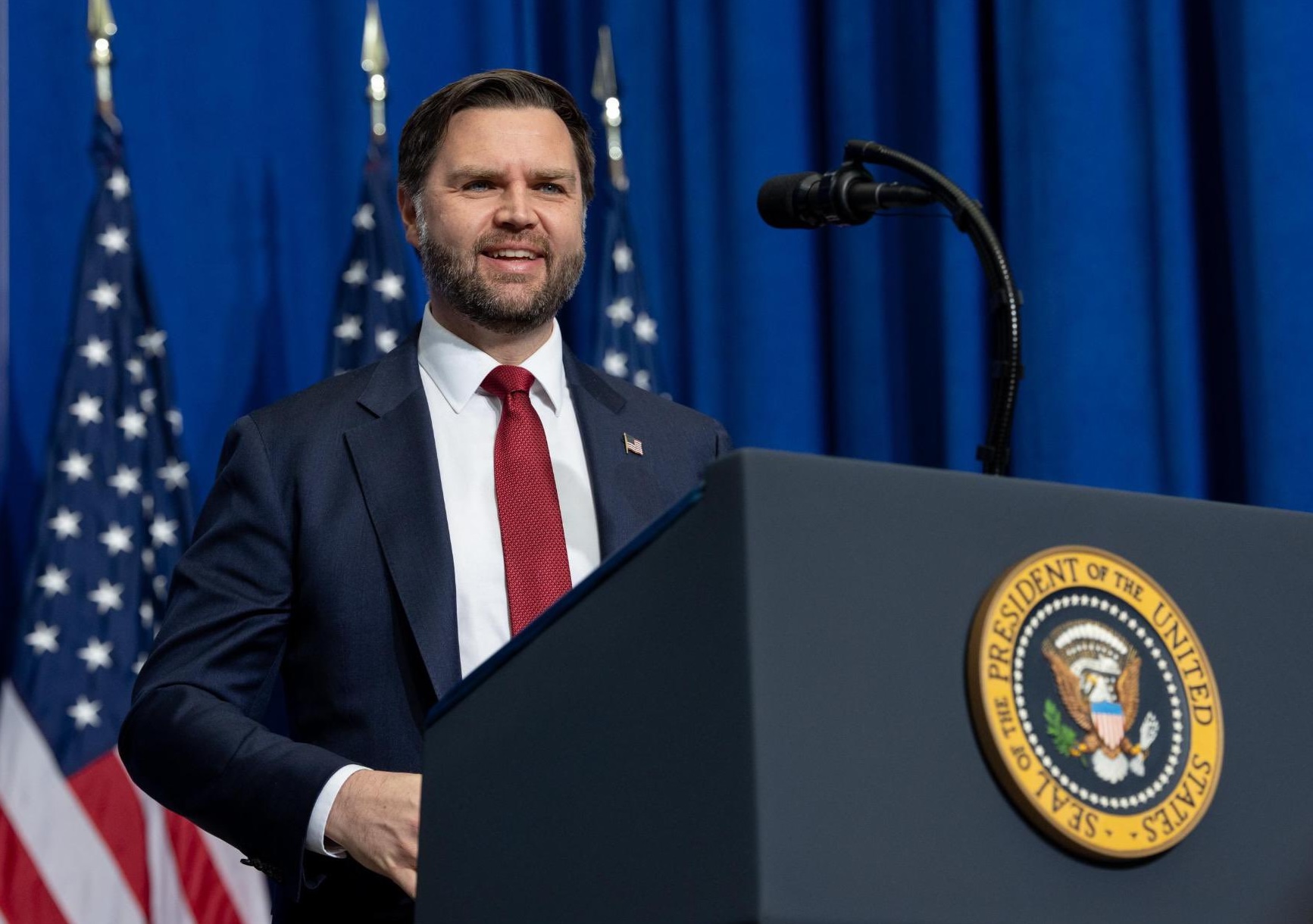
Following Abdul El-Sayed’s midterm victory, which will make him the first Muslim senator in U.S. history, Vice President JD Vance has expressed a willingness to work with the Michigan senator-elect, despite exchanging criticism and personal attacks throughout the campaign.
In an interview with Laura Ingraham on Fox News’ “The Ingraham Angle,” Vance said he hoped to speak with Democrat El-Sayed about how best to serve the people of Michigan.
“I hope we can talk about how to best serve the people of Michigan. I love the working class citizens, all the citizens of Michigan. If Abdul El-Sayed wants to work with me and the president to make people’s lives better, he’s going to find us a very willing partner,” Vance said.
El-Sayed responded on X, signaling that he was open to the proposal. “For me, it will always be about serving working people. I look forward to the conversation,” he wrote, tagging the vice president.
Throughout the election campaign, Republicans, including Vance and President Donald Trump, repeatedly attacked El-Sayed over his identity. Vance described him as a representative of “terrible evil” and called him a “little weasel” who should “shut his mouth” and show gratitude to the country. He also questioned El-Sayed’s commitment to America.
READ: ‘My wife is also Indian American’: Abdul El-Sayed challenges JD Vance in latest exchange (November 9, 2026)
Meanwhile, El-Sayed, an epidemiologist and former public health official who was born and raised in the U.S., did not hold back in his responses. Drawing on their respective university affiliations, he fired back at Vance, an Ohio State University alumnus, invoking the rivalry between the University of Michigan and Ohio State.
“No, no, no. What you’re talking about is a Wolverine. You could take your Buckeye and go shove it somewhere else,” El-Sayed said. “Wolverine” is the nickname associated with the University of Michigan, while “Buckeye” refers to Ohio State University.
The political rivalry took a more symbolic turn after El-Sayed defeated Republican Mike Rogers in the November midterms. During his victory speech, he directly addressed Vance as “Habibi,” an Arabic term meaning “my beloved” or “my dear.”
“JD, Habibi, there is this delicious irony in the fact that you’re constitutionally obligated to swear me in January,” El-Sayed said in a victory speech that drew laughter from supporters.
El-Sayed has also indicated that he is willing to engage with Trump despite the president’s campaign rhetoric. Speaking at a rally in Georgia in October, Trump mocked El-Sayed’s name and attacked him over his religious identity, calling him a “jihadist” and referring to him as “Mohammed.”
“His name is actually Abduladadalalalala. It’s Adulbabababababa Mohammed Al-Sayed. So his middle name is Mohammed. So I was right. He’s a jihadist…. He hates our country,” Trump said at the rally.
El-Sayed countered that he was not running to become a Muslim senator but was seeking a seat in the U.S. Senate and happened to be Muslim. He stressed that his identity was as American as those of Trump, Vance and Rogers.
In an interview with NPR’s “Newsmakers,” El-Sayed extended an invitation to Trump, saying, “Donald, if you’re listening, there’s a lot we could work on. Happy to have a meeting. Let’s figure out what we can work on and get done.”
READ: From Michigan to Bhatkal: Abdul El-Sayed’s historic Senate victory sparks celebrations in wife’s ancestral hometown (November 6, 2026)
“Put his name on it,” he added. “He’ll probably pass it. I’m not above doing that. I don’t care what it’s called.”
On Jan. 3, 2027, Vice President Vance is expected to administer the oath of office to the newly elected senators in the Senate Chamber at the U.S. Capitol in Washington, D.C. El-Sayed will raise his right hand and take the prescribed oath to support and defend the U.S. Constitution.
He is likely to use a Quran during the ceremony, although he has not yet decided which copy. Possibilities include one once owned by former President Thomas Jefferson or the oldest Quran in Michigan, housed at the University of Michigan.
Following the formal ceremony, newly sworn-in senators traditionally sign the official Senate Oath Book and participate in a ceremonial reenactment with the vice president in the historic Old Senate Chamber.
“Whatever my name is, however I pray, it’s not the book that you swear on. It’s the book you swear allegiance to,” El-Sayed said, referring to the Constitution.
Throughout his campaign, El-Sayed emphasized priorities including “Medicare for all,” “money out of politics” and “money in your pocket.”