



How the Founder of Parity Lab is Transforming Communities, One Leader at a Time
By Pragya Raj Singh and Venkatesh Raghavendra
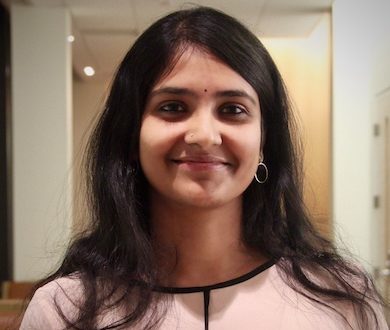
India’s rapid economic growth often dominates global headlines, yet a quieter, equally transformative movement is reshaping the nation’s social fabric. Among the trailblazers in this arena is Mathangi Swaminathan, a social entrepreneur whose work highlights the extraordinary power of female-led initiatives in advancing gender justice. Her vision took shape as Parity Lab, a groundbreaking organization empowering marginalized communities through survivor-led initiatives. By partnering with survivor-led groups, Parity Lab turns resilience into leadership, redefining progress as inclusive and transformative.
For female survivors of gender violence in India, often from marginalized communities, empowerment begins with recognition. Swaminathan’s community-first approach transforms survivors into leaders, creating ripple effects that drive systemic change. Beyond founding Parity Lab, she’s a global Echoing Green Fellow and an influential voice on gender justice, relentlessly championing a more inclusive and equitable world. The American Bazaar spoke with Swaminathan to explore her inspiring journey and gain insights into her unique approach and her vision for making gender justice not just a goal but a reality.
READ: Automating healthcare administration: In conversation with Eden’s Naomi Rajput and Evan Smith (January 2, 2025)
The American Bazaar: Mathangi, your academic and professional journey is truly fascinating, transitioning from a bachelor’s degree in engineering to an MBA and finally a Master in Public Policy. Was there a personal or professional turning point that ignited your passion for gender justice and shaped your commitment to addressing gender-based violence?
Mathangi Swaminathan: I think it was a series of moments that led me to this. Like most Indians, I started my career with a degree in computer science, but my heart was always drawn to social causes. During my MBA, I was deeply inspired by my close friend who worked in poverty alleviation in remote parts of India. Excited and curious, I took on research projects with organizations like the RBI and consulted with various state governments on agriculture and the Swachh Bharat Scheme.
My transition to a social enterprise working with informal waste picker communities in Hyderabad was a turning point. I mobilized over 1,000 waste pickers and 10,000 households into composting and recycling solutions. However, female employees asked to leave work by 5 PM to return home before their husbands did, to avoid violence at home. This experience deeply moved me and solidified my commitment to working on gender-based violence (GbV).
Determined to make a global impact, I pursued a fully funded Master’s program in the U.S. with a focus on gender. I was awarded the prestigious Jane Mansbridge Award by Harvard University for my work on eliminating gender bias in organizations. When the pandemic hit, the shadow pandemic of domestic violence became undeniable, and I knew I had to act. This led to the creation of Parity Lab, with a mission to end GbV in one generation. It’s been a journey driven by passion and purpose, and I’m committed to scaling solutions that heal and empower communities.
The founding of Parity Lab is such an inspiring and bold step. It’s remarkable to see how Parity Lab is already making a difference across four states of India, addressing the root causes of gender-based violence. What led you to develop your unique survivor-led approach and how has it influenced the way you work?
Up to 67% of partnered women experience gender-based violence, and the effects often linger for years, with over 85% struggling with mental health challenges. Each one of us knows someone—either ourselves, a friend, or a colleague—who has struggled with GbV. It affects all of us, trapping us in cycles of trauma and silence. We see examples of this in the media all the time: the recent case in France or the one in Kolkata reflect the magnitude of the issue.
The founding of Parity Lab was driven by the belief that everyone can be a Gender Champion. We identify geographies with high GbV rates and train Gender Champions—survivors and male allies—to heal and launch or scale violence prevention programs up to 50x. Our approach includes comprehensive education about GbV, mental wellness, and leadership development tools. The cascading impact of this approach has already reached across four states in India, and we are determined to expand this model globally, shifting the narrative on gender-based violence.
READ: Dr. Vivek Lall: SkyGuardians deal ‘will significantly enhance India’s security’ (December 24, 2024
Parity Lab has impacted over 70,000 lives with 100% of your fellows coming from historically marginalized communities, a significant milestone. Could you share a specific anecdote or success story that highlights the transformative power of this work? How do such stories influence the direction and drive behind your mission?
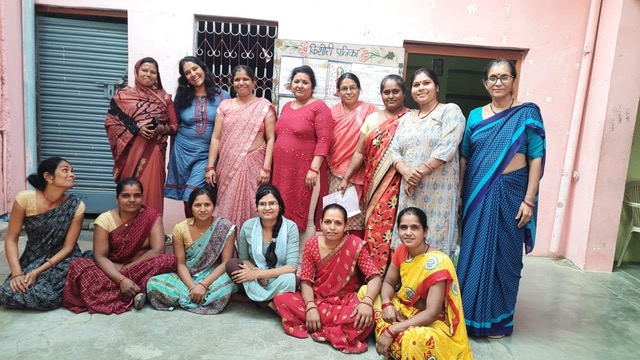
Since its inception, Parity Lab has trained 40+ Gender Champions and reached more than 70,000 individuals, including 20,000+ men, with violence prevention tools, and launched mental wellness programs in six rural communities in India.
One of the most inspiring success stories comes from Meena, a leader in Bundelkhand, one of the most underserved regions in India with some of the worst gender equality indicators. Inspired by our mental wellness approach, Meena, a survivor of child marriage herself, started the first-ever mental wellness program in her community. Not only did she heal from her trauma and launch this vital program, she also successfully raised funds for it—empowering 1,000+ women in her community to heal and take action.
100% of our champions have launched and scaled efforts 2x within their communities. By training these champions to heal, set boundaries, and break cycles of violence, we create a transformative waterfall effect, with each champion leading lasting change in their communities.
Parity Lab aims to impact over one million families by 2035 through survivor-led initiatives. What approaches do you consider essential in navigating the complexities of scaling your programs, particularly when entering new regions with unique cultural and systemic challenges?
Scaling Parity Lab’s programs to impact over one million families by 2035 requires a deep understanding of the unique cultural, socio-economic, and political norms of each region. Gender-based violence (GbV) is intersectional, and each community has its own specific challenges. To navigate this complexity, we focus on identifying the right champions—individuals with lived experience, a passion for change, and a willingness to learn. By working with these champions, we can influence their communities in a way that is culturally sensitive and avoids unintended consequences.
Our programs are tailored to the needs of different audiences, with content available in both English and Hindi. We emphasize safety, self-care, and the reality that this work can be dangerous and potentially life-threatening. Additionally, we offer strong community support, ensuring that individuals have a network to lean on as they lead change in their communities. This holistic, survivor-led approach helps us scale sustainably and effectively.
Your emphasis on mental wellness is a transformative approach to empowering leaders, shaping narratives, and building confidence within the communities you serve. What strategies have been particularly effective in sustaining these mental health programs in under-resourced areas? Additionally, how do you envision addressing gaps in awareness and accessibility to mental health services, particularly in marginalized regions?
At Parity Lab, we’re revolutionizing the approach to GbV by applying a mental wellness lens to the crisis. Through 50+ hours of training and storytelling, we help Gender Champions understand the dynamics of gender and violence while addressing their own trauma. We combine Eastern practices like mindfulness and somatic practices with Western methodologies, creating a culturally rooted framework for healing.
A key strategy in sustaining mental wellness programs in under-resourced areas is ensuring they are practical, accessible, and not seen as a luxury. Mental wellness isn’t just therapy—it’s regular, accessible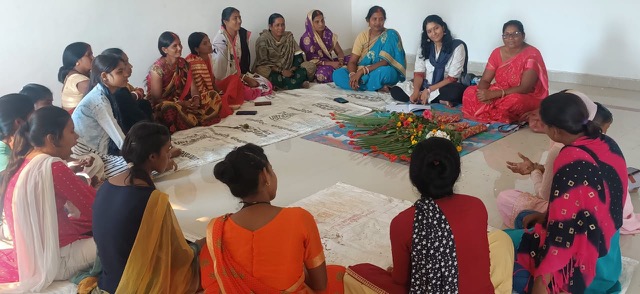 practices that maintain mental wellness, much like a gym for the mind. We also address the misconception that mental wellness is only for those with severe trauma, emphasizing that everyone needs it for regular maintenance. It takes great courage to sit with our feelings, and our strengths-based approach really amplifies this message.
We also focus on engaging men who are the primary perpetrators of GbV and have the potential to lead lasting change. The Adverse Childhood Experience study found that over 70% of men perpetrating violence struggle with mental wellness. Their involvement is crucial for lasting change.
For young individuals passionate about creating change but unsure of how to start, what advice would you give? How can they balance their aspirations with the practicalities of grassroots work, especially in areas as complex as gender justice?
For young individuals passionate about creating change but unsure of how to start, my advice is to first immerse yourself in the subject by volunteering or interning with organizations that focus on gender justice. This hands-on experience will help you understand the complexities on the ground and allow you to build a foundation of knowledge.
At the same time, it’s crucial to combine this work with mental wellness practices. Gender-based violence impacts us all, whether we realize it or not, and it’s easy to become emotionally scarred. By integrating mental wellness into your approach, you can maintain your resilience and stay grounded in the face of tough realities. The work is challenging, but when combined with self-care and continuous learning, it becomes a powerful journey of personal growth and meaningful impact. Stay committed, learn from the community, and always remember that change starts with you.
(Pragya Raj Singh is a young professional with a background in international affairs, driven by a passion for promoting equitable development and social impact through research, advocacy, and innovative community initiatives. Venkatesh Raghavendra is a global social entrepreneur and a contributing editor to American Bazaar and DesiMax.)