



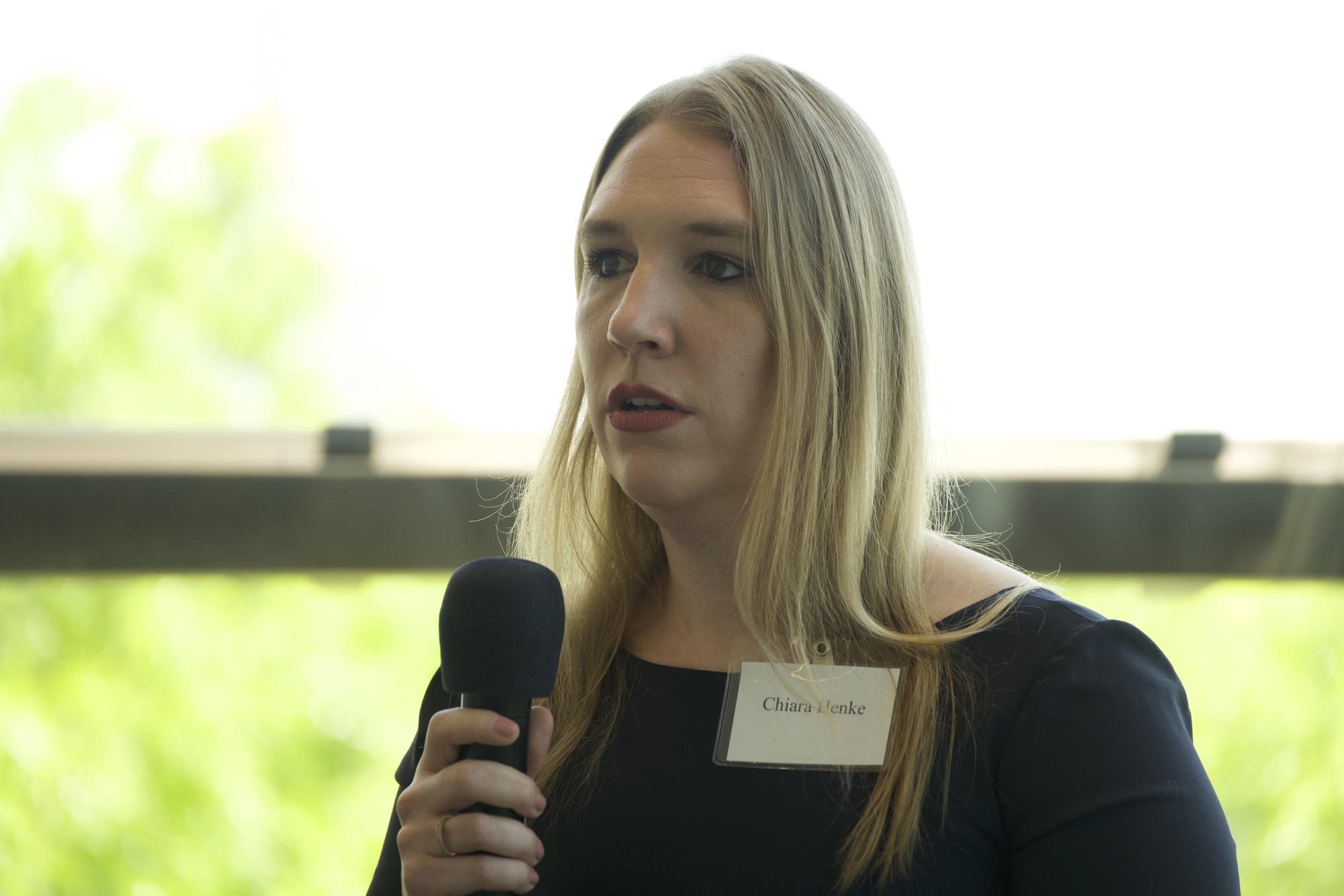
EY sustainability and risk management expert Chiara Henke urges companies to treat ESG not as a checkbox, but as a catalyst for long-term value, resilience, and climate-smart innovation.
By Soumoshree Mukherjee
At the forefront of today’s climate dialogue, businesses are facing unprecedented challenges and opportunities in aligning profitability with sustainability. As climate change reshapes economies and regulations tighten worldwide, companies are no longer asking if they should act but how to do so meaningfully and effectively.
In a recent panel at “Startup Bazaar: DC Climate Week,” Senior Manager for Risk Consulting Sustainability at Ernst & Young (EY) Chiara Henke explored the rapidly evolving global Environmental, Social, and Governance (ESG) ecosystem and how businesses, from startups to giant corporations, are navigating the tide.
The panel, moderated by Bhagyashree More, who is part of the ESG Reporting and Compliance team at FedEx, also featured Ben Brenner, a Senior Vice President at the Washington, DC, -based Boundary Stone Partners.
Henke, an expert in sustainability and risk management based in Germany, began by painting a picture of how climate-focused companies are evolving, not just to meet policy requirements, but to innovate with purpose.
“It’s really about exploring what you have… and how innovations and technology adaptations help companies stay ahead,” she said, emphasizing the need for “flexible business models” and “strategic partnerships.”
She described ESG as a “team sport” that thrives on diversity of thought and shared responsibility. “You really need those different perspectives at the table,” she said.
In Europe, the sustainability landscape is shaped by a dense network of regulatory frameworks like the CSRD, EU taxonomy, and corporate due diligence mandates. But beyond the acronyms, there’s a deeper shift underway.
Companies are no longer just reacting to compliance pressures, they’re learning to use regulation as a springboard for transformation. Across industries, there’s growing interest in aligning ESG efforts with long-term value creation, moving away from box-checking toward real impact.
READ: Green, clean, or just real? Rethinking our climate vocabulary (May 16, 2025)
“What we can really see at the moment is this shift… companies would focus more on the value creation aspect of ESG than just ticking the box,” Henke said, meaning regulations are no longer obstacles — they now support innovation and resilience for businesses.
The EY official highlighted how European firms are embedding ESG deeply into risk management systems, incorporating external data on climate disruptions like wildfires or floods. She noted a growing trend in long-term, data-driven risk management in the U.S. She urged companies to shift from short-term thinking to scenario planning: “Think in best case, worst case, and most realistic case.”
Drawing on her work at EY, Henke emphasized that true ESG transformation starts with clarity. Leading companies begin by defining what sustainability means in their context, ensuring that the entire organization understands and supports that vision. It’s a cultural shift—one supported by training, inclusive communication, and clear governance structures.
She recalled advising a German company that set a powerful but simple goal — to deliver the best products and services while causing the least harm. From there, they mapped their current standing, identified gaps, and built an agile, stakeholder-informed roadmap backed by scenario-based risk analysis.
When asked about future trends, Henke predicted: “Sustainability through AI… and sustainability of AI.”
One of the most exciting developments she touched on is the growing intersection of AI and ESG. Technology is becoming a crucial enabler, not just for measuring sustainability, but for driving it. At the same time, companies are beginning to scrutinize the environmental and ethical implications of the AI tools they deploy. This dual focus is setting the stage for a new era of climate innovation.
When asked about startups entering the climate tech space, Henke dismissed the idea that size determines success. She argued that success hinges more on mindset—setting realistic goals rooted in core values and staying situationally aware—than on size or resources. Through her ESG Risk Circle, she brings together companies of all sizes to share insights, struggles, and breakthroughs in ESG implementation.
READ: Carbon capture is not a climate solution—it’s a fossil fuel lifeline(May 31, 2025)
Henke’s closing words were a call to community. She encouraged teams to learn from both startups and established companies—and adapt those lessons to their own organizational context. “In the end, it’s all about situational awareness,” she noted.
The conversation captured a turning point in how the business world might approach climate responsibility — as an opportunity to lead with purpose, resilience, and foresight.
“Startup Bazaar: DC Climate Week” was held at Johns Hopkins University’s Bloomberg Center in Washington, D.C, April 29, 2025. The Gupta-Klinsky India Institute (GKII) at Hopkins was a partner of the event.