



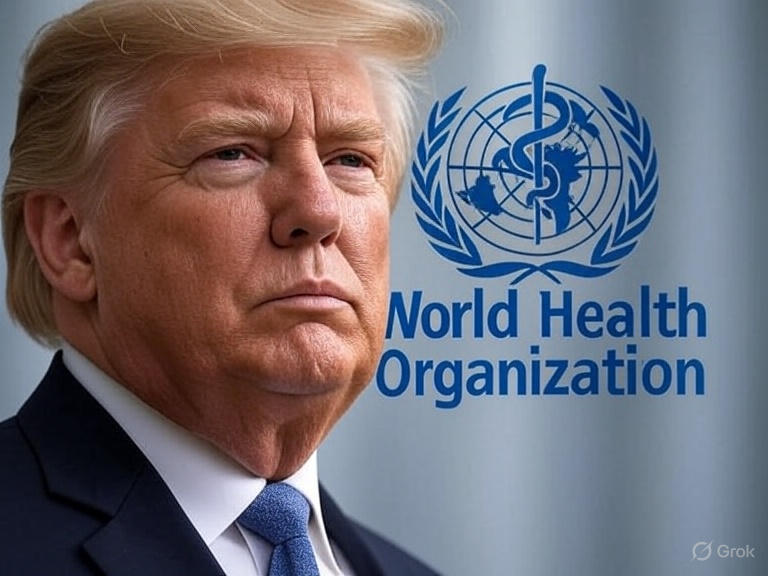
After President Donald Trump’s comments on autism, the World Health Organization has released a statement setting the record straight.
Trump claimed on Monday that taking Tylenol, an over-the-counter medicine to treat fever and mild pain, “is no good” and that pregnant women should “fight like hell” to only take it in cases of extreme fever.
Autism, or Autism Spectrum Disorder (ASD), is a neurodevelopmental condition that affects how a person thinks, communicates, interacts socially, and processes sensory information. It’s called a spectrum because it varies widely, some autistic people may need a lot of support in daily life, while others live independently and may not need much (or any) support.
READ: Gutting of USAID causes ‘devastating’ global health void: Atul Gawande (
The World Health Organization (WHO) emphasizes that there is currently no conclusive scientific evidence confirming a possible link between autism and use of acetaminophen (also known as paracetamol) during pregnancy.
As of 2025, about 1 in 36 children in the U.S. are diagnosed with autism, with increasing recognition in teens and adults. Autism is lifelong and begins in early brain development. It’s not caused by vaccines or parenting, rather, it’s linked to a complex mix of genetic and environmental factors.
WHO recommends that all women continue to follow advice of their doctors or health workers, who can help assess individual circumstances and recommend necessary medicines. Any medicine should be used with caution during pregnancy, especially in the first three months, and in line with advice from health professionals.
UK Health Secretary Wes Streeting said: “I trust doctors over President Trump, frankly, on this.”
Autism and neurodevelopmental disorders are among priority mental health and neurological conditions being discussed at the 4th UN High-Level Meeting on NCDs and mental health this Thursday.
The WHO reportedly continues to recommend that pregnant women follow the guidance of healthcare professionals regarding medication use, emphasizing caution especially during early pregnancy. This ensures that both mother and child receive the safest possible care tailored to individual health circumstances.
This dialogue underscores the importance of relying on evidence-based medical advice rather than unverified claims. It also highlights the ongoing global focus on neurodevelopmental and mental health disorders, as seen in international efforts like the UN High-Level Meeting on Non-Communicable Diseases and mental health.