



By Sreedhar Potarazu
Today over 1 billion people across the world celebrate Diwali — a festival celebrated by Hindus, Jains , Sikhs and some Buddhists in different forms . The common symbolism across all these faiths is the victory of “light over darkness”, knowledge over ignorance. Diwali is a reminder that “ light” as we know it in many shades is at the core of our very existence and so much more no matter what our faith or beliefs . Light is not just the essence of the sun but also what enables vision . And as we get older light takes on an even higher meaning symbolizing knowledge and wisdom. Sometimes we take light too lightly. Light is both an internal brilliance as much an external one we can shine for others.
The word light may be one of humanity’s oldest and most universal ideas. It appears at the beginning of our oldest stories. In the Book of Genesis, the first divine command is simply: “Let there be light.” In Hebrew, yehi ’or; in Latin, fiat lux—a declaration that still resonates through science, art, and faith. Light here is not just physical brightness. It is the first signal that something has begun. Across cultures, that first mention set the tone for how we’ve come to understand light as life, as energy, as awareness and hope.
READ: California set to declare Diwali as a public holiday (
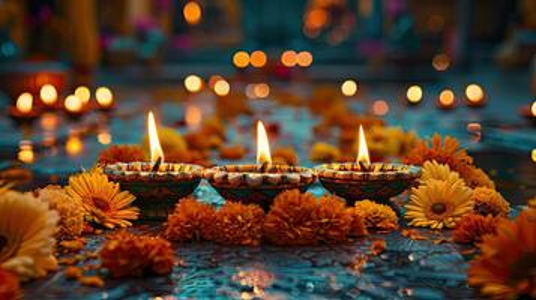
Diwali, the Festival of Lights captures this idea in its purest form. The word Deepavali in Sanskrit literally means “a row of lamps.” What began thousands of years ago as a ritual of lighting small diyas—clay lamps filled with oil—has become a global celebration of illumination in every sense. For Hindus it commemorates the return of Lord Rama to Ayodhya after his victory over Ravana, welcomed by lamps that pierced the night. For Jains it marks the liberation of Mahavira’s soul.
For Sikhs it recalls the release of Guru Hargobind from imprisonment. And for all who celebrate it, Diwali is a reminder that light always finds a way to return no matter how deep the darkness. Whether through mythology, morality or metaphor the message is the same that the human story is a constant journey toward “light”.
Light also implies context. It defines how we literally see the world. Without it there is no color, no form or perception. Every image we experience whether a sunset, face, or work of art is light interacting with matter and our eyes translating those signals into meaning. As an ophthalmologist, light is not an abstraction but the very essence of vision. The retina’s photoreceptors capture the faintest glimmers of light and send them racing to the brain where they become experienced. In that sense, light is the bridge between the outer world and our inner one. When light disappears, whether through physical darkness or visual loss,our orientation shifts. The world turns uncertain and light then is not only what we see but how we make sense of reality itself.
Light is also our lifeline. Every second of our existence depends on it whether it’s the sunlight that nourishes every cell in our body or the artificial glow of our screens connecting us to one another. We rise and sleep according to its rhythm; our circadian clock is literally wired to light.. The same energy that allows a seed to sprout also germinates our communication and creativity.
Yet, as J. Robert Oppenheimer reflected when he quoted the Bhagavad Gita after witnessing the atomic blast—“If the radiance of a thousand suns were to burst at once into the sky, that would be like the splendor of the mighty one”—light also humbles us with its magnitude. It can illuminate or destroy. It reminds us that the same force that sustains life can also overwhelm it, and that how we use light, literal or metaphorical, determines the kind of world we inhabit.
Just as light defines what we see, it also defines how we see. In psychology, perception isn’t only about the amount of light entering the eye but it’s also about the context in which that light is interpreted. The same brightness can feel comforting in one moment and harsh in another, just as the same event can be perceived as a blessing or burden depending on our state of mind. Light, then, is as much about context as it is about physics. It is this context that turns glare into glow, exposure into enlightenment. To “see in a different light” is to shift perspective—to reframe reality. The light we bring to a situation, not just the one that falls upon it, defines our understanding.
That connection between light and perception extends inward to our emotional and mental worlds. We often describe our moods in terms of light and darkness—feeling “dim,” “in the shadows,” or “seeing the light.” These phrases aren’t poetic accidents but describe how the human brain links sensory experience with emotional truth. During times of struggle—depression, grief, loneliness—it can feel as though the inner light has gone out. Yet the same biology that makes us sensitive to sunlight also makes us responsive to symbolic light in the form of kindness, perspective and sense of community. A single act of compassion can change the entire hue of a day. Light can heal the body and the soul.
Light has also been inseparable from knowledge. The Enlightenment wasn’t just a historical period—it was an idea that wisdom dispels ignorance as surely as dawn dispels night. In Sanskrit, vidya means both “knowledge” and “illumination,” its opposite avidya—ignorance—literally the absence of light (Upanishads). The Quran speaks of Allah as the Light of the heavens and the earth (Surah An-Nur, 24:35), a metaphor for divine knowledge radiating into human understanding.
In Christian scripture, the Gospel of John opens with: “In him was life, and the life was the light of men.” In Jewish mysticism, Ohr (light) represents divine emanation—how God’s presence unfolds into creation. Each faith converges on the same insight that to know is to see, and to see truly is to be illuminated.
Our relationship with light evolves as we do. As children, we chase it—fireflies, candles, sparklers. As adults, we rely on it to see, to work, to navigate. But over time, light becomes more than function; it becomes meaning. We start to recognize that the most powerful light is not outside us but radiates from within—from purpose, from integrity, from compassion. When we use that light to guide others, we participate in something larger. The teacher who sparks curiosity, the friend who listens without judgment, the leader who acts with transparency—all become carriers of light. Over a lifetime, the way we use light changes from a source of sight to a source of insight, from something we depend on to something we embody.
Diwali’s enduring power lies in how it brings these meanings of light together. It’s not just a festival of lamps, sweets and new beginnings. It’s an invitation to reflect on how light threads through every part of existence—from the spark of creation to the flicker of a candle, from the flash of insight to the quiet glow of compassion. In lighting a lamp, we affirm that darkness is never final and that our task, as individuals and as communities, is to keep light alive.
Some walk among us unnoticed, yet through their humility and goodness, their light holds the world in place. Light is not only what allows us to see—it is what allows us to be.
(Sreedhar Potarazu, MD, MBA, is an ophthalmologist, healthcare entrepreneur, and author with more than two decades of experience at the intersection of medicine, business, and technology)