



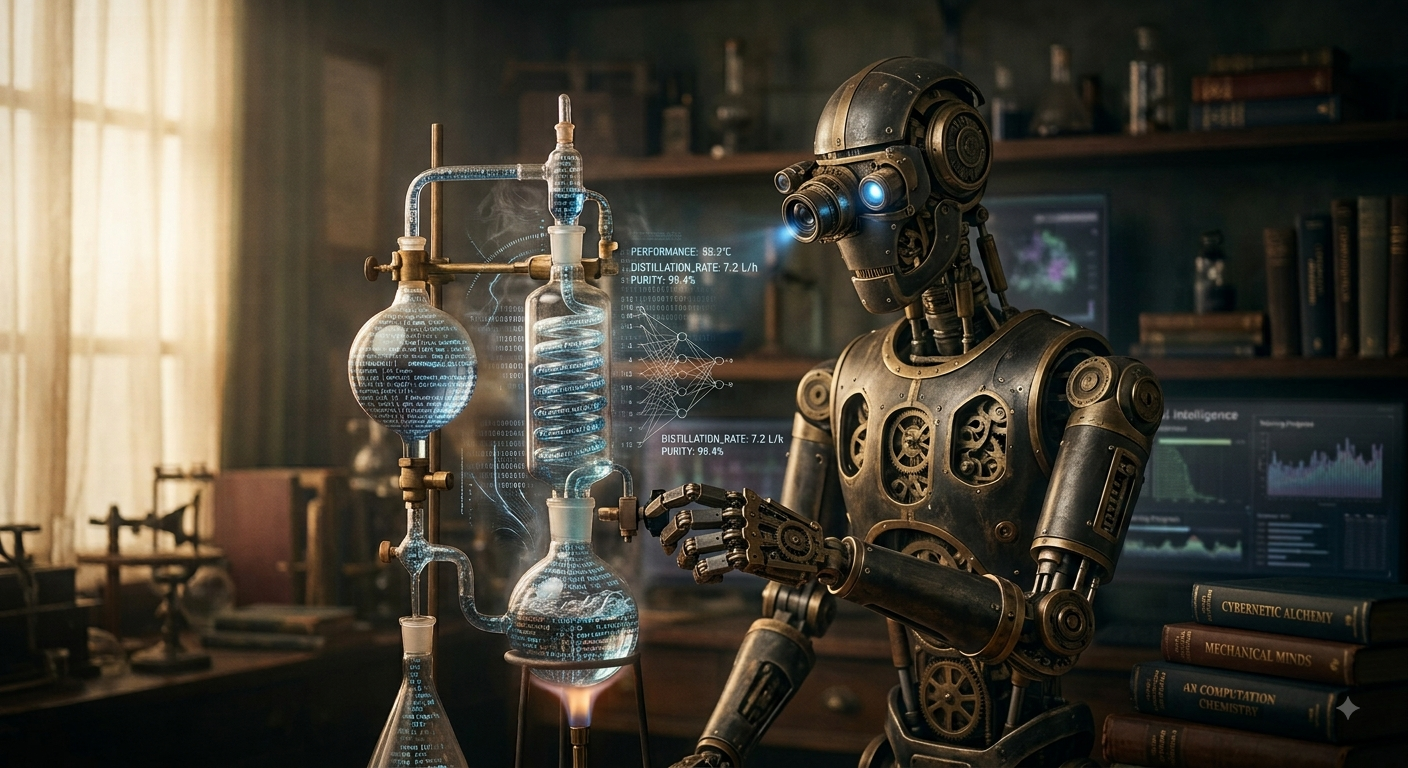
Artificial intelligence is entering a new phase in which the most valuable asset may no longer be the model itself, but the intelligence that can be extracted from it. AI model distillation has become an increasingly important point of contention between the United States and China. At its most basic level, distillation is a technical process through which a smaller AI model learns from the outputs of a larger and more capable model. The smaller model, known as the student, does not need access to the architecture, parameters or original training data of the larger teacher model. Instead, it learns by observing how the teacher responds to questions and by using those responses as training signals.
The concept itself is not new. Knowledge distillation was formally described by Geoffrey Hinton, Oriol Vinyals and Jeffrey Dean in 2015 as a way of transferring knowledge from large or complex neural networks into smaller models that could be more efficiently deployed. A large model may contain enormous computational complexity, but it’s useful knowledge is expressed through the patterns in its outputs. If a smaller model can learn those patterns, it may be able to reproduce a significant portion of the teacher’s capabilities without reproducing the entire system that generated them.
Technically, distillation is much more sophisticated than simply copying answers. A teacher model can produce probability distributions that reveal how strongly it associates different possible answers with a particular input. Those distributions contain information about relationships among possible outcomes that would be lost if the model simply returned a single correct answer. In effect, the student is learning not necessarily what the teacher is internally thinking, but how the teacher behaves when confronted with problems.
READ: Sreedhar Potarazu | Fitness for your eyes and brain: A new approach to reducing dementia risk (August 10, 2026)
The economic and strategic implications are enormous. Developing a frontier AI model requires vast amounts of computing power, data, engineering expertise and capital. If another organization can obtain millions of high-quality outputs from that model and use them to train a second model, it may be able to acquire some of the capabilities of the original system without incurring the full cost of independently developing them. The student does not need to know exactly how the teacher was constructed. It needs to learn what the teacher can do.
This is why distillation has moved beyond being a technical optimization and has become part of the geopolitical competition over artificial intelligence. The United States currently has several of the world’s leading frontier AI laboratories, including OpenAI, Google and Anthropic, while China has rapidly developed its own sophisticated models. At the same time, U.S. restrictions on advanced semiconductor technology and growing limitations on access to American AI systems have made it increasingly difficult for Chinese companies to obtain some of the resources available to their American counterparts. Distillation offers a different pathway. If access to a frontier model can be obtained, even indirectly, its behavior can potentially become a source of training data for another model.
That is at the center of the controversy surrounding Anthropic and several Chinese AI companies. Anthropic has said that it identified what it characterized as large-scale efforts by Chinese laboratories including DeepSeek, Moonshot and MiniMax to extract capabilities from Claude through millions of interactions and thousands of accounts.
If enough of these interactions are collected, they can become a synthetic dataset from which another model can learn. The teacher has effectively become a source of instruction for the student at much lower cost. This is where the story becomes much larger than the competition between the United States and China, because the same principle applies to the relationship between artificial intelligence and human beings.
AI is already beginning to distill us.
Every time we interact with an AI system, we provide information about how we think and communicate. We reveal the questions we ask, the way we frame problems, the assumptions we make, the information we consider important and the answers we reject. Over thousands or millions of interactions, these patterns become increasingly valuable. AI can learn not only facts from humans, but patterns of behavior.
READ: Sreedhar Potarazu | If AI gives professional advice, does it need a license? (August 9, 2026)
Consider what happens when an AI system analyzes thousands of pages written by one individual. It can identify vocabulary, sentence structure, recurring ideas, preferences, patterns of reasoning and even stylistic tendencies. Eventually, it may be able to produce writing that sounds remarkably like that individual. Yet what it has captured is not the person. It has captured a statistical representation of the person’s behavior.
That distinction is critical because distillation necessarily involves deciding what matters.
The purpose of distillation is to preserve the information necessary to reproduce useful behavior while eliminating information that appears redundant or unnecessary. That is precisely what makes it efficient. But human beings are not clean datasets. Our thinking contains contradictions, uncertainty, emotion, memory, intuition and experiences that may not be obvious from our words. We change our minds. We respond differently depending upon circumstances. We sometimes say something today that contradicts what we said yesterday because something happened in between that changed our understanding.
To a system trying to identify stable patterns, those inconsistencies may look like noise. But what looks like noise may actually be context.
Consider a patient who is prescribed a medication but does not take it. A distilled medical record might contain the prescription, the patient’s failure to comply and the subsequent medical outcome. From the perspective of a statistical system, those may appear to be the relevant variables. But the most important information may be elsewhere. Perhaps the medication was unaffordable. Perhaps the patient experienced a side effect. Perhaps the instructions were misunderstood. Perhaps the patient had lost trust in the physician because of a previous experience. Without that context, the behavior can be accurately recorded but incorrectly understood.
This is the fundamental tension between distillation and context.
Distillation asks what information is necessary to reproduce behavior. Context asks what information is necessary to understand behavior. Those are not the same question.
The difference becomes even more significant when AI begins to create increasingly sophisticated representations of individual human beings. Imagine an AI system that has analyzed years of a person’s writing and learned to reproduce their voice. It may know what that person usually says, how they normally construct an argument and what positions they most frequently take. It may therefore become extraordinarily good at predicting what the person is likely to say next. But prediction is not understanding.
The very characteristics that make human thought difficult to model may also be the characteristics that make it meaningful.
This creates a paradox at the heart of artificial intelligence. We want AI to remove human error, inconsistency and bias. In many circumstances, that is precisely what makes AI valuable. But not every irregularity is an error, and not every inconsistency is noise. Some inconsistencies are evidence that a person has learned. Some uncertainty reflects an honest recognition that the available information is incomplete. Some emotional responses reveal priorities that cannot be inferred from statistics alone.
READ: Sreedhar Potarazu | AI is burning through free cash flow (July 25, 2026)
The danger is therefore not simply that AI might lose information when it distills it. The greater danger is that it may lose information whose importance we did not recognize.
This is also why the U.S.-China debate over model distillation matters beyond national security and intellectual property. The two countries are effectively competing over the ability to create, control, access and reproduce artificial intelligence capabilities. But underneath that competition is a much deeper transformation. Intelligence is increasingly becoming something that can be observed through behavior, extracted from that behavior and transferred into another system.
The teacher does not necessarily have to be copied. Its behavior may be enough.
The same principle will increasingly apply to humans. AI will become better at extracting patterns from our writing, our decisions, our conversations and our preferences. It will become better at constructing compressed representations of who we are. The question will then become whether those representations preserve the context that gives our behavior meaning.
The future of artificial intelligence should therefore not be defined solely by how effectively we can distill knowledge. It should also be defined by how intelligently we preserve context. The goal should not be to retain everything, because doing so would defeat the purpose of intelligence and computation. The goal should be to recognize what can safely be discarded and what cannot.
We have become very good at asking machines to find the signal and remove the noise. The next generation of AI will need to become much better at recognizing that what appears to be noise may sometimes be the signal we do not yet understand.
And as AI becomes increasingly capable of distilling not only models but our knowledge, preferences and voices, the most important question may no longer be whether the machine can reproduce us.
It may be whether, after all that distillation, it still understands us.