



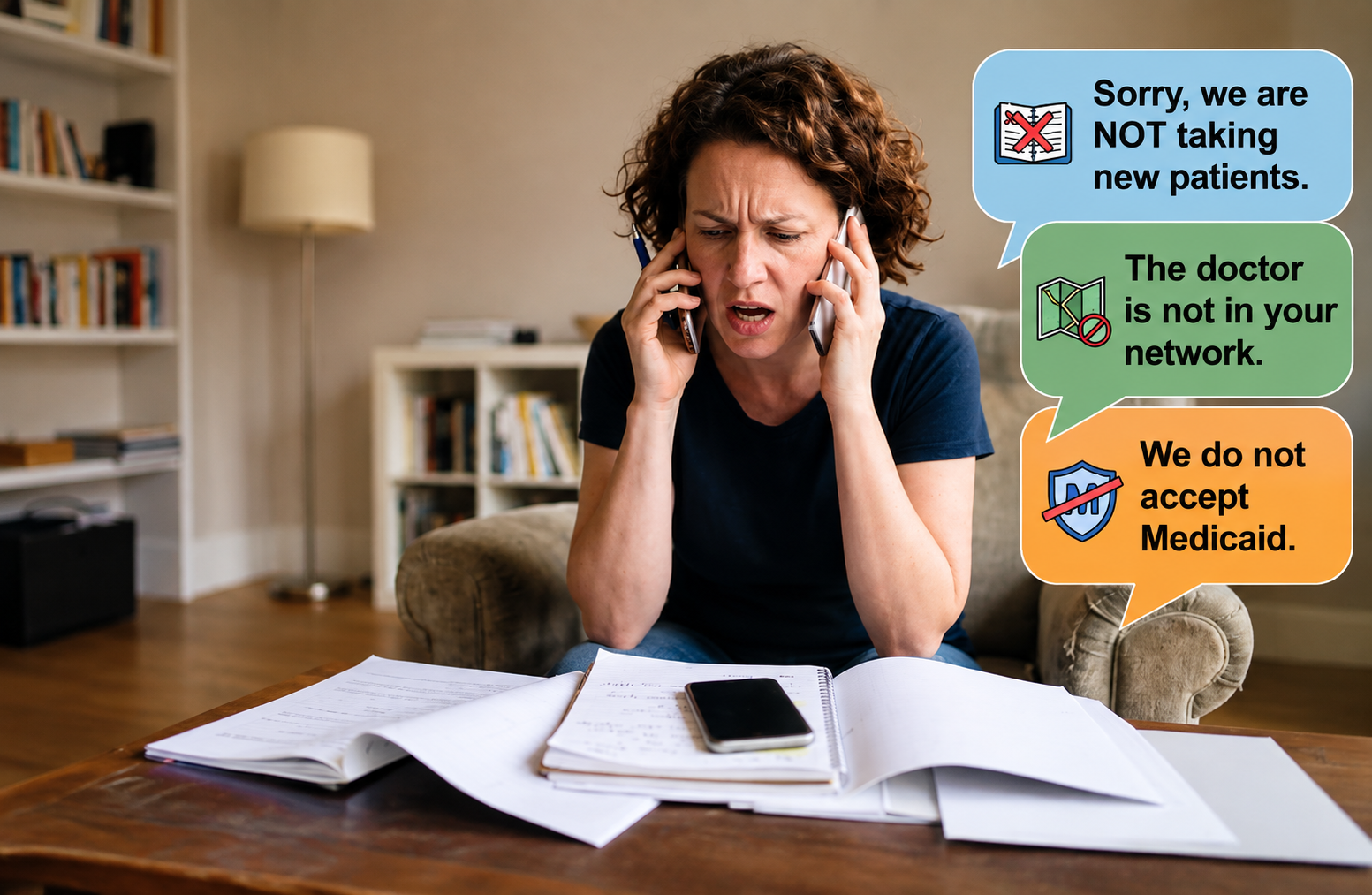
There was a time when one of the most reassuring things a doctor could tell a patient was that they could keep their doctor. The phrase became almost synonymous with the promise of American health care under the ACA regardless of what happened to the health care system around you, there would be someone who knew your medical history, understood your family history, recognized when something had changed and could help you navigate the increasingly complicated world of medicine. That promise has disappeared, and we are beginning to see the dire consequences.
It is becoming extraordinarily difficult for many Americans to find a primary care physician. The problem is not simply that there are not enough doctors. The physicians who remain are increasingly concentrated in large health systems, private equity backed practices or other organizations where the economics and structure of medicine have changed substantially. Many independent physicians have sold their practices, many older physicians are retiring, and too few young physicians are choosing primary care because the economics often do not make sense.
The numbers are sobering. More than 100 million Americans are estimated to lack a regular primary care provider, while the Association of American Medical Colleges projects a shortage of as many as 40,400 primary care physicians by 2036. Those numbers are often presented as a workforce problem that we will eventually have to solve. From where I sit, however, this is not a future problem. It is already happening in doctors’ offices across the country. I see it every day.
Patients come into the office who should have been receiving regular care but have gone months or sometimes years without seeing a physician. They tell me that their primary care doctor retired and they could not find another one. Their doctor stopped accepting their insurance. The practice was purchased by a hospital system and their physician is no longer in their network. They were told the next available appointment was several months away. Others simply gave up trying to find someone.
Patients then delay treatment because they cannot afford it. Some have insurance but cannot afford their deductible. Others discover that the service they need is technically covered but still leaves them with a financial obligation they cannot manage. Some cannot afford to take time away from work for an appointment, particularly when they may have to wait several weeks just to get one. Eventually, a condition that could have been managed in a primary care office becomes more serious.
This is particularly troubling because primary care is the gateway to virtually everything else in medicine for every referral When there are fewer primary care physicians, the problem does not stop at the primary care office. It propagates throughout the health care system.
READ: Sreedhar Potarazu | If AI gives professional advice, does it need a license? (August 9, 2026)
A patient who cannot find a primary care doctor may therefore be unable to see the cardiologist, endocrinologist, gastroenterologist or ophthalmologist they need to see. The specialist may have availability, but the patient cannot get through the gate. What begins as a shortage of primary care becomes a shortage of access to specialty care as well. This is the domino effect.
The first domino is the disappearance of the primary care physician. The next is delayed diagnosis. Then comes delayed specialty care, followed by more advanced disease and, eventually, a much more expensive intervention that might have been avoided with earlier care.
At the same time, we have created powerful economic incentives that encourage physicians to move away from primary care. A young physician may graduate from medical school with hundreds of thousands of dollars in educational debt and then look at the difference between primary care compensation and what can be earned in many specialties We should not be surprised that fewer physicians are choosing the field.
The situation becomes even more complicated when independent practices are acquired by hospitals, health systems and private equity firms. Consolidation is not necessarily bad. Larger organizations can provide capital, technology and administrative infrastructure that a small practice cannot afford. But consolidation also changes the relationship between the physician and the patient. The physician who once owned the practice and could make decisions based primarily on the needs of the patients may now be operating within a much larger organizational structure, with different financial incentives and increasingly complex requirements.
For patients, the change can be almost invisible until it affects them personally. They may discover that their physician is no longer in their insurance network, that the practice has changed its policies, that the doctor has less time available for appointments or that the physician they have known for years has retired and has not been replaced.
This is happening at precisely the moment when Americans need more primary care, not less. Chronic diseases such as diabetes, hypertension, obesity and cardiovascular disease require continuous management. This matters because the American population increasingly depends on continuous primary care. More than half of American adults live with at least one chronic disease, and roughly one-third have two or more chronic conditions. More than 40 million Americans have diabetes, while another 115 million adults have prediabetes, and nearly half of American adults have high blood pressure.
Cardiovascular disease remains the leading cause of death in the country. These are not conditions that can be managed through an occasional urgent care visit or an emergency department encounter. They require someone who knows the patient, follows the trajectory of the disease, adjusts treatment over time and recognizes when a seemingly small change is becoming something more serious. That is precisely the role primary care is supposed to play
That is also why the growth of concierge medicine deserves more attention. There is nothing inherently wrong with concierge medicine. In fact, I understand why both patients and physicians are attracted to it. Patients receive greater access and physicians can spend more time with each patient while escaping some of the volume pressures of conventional practice.
READ: Sreedhar Potarazu | Indians may be more connected. But are we connecting? (August 2, 2026)
But we should ask ourselves what it means when personalized primary care increasingly becomes something that people with financial resources can purchase.
Those who can afford concierge medicine can pay for access to a physician who knows them and can see them when they need care. Those who cannot afford it may find themselves waiting months for a primary care appointment, relying on urgent care, going to the emergency department or simply doing nothing.
We have increasingly confused having insurance with having access to health care. They are not the same thing. Insurance can provide financial protection, but it does not guarantee that there will be a physician available to see you, that the physician will accept your insurance, that you can obtain an appointment in time or that you can afford the deductible and other out of pocket costs.
When people cannot get through the front door of primary care, they find another door.
The emergency department is even less equipped to substitute for primary care. It is designed to manage emergencies, not to provide continuous preventive medicine or manage chronic disease over time. Yet when patients cannot find a primary care physician or cannot afford an appointment, the emergency department increasingly becomes the default. The financial consequences are substantial. Recently the average price of an emergency department evaluation and management visit for people with employer-sponsored insurance $2,256, compared with just $224 for a primary care office visit, making the emergency department roughly ten times more expensive for what is fundamentally an entry point into care. The difference can be even more painful for patients themselves. For a urinary tract infection, for example, the average out-of-pocket cost was $61 in primary care compared with $545 in the emergency department.
This is an extraordinarily expensive way to operate a health care system.
Artificial intelligence will undoubtedly become part of the solution. It can help physicians analyze medical records, identify patients at risk, monitor chronic disease and potentially extend the reach of primary care. Increasing numbers of Americans are already using AI tools to obtain health information, and research suggests that difficulty accessing or affording traditional care is one reason some people turn to these tools.
But AI should augment primary care, not become a substitute for the physician because we failed to maintain the physician workforce.
The solution requires us to rethink what we value in medicine. We need to make primary care financially attractive to young physicians. We need to reduce the administrative burden that consumes the time of practicing physicians. We need to make it easier for independent physicians to remain independent when appropriate, while ensuring that consolidation does not leave patients with fewer meaningful choices. We need to expand primary care training and create incentives for physicians to practice in communities where access is most limited.
We have allowed the economics of American medicine to make primary care increasingly difficult to sustain, and we are now surprised that fewer physicians want to practice it. We have allowed consolidation to change the relationship between physicians and patients, and we are surprised when patients lose continuity. We have allowed insurance coverage to become the measure of access, even when patients cannot afford their deductibles or find a physician who will see them.
The crisis is therefore not simply that America needs more doctors. America needs to decide whether it still values having a doctor who knows you before you become sick. Because when that relationship disappears, the rest of the health care system does not simply become less convenient. It becomes less capable of keeping people healthy.
And by the time we finally recognize what we have lost, it may be far more expensive to rebuild than it would have been to protect in the first place.