



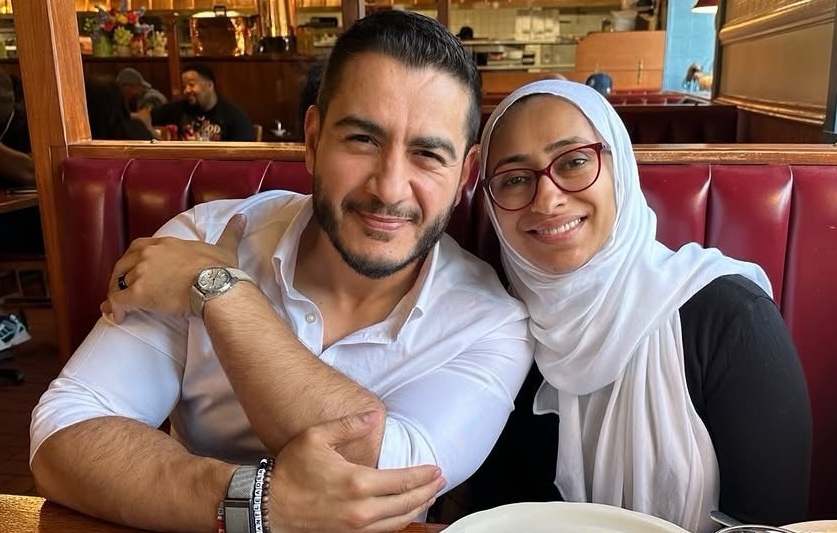
A psychiatrist who has largely stayed out of the political spotlight, Sarah Jukaku comes from a prominent family in coastal Karnataka. The American Bazaar traveled to her ancestral hometown to trace a journey spanning three generations and two countries.
By Rajwa Quasim
BHATKAL (Karnataka, India): Nestled between the Arabian Sea and the foothills of the Western Ghats, Bhatkal is a coastal town of roughly 46,000 people in southern India, about 88.2347 miles (142 kilometers) north of the port city of Mangalore.
Known for its centuries-old maritime trading traditions and distinctive Nawayath community, the town has an unlikely connection to one of the most closely watched U.S. Senate races of 2026.
It is here that Sarah Jukaku, wife of Michigan Democratic Senate candidate Abdul El-Sayed, traces her family roots. Her father, Dr. Jukaku S. Tayeb, grew up in Bhatkal, while her grandfather, J.H. Shamsuddin Jukaku, was a prominent lawyer, educator and political figure whose contributions are still remembered by residents.
Last week, The American Bazaar traveled to Bhatkal to trace the family’s journey from India to the United States. What emerged was an intriguing contrast: While the Jukaku family’s legacy remains familiar to many residents, El-Sayed’s Senate campaign has attracted relatively little attention in its ancestral neighborhood.
One of the residents we met was Abdulrahiman Ismail, who appeared to be in his late 70s or early 80s. He still remembers campaigning decades ago for Shamsuddin Jukaku, a former deputy finance minister of Mysore State, which was later renamed Karnataka.
Yet Ismail knew little about Shamsuddin’s grandson-in-law’s Senate candidacy.
Mohammed Arif, a neighbor of the family’s ancestral home, was even less familiar with the race. He said he was unaware of the election taking place more than 8,200 miles away in Michigan.
Residents with closer ties to the Jukaku family, however, said they had been following the campaign through social media and local WhatsApp groups.
Obtaining comments from family members proved difficult. Relatives approached by The American Bazaar were reluctant to speak to the media. The reporting, therefore, drew on interviews with residents familiar with the family, visits to the ancestral neighborhood and published historical accounts.
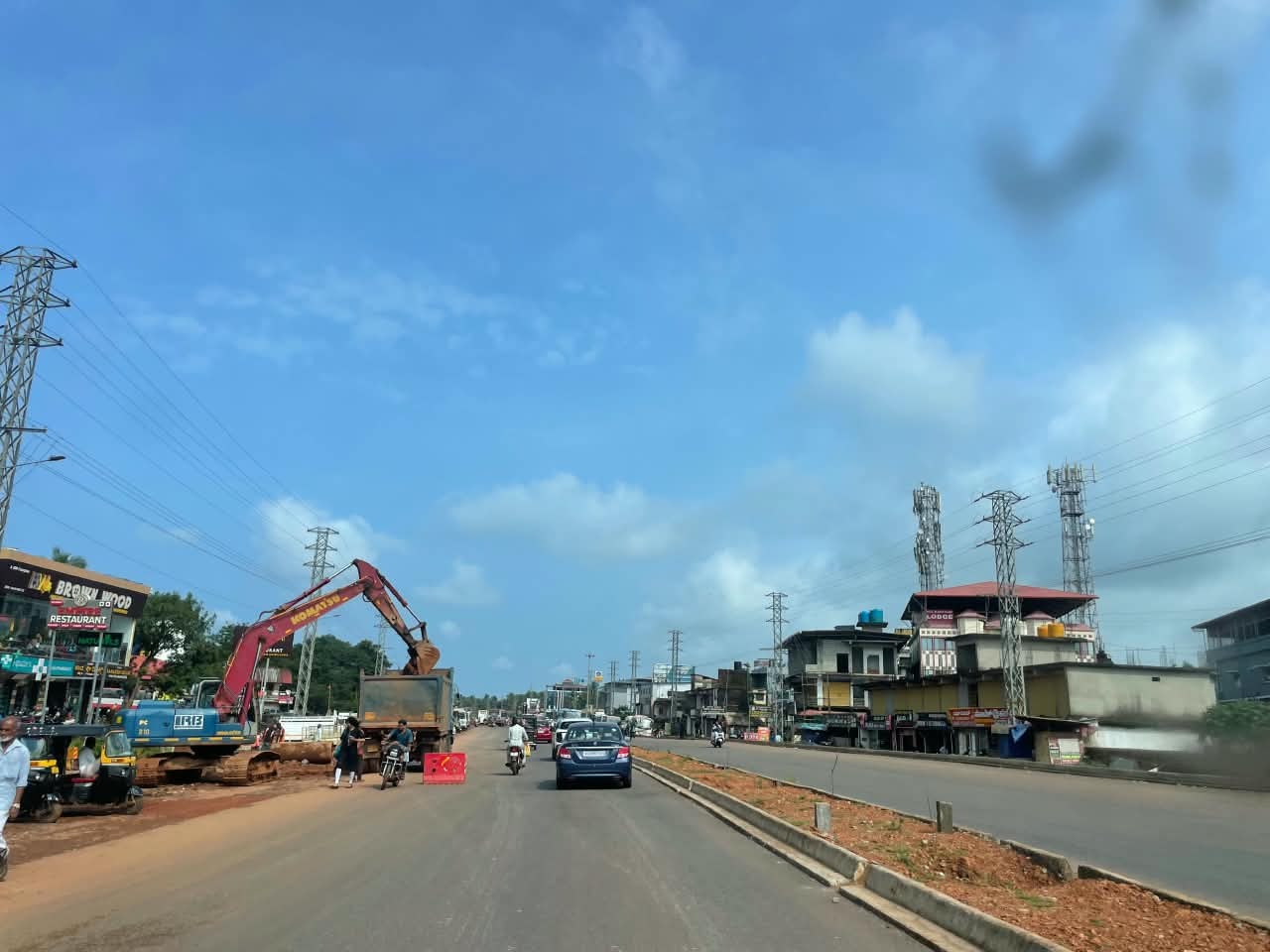
One prominent Bhatkal resident, who requested anonymity, spoke of the family’s contributions to education and expressed pride in its connection to a major American political contest.
“We wish him all the very best. It’s a proud moment for all of us, that too from Jukaku family contesting for an important post in U.S.,” he said.
The resident also addressed the attention surrounding Sarah Jukaku’s decision to wear a hijab, arguing that her religious attire should not overshadow her professional accomplishments or her family’s legacy.
READ: Abdul El-Sayed faces Medicare for All, citizenship attacks (
Bhatkal has a predominantly Muslim population, with Muslims accounting for more than half of the town’s residents. The hijab is a familiar sight here, worn by many Muslim women as part of everyday life.
For those in Bhatkal who have followed the campaign, El-Sayed’s candidacy represents an unexpected new chapter in the story of a family whose influence has extended far beyond this coastal town.
El-Sayed faces Republican Mike Rogers in the closely watched Nov. 3 Senate race to succeed retiring Sen. Gary Peters. If elected, the Egyptian American would become the first Muslim to serve in the United States Senate.
India connection
It was El-Sayed himself who recently offered a personal glimpse into his family’s ties to India.
“My wife is desi,” El-Sayed told a largely Pakistani American gathering marking Pakistan’s Independence Day on Aug. 23, using a term commonly used to describe people of South Asian heritage.
“She’s from the other side of the Partition line,” he said of Jukaku, a psychiatrist who has largely stayed out of the public spotlight.
El-Sayed has spoken, sometimes humorously, about his familiarity with South Indian culture after nearly two decades of marriage.
“Listen, I’ve been married in a South Indian family for 20 years, like… I am well inducted now I… you know, I might be more Indian than I am Arab,” he said in one interview.
In another, he described the cultural influences within his household.
“I’m like surrounded by desi women my whole life like I have two desi daughters and a desi wife.”
His remarks offer a glimpse into a family shaped by two cultural traditions: his Egyptian heritage and his wife’s Indian roots.
But while Jukaku’s ancestral roots trace back to Karnataka, her own story is firmly rooted in the United States.
Born and raised in Michigan in an Indian immigrant family, she attended the University of Michigan, where she met El-Sayed, and later pursued graduate studies at the University of Oxford.
She earned her medical degree from Columbia University’s Vagelos College of Physicians and Surgeons in 2015 before pursuing a career in psychiatry.
According to published biographical accounts, she has also held a leadership position in psychiatry at University of Michigan Health.
READ: Abdul El-Sayed’s sister faces backlash over being ‘Anti-American’ on X (August 14, 2026)
A family name that still resonates
The journey to Bhatkal offers a glimpse into a part of India where geography, commerce and culture have intersected for centuries.
Approaching the coastal town along National Highway 66, which runs along India’s western coast, the landscape offers views of the Arabian Sea on one side and the lush green foothills of the Western Ghats on the other.
Away from the highway, the roads narrow. Houses stand close together, some sharing walls, while others display architectural features reflecting the town’s rich history and diverse cultural influences.
Bhatkal’s identity is closely associated with the Nawayath community, whose history reflects centuries of maritime trade and cultural exchange.
Historical accounts describe traders arriving from regions including Yemen and Persia, establishing commercial relationships and marrying local women. Over generations, these interactions helped shape a distinctive linguistic and cultural identity.
The Nawayathi language, spoken among sections of Bhatkal’s Muslim population, reflects influences from Konkani, Persian, Arabic and Urdu. While Nawayathi remains a language of home and community, Urdu is also used in educational and religious settings.
The town’s architecture reflects this layered history, combining regional building traditions with Islamic and other cultural influences.
Though relatively small, Bhatkal has developed connections extending far beyond Karnataka through trade, education and migration. Families originating from the town have established themselves across the Middle East, Europe and North America.
The Jukakus are among them.
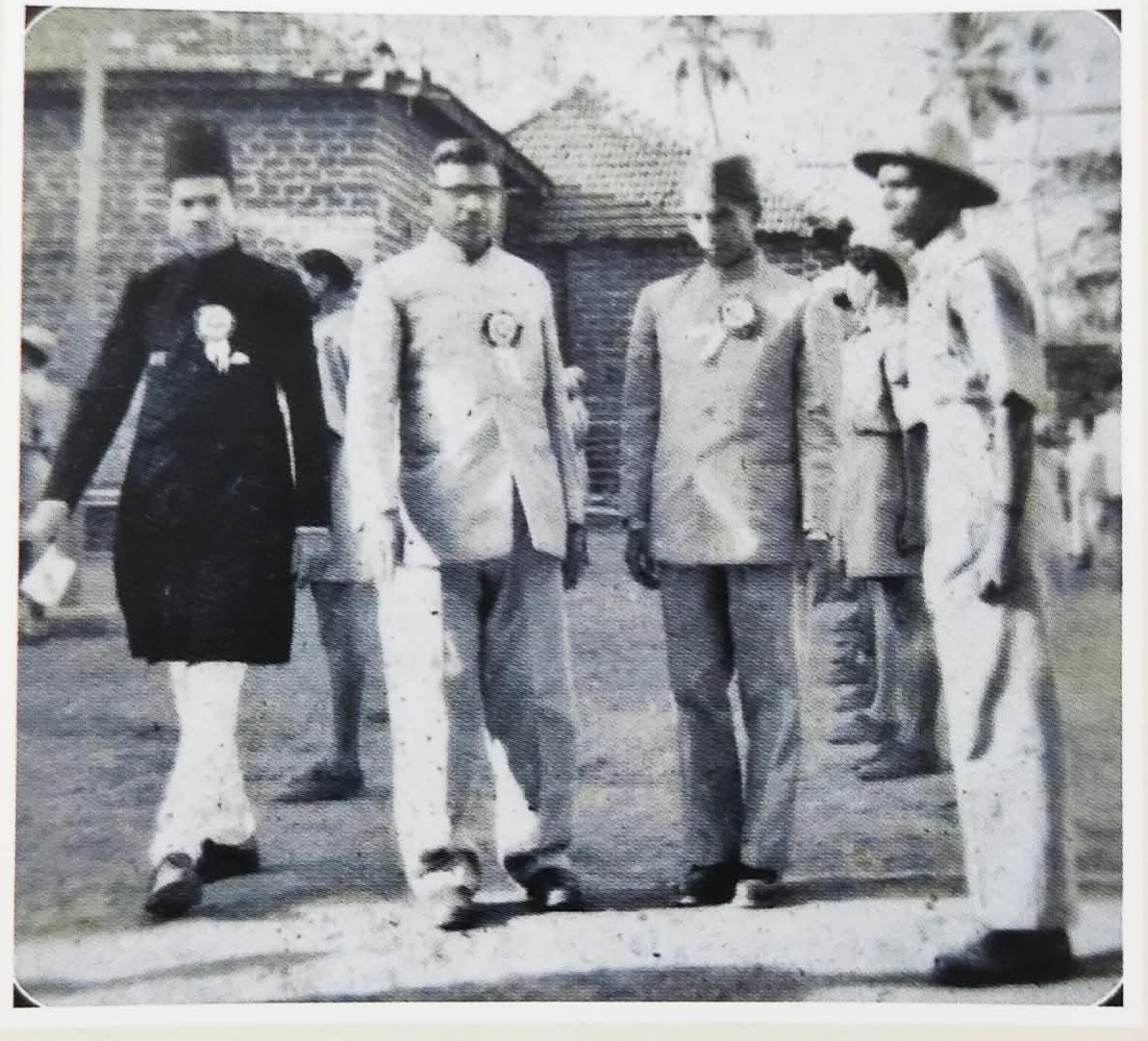
One name repeatedly emerged during The American Bazaar’s reporting in Bhatkal: Sarah’s grandfather, Shamsuddin Jukaku.
A lawyer, educator and politician, Shamsuddin was among the town’s prominent public figures during the decades surrounding India’s independence.
His contributions extended well beyond politics.
READ: Abdul El-Sayed highlights Karnataka roots of his wife, criticizes Pakistan democracy (August 31, 2026)
Residents credit him with helping bring electricity and other essential infrastructure to Bhatkal and surrounding areas. He also played an important role in strengthening educational and community institutions at a time when opportunities for formal education were limited.
For Mohammed Tanveer Kasarkod, a Bhatkal-based engineer familiar with the family’s history, the accomplishments of Shamsuddin and his children reflect the family’s longstanding emphasis on education.
“J.H. Shamsuddin became lawyer at a time when education was not easily accessible,” Kasarkod told The American Bazaar.
Even completing the 10th grade was considered a significant achievement in those days, he said.
Shamsuddin was closely associated with Anjuman Hami-e-Muslimeen, one of Bhatkal’s major educational institutions, and residents continue to remember his contributions to education and public life.
His commitment to education was reflected in the accomplishments of his children.
Sarah’s father, Jukaku S. Tayeb, became a physician, while another son, Abdul Rahim Jukaku, trained as a mechanical engineer and later served as president of Anjuman.
Kasarkod said the family maintained ties with India through occasional visits. Although Bhatkal was its ancestral home, family members also lived in Bangalore and Coorg, about 190 miles south of Bhatkal.
Shamsuddin’s legacy also became part of the town’s physical landscape.
For decades, one of Bhatkal’s prominent intersections was known as Shamsuddin Circle, named in his honor.
The landmark served as a familiar reference point for generations of residents. Although the structure at the junction was demolished as part of road development, the name remains a reminder of a man whose contributions helped shape the town’s development.
During The American Bazaar’s visit to Bhatkal, local residents helped locate a house associated with the Jukaku family.
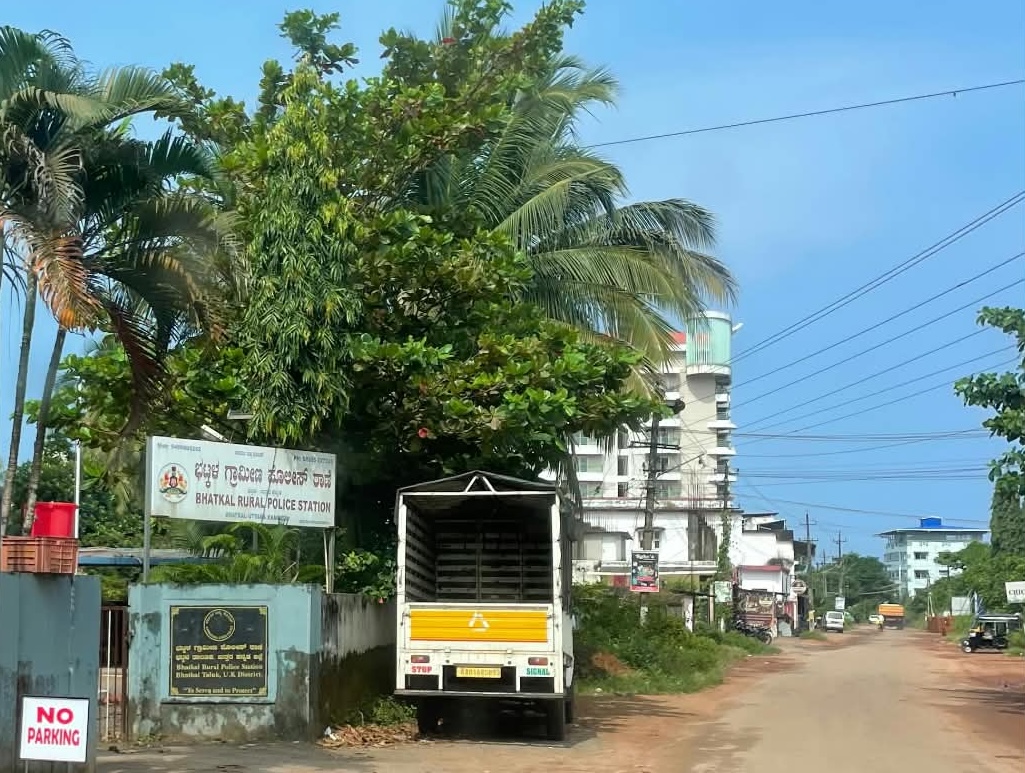
Tucked away from the town’s main thoroughfares, the building was undergoing renovation. Its weathered exterior revealed exposed red brick and concrete walls, with patches of moss and greenery adding to its aged appearance.
According to residents, the house once belonged to Shamsuddin, although The American Bazaar could not independently verify its ownership history.
They also recalled that Shamsuddin had built another house but died before he could move into it.
Over the decades, the family’s physical presence in Bhatkal has diminished as successive generations moved to other Indian cities and overseas. According to local accounts, Sarah’s father no longer owns a house in the town.
Yet the Jukaku name remains familiar, particularly among older residents and those associated with Bhatkal’s educational and community institutions.
A physician’s journey to Detroit
The Jukaku family’s journey from Bhatkal to Michigan began with Sarah’s father, Dr. Jukaku S. Tayeb, who left India to pursue a medical career abroad.
A nephrologist, Tayeb graduated from Bangalore Medical College in 1976 before beginning a professional journey that would eventually take him to Michigan.
According to a Bhatkal resident familiar with the family’s history, Tayeb worked at King Faisal Hospital in Saudi Arabia before moving to the United States in the 1980s in search of better professional opportunities. The American Bazaar could not independently verify his employment at the hospital.
In Michigan, Tayeb completed his residency in internal medicine at Bon Secours Hospital between 1984 and 1987, followed by a fellowship in nephrology at Henry Ford Hospital from 1987 to 1989.
He subsequently established a medical practice in the Detroit area.
READ: Usha Vance responds to Abdul El-Sayed’s Ohio family dig (
His journey mirrored that of many Indian physicians who built careers in American hospitals and medical institutions in the latter decades of the 20th century.
For the Jukaku family, it also carried forward a commitment to higher education that had been central to Shamsuddin’s life.
One generation helped build educational and community institutions in coastal Karnataka. The next established a professional foothold in the United States.
Decades later, Tayeb’s daughter Sarah would continue the family’s medical tradition, pursuing a career in psychiatry.
A marriage that began on campus
Much of what is publicly known about Sarah Jukaku’s early adult life comes from accounts of her relationship with El-Sayed, which began when both were students at the University of Michigan.
Jukaku was a freshman when they met, and the couple married in May 2006, when she was 19 and El-Sayed was 21.
In an interview with The Michigan Daily, El-Sayed reflected on building a life together while both were still students.
“Being able to grow with your significant other is an experience that a lot of people miss out on. (Sarah and I) are happy and lucky to have the opportunity, thank God.”
Jukaku recalled El-Sayed reassuring her that marriage did not mean they had to stop developing as individuals.
“We’re still growing, now we can grow together,” he told her, according to her recollection.
El-Sayed jokingly added, “I’m romantic.”
Her first impression of her future husband was hardly that of a polished intellectual or aspiring political figure.
She recalled that he wore lacrosse gear everywhere and seemed very much like a jock, although she acknowledged that he was smart.
In the years since, their marriage has occasionally featured in El-Sayed’s public remarks, often revealing a more personal side of the politician.
In a Valentine’s Day video dedicated to his wife, he described her as “the best of us,” “mama bear” and “an incredible doctor.”
His admiration has also found expression in more reflective writing.
“I struggled to learn who I was. Sarah did not. She danced with her emotions. I wrestled with mine. And in time she would teach me to dance, awkwardly, with mine too,” he wrote.
The passage offers a glimpse of the influence El-Sayed credits his wife with having on his personal development, particularly in helping him better understand and express his emotions.
Today, the couple are raising two daughters in a household shaped by both Indian and Egyptian cultural traditions.
READ: Abdul El-Sayed’s Michigan win ignites a new debate inside the Democratic Party (
A political spouse who stays out of the spotlight
Despite her husband’s increasingly prominent political career, Jukaku has maintained a relatively low public profile.
Unlike political spouses who regularly appear in campaign advertisements, address rallies or take on visible roles in their partners’ political activities, Jukaku has largely remained focused on her medical career and family.
A psychiatrist with an established professional life, she has occasionally appeared at political events but has not been a prominent presence in El-Sayed’s campaign messaging.
Her limited public role, however, has not kept her entirely outside the political spotlight.
Following El-Sayed’s Democratic primary victory in August, President Donald Trump drew criticism for sharing a social media post juxtaposing a photograph of himself and first lady Melania Trump with one of El-Sayed and his hijab-wearing wife.
The post, captioned “Two VERY DIFFERENT America’s,” prompted criticism from those who viewed the comparison as targeting the couple’s religious identity.
The controversy brought Jukaku, who has generally avoided the political spotlight, into the public debate surrounding her husband’s candidacy.
Her background also offers a point of comparison with Usha Vance, wife of Vice President JD Vance.
Both women are accomplished professionals from families with roots in India, although their public roles differ considerably.
Usha Vance, an Ivy League-educated lawyer, has become a nationally recognized figure through her husband’s political career. Jukaku, by contrast, has maintained a less visible role in electoral politics while continuing her medical career.
A family in national conversation
El-Sayed’s political ambitions have been building for years. In 2018, he finished second in Michigan’s Democratic gubernatorial primary. Eight years later, his narrow victory over Rep. Haley Stevens in the Aug. 4 Democratic Senate primary brought him a step closer to making history.
A Sept. 17 Washington Post–Schar School poll showed El-Sayed leading Rogers 48% to 45%, a difference within the margin of error.
Yet in Bhatkal, the family’s connection to American politics is only the latest chapter in a history that stretches back generations.
For older residents, the Jukaku name still evokes memories of Shamsuddin, whose contributions to education, infrastructure and public life helped shape the coastal town.
His descendants have since built lives across India and overseas, including in Michigan, where his granddaughter Sarah is raising a family and pursuing a career in psychiatry.
Back in Bhatkal, the family’s physical presence may have diminished, but its legacy endures — in the institutions Shamsuddin helped develop, the intersection that once bore his name and the memories of residents who still speak of his contributions.
From a coastal town in Karnataka to the political landscape of Michigan, the Jukaku family’s journey spans three generations, two countries and a legacy shaped by education, migration and public service.