



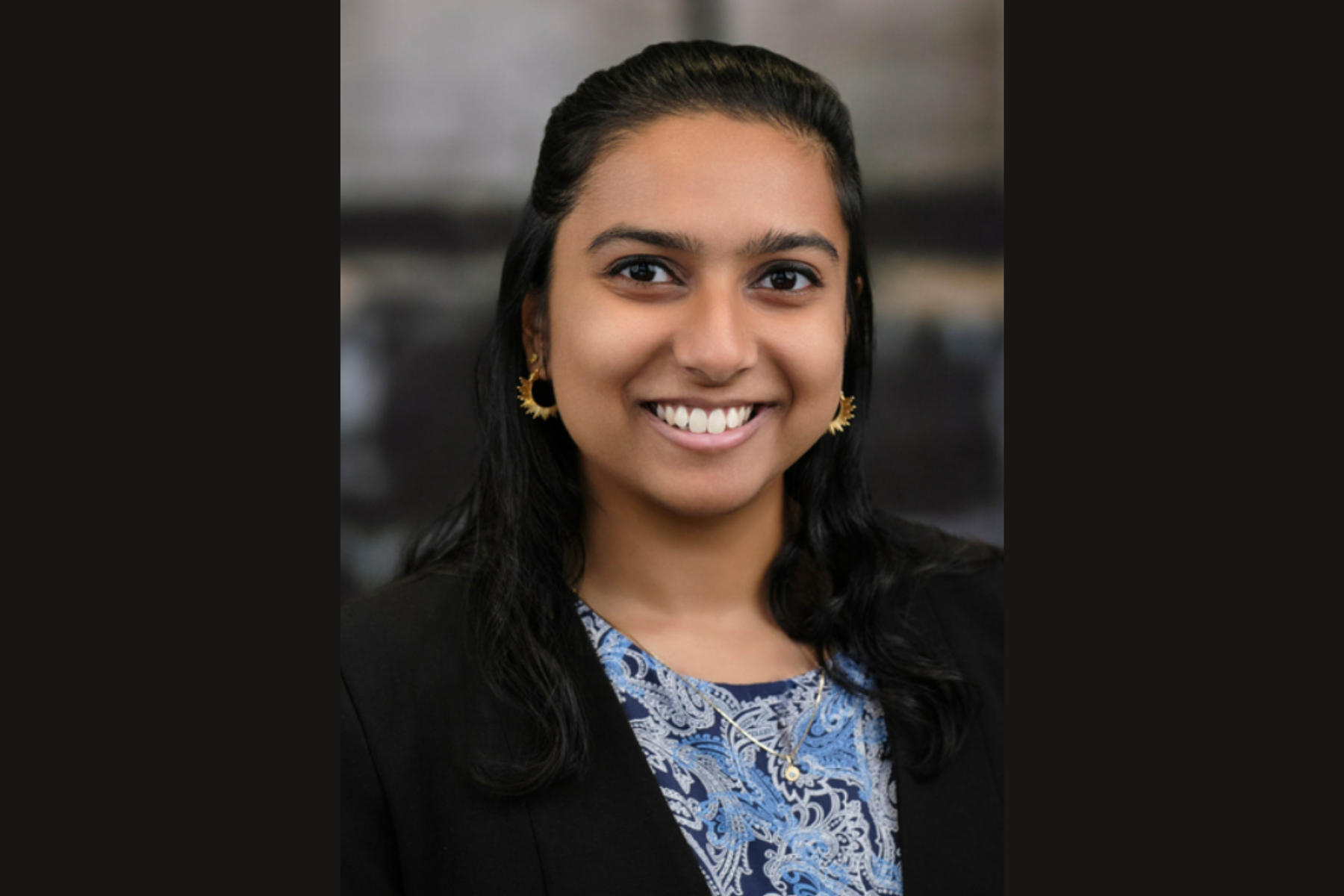
For Mitali Chowdhury, the distance between the laboratories of the Massachusetts Institute of Technology and the rural water sources of South Asia has always been shorter than it appears on a map.
The 2024 MIT graduate, recently named a 2026 Gates Cambridge Scholar, credits her Indian heritage and childhood visits to India for shaping her path in biotechnology.
Growing up in a multilingual household where STEM excellence was a family tradition, with parents and grandparents in engineering and IT, Chowdhury was early to recognize the disparity in healthcare resources between the U.S. and India.
“Coming from a multilingual family with Indian roots inspired my dedication to enhancing global health and tackling inequities,” said Chowdhury, who will begin her doctoral studies at the University of Cambridge this fall.
During her time at MIT, Chowdhury transformed that inspiration into action. Working with the MIT D-Lab and the Climate & Sustainability Consortium, she traveled to Nepal to address bacterial water contamination.
Read: Indian American scholar maps the Milky Way’s hidden worlds
Her fieldwork focused on the “ECC Vial,” a low-cost testing tool for E. coli. By collaborating with Nepali organizations like the Environment & Public Health Organization (ENPHO), she sought to make diagnostic tools faster and more reliable for communities lacking formal infrastructure.
Beyond the lab, Chowdhury balanced her technical studies in biological engineering with minors in urban planning and sustainability.
A practitioner of both Western and Indian classical music, she views scientific innovation through a humanistic lens, often considering how urban environments affect the delivery of medical care.
At Cambridge, Chowdhury will join the Centre for Doctoral Training in Sensor Technologies and Applications. Her PhD research will leverage CRISPR-based diagnostics to combat antimicrobial resistance, a critical issue in South Asian public health, particularly regarding typhoid treatment.
Her goal is to create “point-of-care” sensors that provide high-accuracy results in remote settings without the need for expensive laboratory equipment. Currently a systems engineer at the startup XGenomes, Chowdhury is already working on making genomic sequencing more affordable.
Her move to Cambridge marks the next chapter in a career dedicated to ensuring that life-saving biotechnology is not a luxury, but a globally accessible standard.