



History has a curious habit of remembering the names of buildings while forgetting the people who quietly ensured that those buildings were ever constructed in the first place. We celebrate founders, presidents, visionaries, and public figures because they occupy the visible space in our collective consciousness, yet behind every enduring institution stands a small number of individuals whose contributions are so fundamental that they become inseparable from the institution itself. Their work is rarely dramatic, their presence is rarely announced, and their influence is often measured not by public recognition but by the durability of what they leave behind.
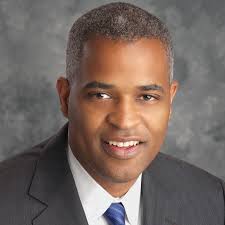
As the Obama Presidential Center opens on June 19th, on Chicago’s South Side, much attention has understandably focused on the legacy of President Barack Obama, the architecture of the Center, its mission, and its potential impact on future generations. What has received far less attention is the individual who has spent more than a decade quietly shepherding this ambitious undertaking from aspiration to reality. That individual is Marty Nesbitt.
READ: Sreedhar Potarazu | The Supreme Court reframes ‘The Art of the Deal’ by striking down tariffs (February 20, 2026)
My observations are not based upon political affiliation, nor are they intended to be. Politics is inherently transient. Administrations come and go, elections are won and lost, and policy debates eventually give way to new debates. Institutions, however, operate on a different timescale. The true measure of an institution is not whether it survives a news cycle but whether it continues to shape lives decades after its founders have departed.
Over the past decade as I have known Marty and what has consistently impressed me is not his business success, his influence, or even his proximity to one of the most consequential political figures of our time. What has impressed me is something far less tangible and far more important: his character.
There is a dignity about him that is difficult to describe but impossible to miss. It reveals itself not through grand gestures but through countless small interactions that most people would never witness. In a culture increasingly dominated by self-promotion and personal branding, Marty possesses a rare ability to make every interaction feel human. He listens carefully. He responds thoughtfully. He treats people with respect regardless of their station in life. He demonstrates empathy when judgment would be easier, and extends grace when many would choose resentment.
The longer one lives, the more one realizes that intelligence, wealth, influence, and accomplishment are relatively abundant. The capacity to maintain one’s humanity while navigating positions of significant responsibility is exceedingly rare. Yet these are precisely the qualities that determine whether institutions become monuments to ego or instruments of service.
The Obama Presidential Center represents far more than a collection of buildings. It represents an idea about civic engagement, leadership, community, and the possibility that ordinary citizens can contribute to something larger than themselves. Such aspirations cannot be embedded into concrete and steel by architectural plans alone.
In many respects, stewardship is among the least appreciated forms of leadership because it requires a willingness to subordinate personal recognition to a larger mission. That description captures Marty Nesbitt better than any title ever could.
READ: Sreedhar Potarazu | AI sovereignty race: US and China lead, India watches (
Much has been written about the friendship between Barack Obama and Marty Nesbitt, and rightly so. Friendships of that duration and depth are uncommon, particularly in public life.When I think about Marty, I am reminded that the strongest relationships and the strongest institutions are built upon the same foundation.
One day millions of visitors will walk through the Obama Presidential Center. They will admire the architecture, engage with the exhibits, participate in programs, and reflect upon the history preserved within its walls. Most will never know the countless hours of planning, negotiation, fundraising, problem-solving, and perseverance that were required to transform an ambitious vision into a tangible reality. They will see the finished product but not the years of stewardship that made it possible.
In an era that often confuses visibility with significance, Marty Nesbitt serves as a reminder that some of the most consequential contributions are made quietly. The Obama Presidential Center will bear President Obama’s name, as it should, but woven throughout that institution is the character of the man who helped guide it into existence. His grace, empathy, humility, and humanity are not merely personal attributes; they are qualities that shape the culture of organizations and the legacy of institutions.
READ: Sreedhar| Who’s making money from your data in dynamic pricing (March 6, 2026)
Long after today’s political debates have faded into history, the Center will remain. Future generations may never know the full story of the individuals who brought it to life, but they will experience the values embedded within it. Those values did not emerge by accident. They were cultivated, protected, and advanced by people who believed that service matters, that institutions matter, and that character matters.
Among those individuals, few have played a more important role than Marty Nesbitt, the quiet steward whose greatest achievement may not be the Center itself, but the example he has set of how leadership can be exercised with dignity, grace, and profound humanity.