



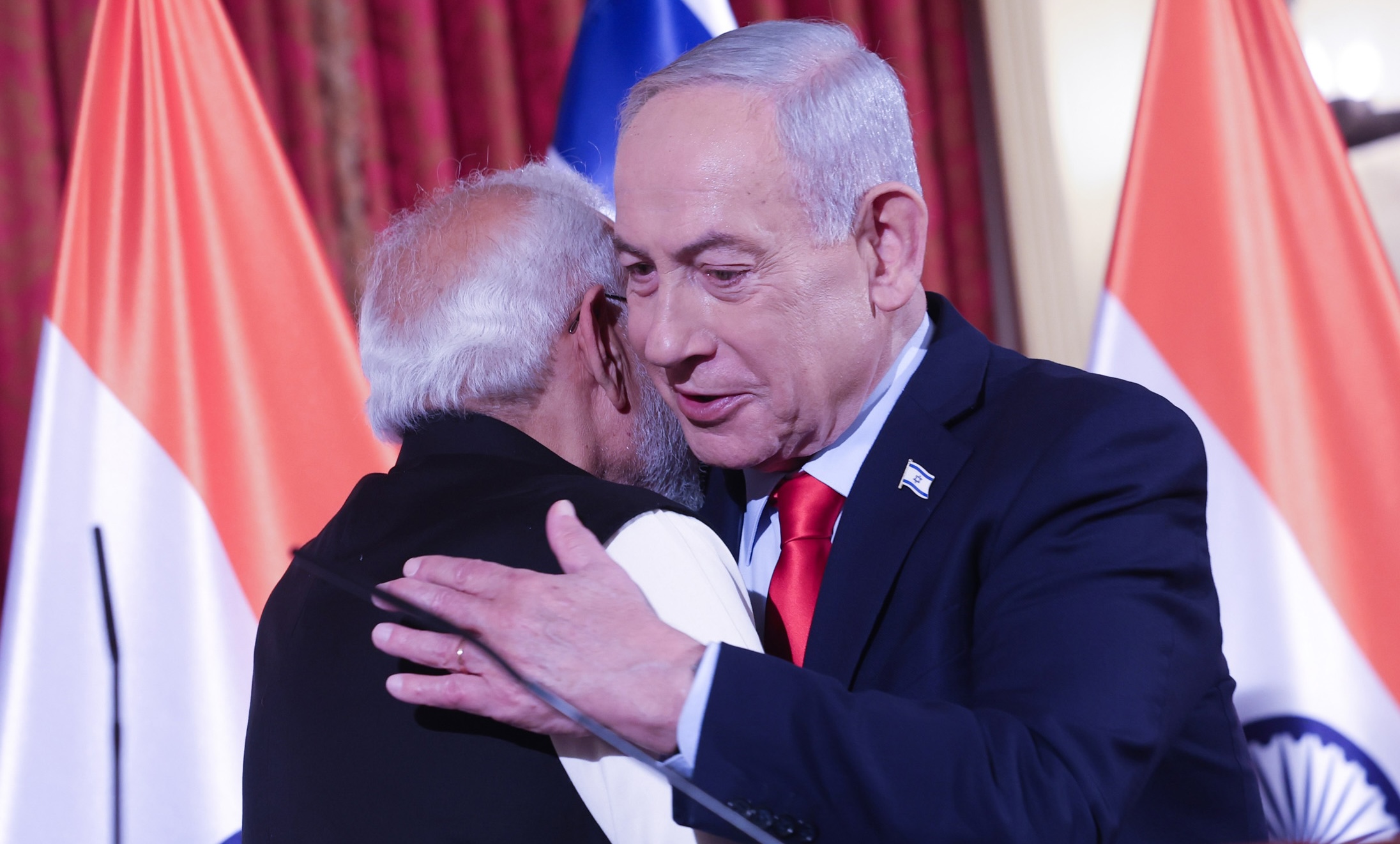
India has long projected itself as a civilizational power — a nation that stands above conflict, champions peace, and leads the Global South with moral authority. But recent geopolitical events have exposed a widening gap between India’s stated neutrality and the global perception of its actions.
The signing of a new agreement with Iran, the visible closeness with Israel during a period of intense regional violence, and the diplomatic rise of Pakistan’s General Asim Munir have all combined to create a moment of strategic discomfort for New Delhi.
In recent months, the country’s foreign policy choices, regional optics, and shifting alliances have reshaped its global image, and it is happening at a time when the Middle East is undergoing rapid transformation.
New Delhi continues to describe its position in the Middle East as neutral, balanced, and guided by long-term strategic interests. Official statements emphasize peace, stability, and a two-state solution. Yet the world sees something different.
READ: Akhlaq Siddiq | The plan that was made before the oath (June 13, 2026)
India’s voting patterns at the United Nations, its deepening defense cooperation with Israel, and its silence during periods of intense civilian suffering have created a perception that the country is aligned more closely with Israel and the United States than with the broader international community. The optics of public warmth between the Indian Prime Minister and Israel’s leadership during a period of global outrage have further reinforced this impression.
In diplomacy, perception often matters as much as policy. India’s neutrality is increasingly viewed as selective — a stance that protects strategic interests but lacks the moral clarity expected from a nation aspiring to global leadership.
India’s recent agreement with Iran has raised questions about timing and intent. After years of distancing itself from Tehran — driven largely by U.S. sanctions and shifting regional priorities — New Delhi’s sudden re-engagement appears reactive rather than strategic.
For years, India reduced its energy imports from Iran, slowed progress on the Chabahar port, and allowed its diplomatic presence to shrink. Now, as Iran negotiates with the United States, Pakistan, and the Gulf Cooperation Council, India’s return to the table seems late. The deal itself is not a failure, but the optics suggest India is trying to regain lost ground in a region where new power centers are emerging.
Pakistan’s diplomatic moment
While India has been navigating contradictions, Pakistan’s Army Chief, General Asim Munir, has unexpectedly emerged as a central diplomatic figure in the Middle East. His visits to Tehran, Riyadh, and other regional capitals, combined with his involvement in facilitating dialogue between Iran and the United States, have elevated Pakistan’s profile.
This shift is not about Pakistan surpassing India in power — India remains the larger economic and geopolitical actor. But in this specific moment, Pakistan appears active, engaged, and relevant, while India appears cautious and absent from key mediation efforts.
READ: Akhlaq Siddiqi | The leaking bucket: India’s GDP rises as investment slips away (June
The contrast is striking: Pakistan is seen as a bridge-builder, while India is seen as a silent observer.
India’s aspiration to be a “Vishwa Guru” — a global teacher and moral leader — depends heavily on how the world perceives its actions. The Middle East, home to millions of Indian expatriates and a major source of energy, is a region where India’s image matters deeply.
The combination of India’s visible closeness with Israel, its delayed engagement with Iran, and its absence from regional mediation efforts has weakened the moral dimension of its foreign policy narrative. The world sees India acting as a transactional power, not a moral one.
This does not diminish India’s economic or strategic weight, but it does challenge the idea that India can lead the Global South through moral authority alone.
A region in flux: China, GCC, Iran, Pakistan, and the U.S.
The Middle East is undergoing a realignment driven by energy security, economic diversification, and shifting global power dynamics. China’s growing influence, Iran’s negotiations with multiple actors, Pakistan’s diplomatic resurgence, and the GCC’s desire for stability have created a new regional architecture.
In this evolving landscape, India risks being seen as peripheral — not because it lacks power, but because it has chosen caution over engagement. The region is rewarding active diplomacy, and India’s current approach appears too passive for the moment.
India is not losing power, but it is losing narrative control. Its claim of neutrality is being questioned, its moral leadership is being challenged, and its regional relevance is being tested. The Iran deal, the optics with Israel, and the rise of new diplomatic actors have all contributed to a moment of introspection for New Delhi.
If India wishes to reclaim its image as a balanced, principled, and influential actor in the Middle East, it will need to align its actions more closely with its stated values — and engage more actively in shaping the region’s future rather than reacting to it.